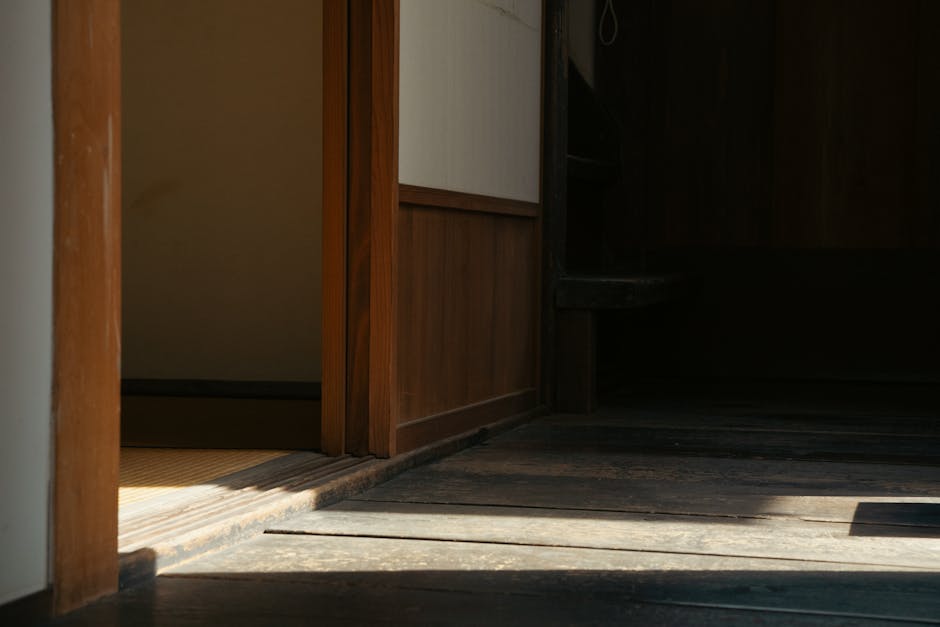
Most rooms that attempt Japanese style end up looking like a hotel gift shop — a bamboo tray here, a paper lantern there, a bonsai in the corner, and none of it cohering. The issue isn’t bad taste. It’s that most guides skip the underlying principles entirely and jump straight to product lists.
Start with the ideas. The execution becomes obvious after that.
The Three Design Concepts Behind Every Japanese Interior
Japanese interior design is not a style you apply on top of existing decor. It’s a set of values that produce a style as a byproduct. Miss the values, and you get surface-level imitation — rooms that photograph like Japan but feel like nowhere.
Wabi-Sabi: Imperfection as the Point, Not the Problem
Wabi-sabi is cited constantly and understood almost never. It doesn’t mean rustic, distressed, or artfully worn. It describes a worldview that accepts aging, change, and imperfection as natural — and finds those qualities interesting rather than something to correct. A ceramic bowl repaired with gold lacquer using the Japanese technique kintsugi becomes more beautiful after breaking, not despite it. That’s wabi-sabi in its clearest form.
Practically: don’t replace the worn linen cushion because it looks “used.” An object that has genuinely earned its aging belongs in a wabi-sabi room. What doesn’t belong: random clutter, cheap objects bought to fill visual space, or pristine mass-produced pieces arranged to look curated.
The distinction is sharp. Wabi-sabi is not permission to keep a messy room. It’s a deliberate appreciation for the specific wear of meaningful objects. A single wooden bowl you’ve used daily for three years qualifies. A pile of ignored magazines does not.
Ma: Why Empty Space Is an Active Design Decision
Ma (間) is the concept that separates genuinely Japanese rooms from rooms that just own Japanese objects. It translates roughly as “negative space” or “interval,” but those translations flatten it. Ma isn’t the empty space left over after you place objects. It’s the intentional gap between things, treated as an active design element with equal weight to the objects themselves.
Western decor trains you to fill space. A shelf with three items feels incomplete — the instinct is to add until it looks “done.” Japanese design inverts this. A shelf with three objects and visible space between them communicates deliberateness. It says every object here was chosen. The space means something.
Here’s a diagnostic. Walk into your living room and count every surface: shelves, coffee table, windowsill, the top of the TV unit. Now count how many of those surfaces have objects on them. If the answer is close to all of them, your room has no ma. The fix isn’t buying more storage to hide things — it’s genuinely editing what earns the right to exist in the room.
Shibui: Restrained Beauty That Rewards Attention
Shibui (渋い) is the hardest concept to define but the easiest to recognize once you’re looking for it. A shibui object is quietly beautiful — it doesn’t announce itself. You might sit in a shibui room for twenty minutes before you notice a particular texture in the plastered wall or the specific tone of a wooden bowl. That delayed recognition is the point.
Shibui palettes come from nature: ash, warm stone, celadon, moss, indigo, unbleached linen. They’re not colorless — they’re specific. Farrow & Ball’s Mole’s Breath (No. 276) and Purbeck Stone (No. 275) sit credibly within a shibui range despite being from a British paint house. What to avoid: bright white (too stark, too clinical), gray that reads as office neutral, and any color with heavy saturation.
Texture matters as much as color here. Rough-plastered walls, natural linen, unglazed ceramics, and unpainted wood are all shibui materials. High-gloss lacquer and synthetic fabrics are not — even if the color is technically correct.
Japanese Room Elements and Their Western Equivalents

Most people aren’t going to install tatami floors or build a tokonoma alcove into a rented flat. That’s fine — the aesthetic translates. But the translation only works if you understand what each traditional element is actually doing, not just what it looks like.
| Traditional Element | What It Does | Practical Western Equivalent |
|---|---|---|
| Tatami flooring | Lowers visual weight, adds natural texture and warmth underfoot | Flat natural jute or sisal rug, unfringed, in neutral tone — no patterned weave |
| Shoji screen | Diffuses harsh light, divides space softly without hard walls | Rice paper blind or frosted glass panel; IKEA TUPPLUR in off-white as a functional low-cost option |
| Futon on floor | Lowers the room’s visual center of gravity | Platform bed with no headboard; mattress on low slatted base, as close to floor as possible |
| Tokonoma alcove | One curated object in a dedicated display space — nothing else | Single floating shelf, styled with one item only, shelf brackets hidden or flush-mounted |
| Fusuma panels | Room division using texture and pattern rather than solid walls | Full-height linen curtain used as a soft room divider between spaces |
| Genkan entry zone | Transition space between outside and inside; shoes removed here | Distinct entry mat, closed shoe storage, single plant — creating a pause before the main space |
The third column is where most guides stop. But there’s a step further: each substitute works only if you apply the principle behind it, not just the form. A rice paper blind reads wrong if the rest of the window treatment is ornate. A floating shelf with one object looks wrong if the surrounding wall is covered in gallery art. Every element needs space to breathe, and that space has to be deliberately preserved.
The Reason Most Japanese-Style Rooms Fail
They contain too many things. Every Japanese decor project that doesn’t land does so because the person kept adding objects trying to “complete” the look. Japanese interiors don’t look complete. They look considered. Those are not the same thing, and confusing them is expensive.
Room-by-Room: Specific Steps That Actually Move the Needle
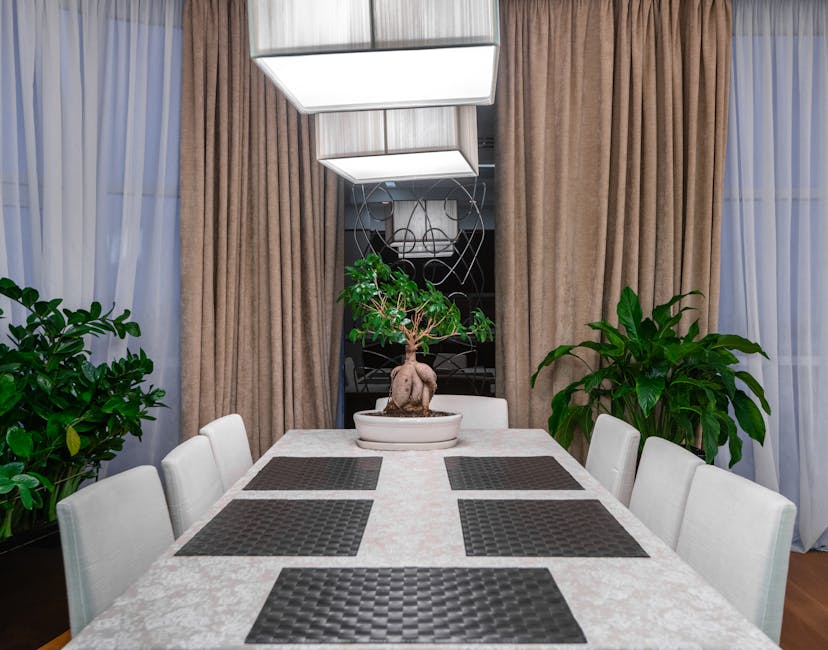
The principles above are easy to understand and consistently ignored the moment someone opens a browser tab. Here’s how to apply them practically, room by room, without a renovation.
Living Room: Five Changes in Order of Impact
- Clear every surface completely. All of them — shelves, coffee table, windowsill, the top of the TV cabinet. Start from zero, not from editing.
- Return only what earns its place. Each object needs a reason: functional, genuinely meaningful, or genuinely beautiful. If you can’t answer which one, it leaves the room.
- Lower your light sources. Overhead lighting is the enemy of a Japanese-style room. Add a floor lamp or table lamp with a paper or bamboo shade. The IKEA KNIXHULT bamboo pendant lamp (~$22) used with a cord adapter as a table or floor lamp casts warm, diffused light and costs almost nothing. The bamboo is real, the light is right.
- Swap cushion covers for natural linen or nubby cotton in stone, clay, or indigo. H&M Home and Zara Home both carry options under $30 — check the composition label and buy only natural fiber. Polyester linen-look fabric reads wrong at close range.
- Add one plant in one plain unglazed clay pot. Not three. One. A kokedama (Japanese moss ball plant) with a string fern is the most distinctly Japanese option — roughly $25–40 from most garden centers. It’s watered by soaking in a bowl of water for 20 minutes every 7–10 days, not by pouring, which is worth knowing before it dies on you.
Bedroom: The Simplest Room to Convert
The bedroom is where Japanese design principles map most cleanly onto Western goals. Rest, calm, and minimal stimulation are what both aim for — you’re already aligned on function.
- Remove the headboard entirely, or replace it with a flat, low panel in natural wood. The IKEA TARVA pine bed frame ($179) works well as a simple, low-profile base that doesn’t fight the room.
- Replace synthetic bedding with linen. The Soak&Sleep linen duvet cover (available through John Lewis, around £80–120) holds up well over time and gets better with washing — which is, again, wabi-sabi in a form you can actually buy.
- Leave at least one wall completely bare. This is non-negotiable, and it’s also the hardest instruction for most people to follow.
- Use one bedside lamp only. Warm white LED at 2700K. Avoid Edison bulbs — they read as industrial farmhouse, not Japanese.
Entryway: The Genkan in Practice
Most Western entryways are ignored. Coats on hooks, shoes on the floor, keys on a table — functional chaos that sets the wrong tone before you’ve entered a single room.
Fix it in three moves. First, add a closed shoe cabinet so footwear disappears entirely — the IKEA STÄLL shoe cabinet at $130 handles three tiers of shoes behind clean closed doors and is the only entry furniture that genuinely matters. Second, place one plant near the door: a small peace lily or a Juniper bonsai (Juniperus procumbens) in a plain unglazed pot. Third, use a natural fiber mat at the threshold only — sisal or jute, no runner extending down a hallway.
Products That Consistently Get the Look Right
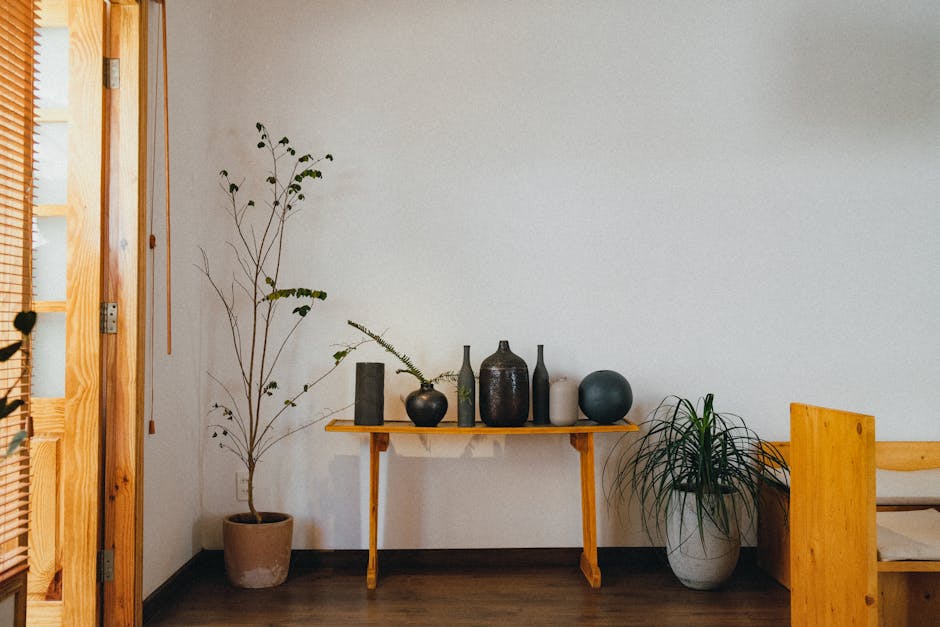
Three categories determine whether a Japanese-style room works: furniture, lighting, and natural materials. Here’s what holds up in a real room versus what looks correct in a product photograph and wrong in person.
Furniture: Honest Materials, Low Profiles, No Hardware
Avoid anything with ornate detailing, carved edges, or visible decorative hardware. Japanese furniture is honest about its material — you can see what it’s made of, how it’s jointed, and how it ages. Nothing is disguised.
What actually delivers:
- Muji Low Table (~$200): Solid oak, low-profile, no visible hardware. Muji’s entire furniture range is built around Japanese minimalism and holds up in Western rooms without looking out of place. The brand’s commitment to material honesty is the right foundation — their online store ships widely across Europe and North America.
- YAMAZAKI Home Tower Shelf Series (~$60–80): A Japanese brand making minimal powder-coated steel storage that works in any room. Both black and white colorways are available through major UK retailers. Better value than most competitors at the same price, and genuinely from the design tradition being discussed.
- HAY Copenhague CPH30 Table (~$800+): Danish design with strong Japanese-Scandinavian DNA. Expensive, but genuinely well-made. The linoleum top in dark gray is the shibui pick if you’re investing in a centerpiece.
The clear verdict: start with YAMAZAKI Home for storage and accessories. Add Muji for furniture when budget allows. HAY is for when you want one investment piece that anchors the room.
Lighting: Paper and Bamboo, Nothing Else
Those two materials cover 90% of what Japanese interior lighting does. Synthetic fabric shades and metal shades read wrong regardless of form — even if the shape is technically correct.
The IKEA KNIXHULT bamboo pendant (~$22) is the most cost-effective correct choice. Used as a pendant over a dining area or work surface, it casts warm diffused light that shifts the atmosphere of a room noticeably. The Muji LED Arm Lamp (~$80) is the right desk and bedside choice — clean matte body, adjustable, built to last. Neither requires justification beyond: they’re made of the right materials and they work.
Natural Materials: The Details That Finish the Room
Noren — Japanese fabric room dividers — are the highest-impact inexpensive change available. A full-height linen noren in indigo or undyed cotton transforms a doorway or open room division immediately. Budget $30–80 for a genuine cotton version; avoid polyester blends entirely.
For ceramics: choose unglazed or single-glaze pieces from Japanese or Korean makers where possible. A single Hagi-ware tea bowl ($40–80 from specialist importers) or a plain celadon vase does more for a room than five cheaper alternatives. One considered object beats a collection every time — which is, again, exactly what ma requires.