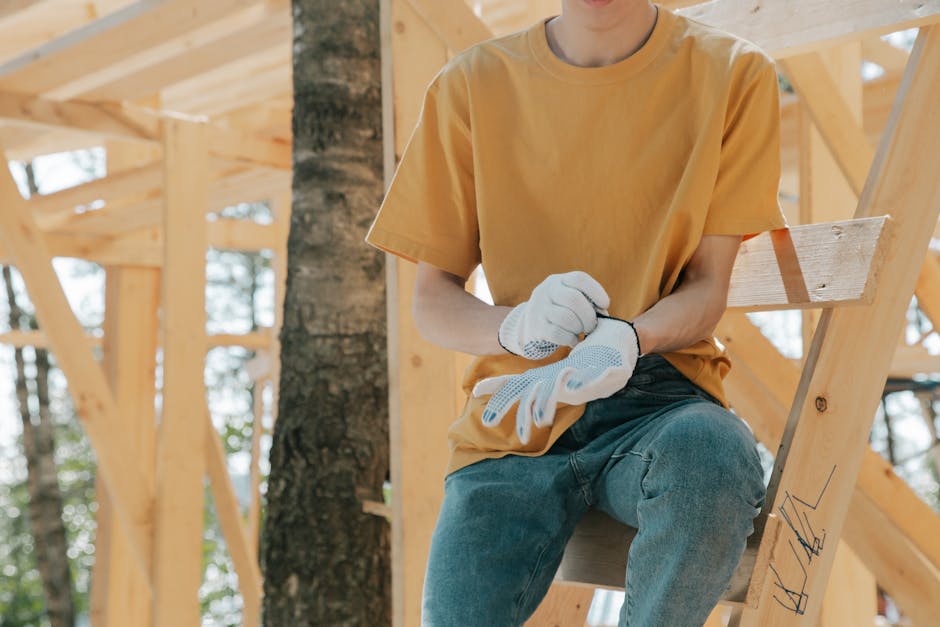
Most home improvement advice covers tools, materials, and technique. Nobody talks about what you wear while doing the work — and after spending hundreds of hours building furniture, painting rooms, and assembling shelving, I’ve become convinced it matters more than people realize. The wrong shirt makes a four-hour project feel like six.
Why Home Projects Destroy Regular Cotton Shirts
Standard cotton tees are the default work shirt for most people. They’re cheap, they’re everywhere, and they seem fine — until you’re three hours into assembling a sectional sofa and your shirt has bunched up, soaked through, and started pulling tight every time you reach overhead to tighten a cabinet hinge.
The core problem is that cotton doesn’t stretch meaningfully. It gives slightly when new, then after a wash cycle or two it’s about as elastic as cardboard. Furniture assembly and home improvement involve constant reach-and-twist motions that basic cotton actively fights against. Installing floating shelves, screwing in fasteners behind a bookcase, sanding a dresser — all of these put real demands on shoulder and torso mobility that flat-weave cotton isn’t built to handle.
The Mobility Problem in Furniture Assembly
Here’s the specific failure mode: when you reach overhead with a non-stretch shirt, the hem pulls out of your waistband, your lower back gets exposed to drafts (relevant in a winter garage), and the fabric constricts across your upper back. You compensate by bending your arms differently. Over hours, that subtle compensation creates fatigue in your shoulders that feels like muscle strain but is really just your body working around clothing restrictions.
Slim-fit ribbed fabric — the kind with horizontal elasticity built into the knit weave — eliminates most of this. The stretch moves with your arms and returns to shape when you lower them. It sounds minor. Over a full project day, it’s the difference between feeling fine at 4pm and feeling worn out at 2pm.
Ribbed knit also drapes differently. It stays in contact with your torso without bunching, which matters when you’re on your knees fitting furniture legs or reaching behind a sofa to route cables. Baggy shirts catch on Allen keys, drill handles, and cabinet edges constantly — a minor annoyance at best, a real hazard near power tools at worst.
Why Cotton Fails Once You Start Sweating
Cotton absorbs moisture but holds it. An hour of light furniture assembly generates enough body heat to dampen a cotton shirt, and once damp cotton sits against your skin, it stays cold and clammy for a long time. Moving between a warm room and a cool garage — which happens constantly on project days — makes this cycle worse.
Ribbed knit breathes better than flat-weave cotton and doesn’t trap heat the same way. It’s not technical moisture-wicking polyester like what you’d find in a dedicated athletic shirt — that level of performance would be overkill for most home improvement contexts — but it manages sweat noticeably better during sustained light-to-moderate physical work. The difference is most obvious during summer projects or in unventilated spaces like attics, closets, and narrow hallways where you’re working around built-ins.
4 Features That Separate Good Project Shirts from Mediocre Ones
After testing six shirts across multiple projects, I narrowed the evaluation to four things that actually determine comfort during home improvement work. Not vague “performance” marketing language — specific properties you can verify before buying.
- Stretch type — Ribbed horizontal knit gives you natural multi-directional give without the constriction of compression-grade fabric. True compression shirts (think: gym-specific gear) are actually too restrictive for sustained multi-hour work where you need unrestricted breathing alongside physical movement. Slim-fit ribbed is the sweet spot.
- Seam placement — The seam running down the side of your shirt needs to fall at or slightly behind the natural line of your torso. When it sits directly against your ribcage, it creates constant low-grade pressure that builds slowly and becomes genuinely distracting after two hours. Some buyers note specifically that “the seams will annoy you unless you wear them inside out” — a real consideration for all-day project wear.
- Sleeve length for your task — Long sleeves protect your arms when staining, painting, or working with chemical strippers. Short sleeves are better for high-mobility tasks like painting ceilings or tile work where you’re constantly raising your arms above your head. Matching sleeve length to the task type makes a bigger difference than most people expect.
- Fit category — There are three buckets: compression (too tight for hours-long work), regular fit (gets caught on tools, hardware, and cabinet edges), and slim fit (the sweet spot). Slim fit stays in place, doesn’t restrict range of motion, and doesn’t create the snagging hazard that loose shirts do near drills and orbital sanders.
Stretch Type Matters More Than “Athletic Fit” Labels
Every shirt brand now uses “athletic fit” or “performance” on the label. It means very little without understanding the fabric construction underneath. True ribbed knit has elasticity built into the weave structure itself. A pseudo-athletic shirt is just regular cotton cut slightly narrower. They look identical on a hanger. They behave completely differently when you’re on your knees reaching under a bed frame.
The easiest field test: grab the fabric at the chest and pull it sideways. Proper ribbed knit stretches cleanly and snaps back with consistent tension. Regular cotton stretches unevenly and leaves a slight distortion in the weave. Budget slim-fit tees from Amazon Essentials or basic H&M athletic tees fail this test consistently. Purpose-built ribbed athletic shirts — including the Muscle Cmdr line — pass it. That physical difference is why one verified buyer described the fabric as “definitely stretchy — tight up top and room in the stomach,” which is exactly the combination you need when bending and reaching across a full project day.
Seam Position — The Spec Most Buyers Miss
Seam irritation builds slowly and arrives all at once. You won’t feel it in the first twenty minutes. You’ll notice it by hour three when the cumulative pressure against your ribcage or underarm starts pulling your focus away from the task you’re actually trying to finish.
For project shirts specifically — where you’re wearing the same shirt for six to eight hours, not forty minutes at the gym — seam placement matters more than it does for casual wear. Before committing to a shirt for project use, put it on and run through the specific motions of your work: overhead reach, forward bend, lateral twist, crouch. If you can feel the seam in any of those positions during the first try-on, it will only get worse over time. The inside-out workaround some buyers use is real and it works — but knowing that before purchase lets you make a better decision rather than discovering it on project day.
Muscle Cmdr Long Sleeve vs. Short Sleeve: Side by Side
Same brand, same ribbed slim-fit construction, different use cases. Here’s the full comparison:
| Feature | Long Sleeve 2-Pack ($37.99) | Short Sleeve Single ($26.99) |
|---|---|---|
| Price per shirt | ~$19 | $26.99 |
| Review count | 106 reviews | 1,813 reviews |
| Rating | 4.3/5 | 4.2/5 |
| Best for | Winter projects, staining, finishing, cool garages | Warm weather, painting, ceiling work, high-mobility tasks |
| Arm protection | Yes — good for chemical/stain exposure | No |
| Breathability in heat | Good | Better |
| Value per shirt | Strong — 2 shirts per order | Weaker at single-shirt price |
| Color options | Black (2-pack) | Multiple including green |
| Sizing note | Order one size up | Order one size up |
Which One Is Better Value?
The long sleeve 2-pack wins on economics — roughly $19 per shirt versus $26.99 for a single short sleeve. That said, the short sleeve has nearly 1,800 more reviews, which gives you a much more reliable signal about quality consistency over time. When buyers across that many purchases describe the shirts as shirts that “fit well and are warm” and “fabric feels good on the body,” those patterns carry real weight. A 106-review average tells you something. A 1,813-review average tells you considerably more.
If you’re buying for the first time, start with the short sleeve version in your current project season to verify that the sizing works for you, then add the long sleeve 2-pack once you know your correct size. The 2-pack is better value in the long run, but the single shirt is the lower-stakes entry point.
One consistent note across both: “the fit is pretty good and looks good” — which matters because these shirts will end up as casual wear too, not just project shirts. Getting something that’s also presentable outside the garage is a genuine bonus at this price point.
The One Sizing Rule That Prevents a Return
Order one size up from your normal size. These run small — multiple buyers flag it directly: “Does fit snug so order a size bigger if you want some room to breathe.” For project wear specifically, where you want mobility across six to eight hours rather than compression, your true size will feel restrictive within the first hour. Medium becomes Large. Large becomes XL. That’s the entire rule.
What to Know Before You Buy: Real Questions Answered
Can these shirts double as everyday wear or gym shirts?
Yes, and that’s part of what makes them a reasonable buy. The slim ribbed fit that works for furniture assembly also holds up for casual wear and gym sessions — this is the design intent. They’re not specialty project shirts that live in the garage. They’re versatile athletic basics that happen to perform well during home improvement work because the fabric requirements overlap significantly. If you’re buying project shirts you’ll realistically wear ten to fifteen times a month across different contexts, that doubles or triples the cost-per-use compared to a dedicated single-purpose shirt.
How do I wash these without ruining the stretch?
Cold water wash only. Tumble dry low or hang dry. Hot water breaks down the elasticity in ribbed knit faster than it does with flat-weave cotton — the heat degrades the fiber structure that creates the stretch. Don’t iron ribbed fabric under any circumstances; high heat permanently flattens the rib texture and kills the give. Skip fabric softener too — it coats the fibers and reduces their moisture management over time. These rules apply to essentially all ribbed athletic knit, not just this specific brand.
Should I buy Carhartt Force instead for heavier work?
For actual heavy construction — drywall, concrete work, demolition, roofing — yes. The Carhartt Force ($35–45 per shirt) has reinforced seams built for repeated abrasion and is purpose-designed as genuine workwear. The Duluth Trading Armachillo Tee ($35) is another solid option if you run hot and want purpose-built moisture management, though it runs looser and creates the snagging hazard I mentioned earlier.
For furniture assembly, light carpentry, painting, refinishing, and general home improvement that doesn’t involve heavy abrasion or constant contact with rough materials, the Muscle Cmdr long sleeve 2-pack is the better call. Better mobility, better value per shirt, and you get two for roughly what you’d pay for one Carhartt. Spending $45 on a single work shirt that’s going to get stained by wood finish or drywall compound is a hard sell when a 2-pack at $37.99 covers the same task.
What’s the real warmth difference between long and short sleeve?
Meaningful but not dramatic. Long sleeves add arm coverage that matters in a 55°F garage but won’t keep you comfortable in an unheated space at 40°F — you’d need a layer over the shirt for that. For garage projects in fall or early spring, the long sleeve alone is often enough during active work. Pair it with a zip fleece you can pull on during breaks when your body temperature drops. For summer projects in a warm house or humid climate, the short sleeve is the obvious answer — the arm coverage of the long sleeve becomes a liability rather than an asset once the temperature climbs above 70°F and you’re generating heat from sustained physical effort.
For year-round home improvement across different seasons, the long sleeve 2-pack is the practical buy: one for the project, one clean and ready for next weekend. At roughly $19 per shirt, losing one to a permanent stain from oil-based primer or wood finish stings considerably less than losing a $45 Carhartt Force to the same mishap.