Water bills jumped another 8% last year across the Southwest. Meanwhile, neighborhoods in California and Texas now fine for overwatering. The lawn you grew up with isn’t just expensive—it’s becoming a liability.
But here’s what nobody tells you: a drought-tolerant yard doesn’t mean a cactus garden surrounded by beige gravel. It means swapping thirsty plants for ones that look better with less work. Less mowing. Less fertilizing. Less standing in the sprinkler aisle at Home Depot wondering why you’re about to spend $47 on a brass impact head that’ll clog by August.
I’ve pulled together 9 ideas that work across most USDA zones—from the bone-dry Southwest to the humid-but-still-drought-prone Southeast. No fake “water features” that recirculate. No plastic turf that hits 160°F in July. Just real plants and materials that hold up.
1. Replace Lawn with No-Mow Ground Covers
The single biggest water hog on your property is the turf. Kentucky bluegrass needs about 1.5 inches of water per week in summer. Over 1,000 square feet, that’s 935 gallons. Every. Single. Week.
Ground covers cut that number by 60-80%. The trick is picking ones that handle foot traffic if you actually use the yard.
Dymondia margaretae (Silver Carpet)
This South African native forms a dense, silver-green mat that handles light foot traffic without dying. It grows to about 2 inches tall and needs water once every 7-10 days once established. No mowing. It spreads slowly, so buy plugs every 12 inches for full coverage in about two seasons.
Kurapia (Phyla nodiflora)
Developed in Japan for erosion control, Kurapia has exploded in California for a reason. It handles heavy foot traffic, stays under 2 inches, and uses about 70% less water than turf. It does go dormant and turn purplish-brown in freezing winters, so skip it if you’re in Zone 7 or colder. One downside: it spreads aggressively. Install deep edging or it’ll colonize your neighbor’s petunias.
When NOT to use ground covers
If you’ve got dogs that dig, ground covers won’t hold up. Same goes for areas under heavy shade where nothing but moss wants to grow. In those spots, go straight to decomposed granite or mulch—skip the plant struggle entirely.
2. Gravel Gardens That Actually Drain
Most gravel installations fail because people treat gravel like mulch—they throw it on top of soil and call it done. That creates a muddy, weed-choked mess after one rainy season.
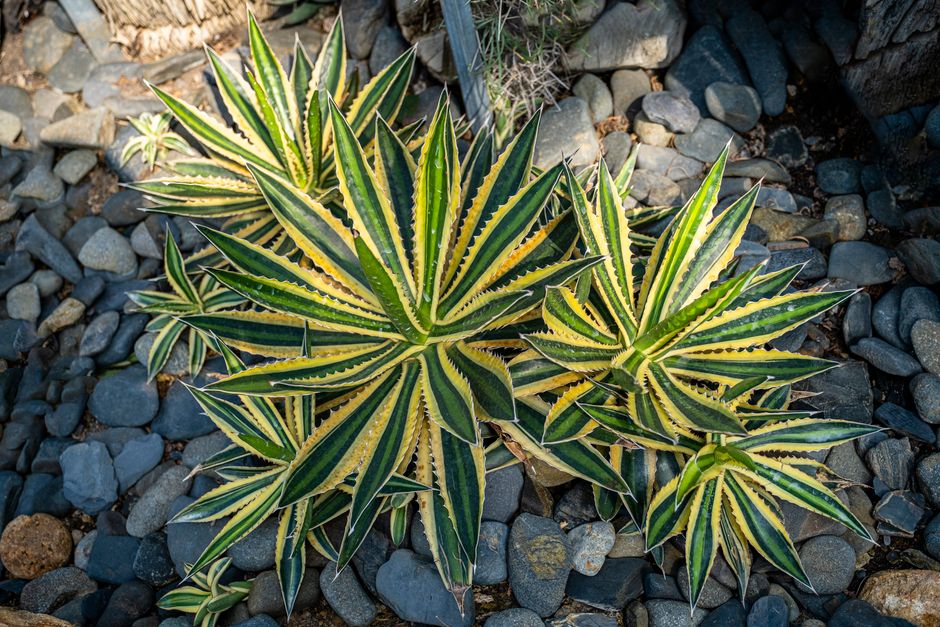
A proper gravel garden works differently. You excavate 4-6 inches, lay landscape fabric (the heavy woven kind, not the flimsy stuff that shreds), and backfill with 3/4-inch angular crushed stone. Angular locks together. Pea gravel rolls around like ball bearings and ends up on the sidewalk.
Best plants for gravel gardens
Mediterranean and desert-adapted species thrive here because the gravel reflects heat and keeps root crowns dry. Try Lavandula ‘Hidcote’ for structure, Agave parryi for focal points, and Euphorbia characias for year-round green. All three survive on rainfall alone in Zones 8-10 once established.
Cost breakdown per 100 square feet
| Material | Quantity | Approx. Cost (2026) |
|---|---|---|
| Woven landscape fabric | 100 sq ft | $45-60 |
| 3/4″ angular gravel (bulk) | 1.5 cubic yards | $90-130 |
| Steel edging | 40 linear feet | $80-110 |
| Plants (5-7 specimens) | 1-gallon pots | $75-150 |
| Total DIY | $290-450 |
Contractor install runs $1,200-2,000 for the same area. The labor is in the excavation.
3. Ornamental Grasses That Move in the Wind
Shrubs sit there. Perennials bloom and die back. Ornamental grasses give you something no other plant category does: motion. A stand of Pennisetum ‘Hameln’ catches every breeze and makes the yard feel alive even when nothing’s flowering.
Grasses also need almost nothing from you. Cut them back once in late winter. Water deeply once a month in summer if there’s no rain. That’s it.
Top performers by height
- Short (under 2 ft): Festuca glauca ‘Elijah Blue’ — powder-blue tufts that stay tidy. $8-12 per plant.
- Medium (2-4 ft): Pennisetum alopecuroides ‘Hameln’ — fluffy cream plumes July through frost. $14-18 per plant.
- Tall (4-6 ft): Panicum virgatum ‘Northwind’ — rigidly upright, turns gold in fall. $18-22 per plant.
One warning: avoid Miscanthus in fire-prone areas. It produces tons of dry thatch that ignites fast. In California foothill zones, stick to succulents and low-resin shrubs instead.
4. Succulent Mass Plantings That Fill Space Fast

Succulents are the most overused and most misunderstood drought-tolerant plant category. People buy one sad Echeveria in a tiny pot, stick it in the ground, and wonder why their yard still looks empty a year later.
Succulents work when you plant them in masses—same species, tight spacing, covering ground. The visual impact comes from repetition, not variety.
Sedum ‘Angelina’ covers 2 square feet per plant in one season. It turns bright chartreuse in sun, orange in cold, and roots wherever stems touch soil. For larger texture, Aloe ‘Blue Elf’ produces tight clumps of blue-gray rosettes with coral flower spikes in winter. Both handle temperatures down to 15°F.
The mistake I see constantly: planting succulents in heavy clay without amending. They’ll rot. Mix in 50% pumice or crushed granite to the planting hole. Don’t use sand—it compacts and makes drainage worse.
5. Hardscape Zones That Reduce Planted Area
Every square foot of hardscape is a square foot you never water, weed, or mulch again. That’s the math.
The best drought-tolerant designs treat hardscape as the backbone and plants as the accents—not the other way around. A 400-square-foot patio with decomposed granite paths and a few large agaves looks intentional. The same yard trying to be 70% planted with drought-tolerant shrubs looks like you gave up halfway.
Material choices ranked by heat reflection
In hot climates, surface temperature matters. Dark pavers hit 140°F+ and radiate heat into the house. Light-colored decomposed granite stays under 110°F. Porous materials also let rainwater infiltrate instead of running off—important if your area has drought/flood swing cycles.
- Decomposed granite: Best all-around. $40-60 per cubic yard. Permeable, compactable, natural look.
- Crushed limestone: Brighter, stays cooler. $50-75 per cubic yard. Can raise soil pH in adjacent beds.
- Concrete pavers (light color): Most durable. $4-8 per square foot installed. Impermeable unless you use permeable grid systems.
6. Small Trees That Cast Decisive Shade
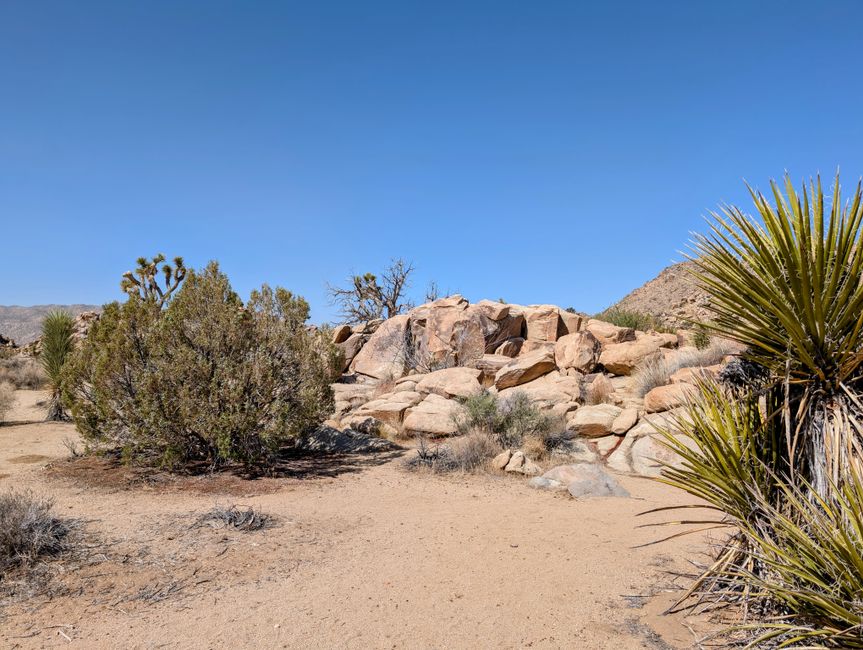
Shade is the most overlooked water-saving tool. A well-placed tree on the west or south side of a house cuts wall temperatures by 20-30°F, which reduces AC load and slows evaporation from everything growing under it.
But you can’t plant a water-hungry tree to solve a water problem. The species matters.
Parkinsonia ‘Desert Museum’ (Palo Verde hybrid) grows 20 feet tall in five years, casts filtered shade, and needs zero supplemental water after year two in the Southwest. It drops tiny leaves that don’t require raking. In cooler zones, Cercis canadensis (Eastern Redbud) handles drought once established and gives you spring flowers plus dappled summer shade.
Position the tree 10-15 feet from the house. Closer than that and roots risk foundation issues. Farther and you lose the cooling benefit.
7. Rainwater Harvesting That Actually Pays Back
Most rainwater setups are decorative barrels that hold 50 gallons—enough to water a small flower bed twice. That’s a toy, not a system.
Real payback comes from 500+ gallons of storage connected to downspouts. A 530-gallon polyethylene tank costs $600-800 and fills completely from 1 inch of rain on a 1,000-square-foot roof. That’s roughly 600 gallons of free water per inch of rainfall.
In areas with seasonal drought patterns (dry summers, wet winters), this shifts your peak irrigation demand to stored supply. Pair the tank with a simple drip irrigation kit from Rain Bird or DIG—gravity-fed works if the tank is elevated, otherwise a small 12V pump handles it.
The catch: some municipalities have restrictions on tank size or require permits. Check before you buy. Also, mosquitoes breed in standing water, so tanks must be fully screened and sealed. No open-top barrels.
8. Native Plant Communities Instead of Specimens
The single biggest landscaping mistake I see: planting one of everything. One salvia, one penstemon, one yarrow—each looking lonely and wrong. Native plants evolved to grow in communities with interlocking root systems and shared mycorrhizal networks. Plant them that way.
Pick a reference habitat for your region and replicate it. Coastal sage scrub for Southern California. Shortgrass prairie for Colorado’s Front Range. Oak savanna for the Midwest. Plant in groups of 5-7 of the same species, spaced as they’d occur naturally.
Eschscholzia californica (California poppy) + Salvia clevelandii (Cleveland sage) + Artemisia californica (California sagebrush) planted together create a self-sustaining guild that requires no irrigation, no fertilizer, and one annual cutback. The poppies reseed. The sagebrush provides structure. The salvia handles the fragrance.
Find your local native plant society’s recommended communities. Big-box nurseries won’t carry these—you’ll need specialty growers like High Country Gardens or your regional native plant sale.
9. Drip Irrigation With a Brain
Overhead spray irrigation loses 30-50% of water to evaporation and wind drift before it hits soil. Drip cuts that to near zero. Adding a smart controller cuts total water use another 20-40% by adjusting for weather automatically.
The Rachio 3 controller ($180) pulls hyperlocal weather data and skips watering when rain is forecast. Pair it with Rain Bird’s 1/2-inch drip tubing ($25 per 100 feet) and pressure-compensating emitters. Pressure compensation matters—without it, emitters at the end of the line get less water than those at the start.
One failure mode: people install drip and then run it on the same schedule as their old sprinklers. That drowns plants. Drip delivers water slowly and deeply. Run times should be longer but far less frequent—think 45 minutes twice a week instead of 15 minutes every day.
Also, bury the drip lines under 2 inches of mulch. UV breaks down exposed polyethylene tubing within 3-4 years. Covered, it lasts a decade.
What to Do First: A Priority Order
If you’re staring at a thirsty lawn and a tight budget, here’s the order that gives you the biggest water savings per dollar spent:
| Step | Action | Water Savings | Cost |
|---|---|---|---|
| 1 | Install a smart drip controller on existing zones | 20-30% | $180-250 |
| 2 | Replace overhead spray heads with drip conversion kits | 30-50% | $50-100 per zone |
| 3 | Sheet mulch and kill 50% of lawn area | 50% | $100-200 in cardboard and mulch |
| 4 | Plant shade tree on west/south exposure | 10-15% (indirect, via reduced evaporation) | $80-200 for a 5-gallon tree |
| 5 | Replace remaining lawn with ground cover or gravel garden | 60-80% of remaining usage | $300-800 depending on material |
Start at the top. You’ll see the water bill drop before you’ve spent real money on plants and hardscape. That momentum makes the bigger projects easier to justify.