The common misconception is that a tiny room needs the shallowest sofa available. That sounds logical, but the outside depth is only half the story. A sofa can measure 34 inches deep and still feel cramped if its arms are wide or its back cushions eat up the sitting space. Another can measure 39 inches deep yet feel comfortable because it has slim arms and supportive cushions. The real goal is to protect a clear walking route while giving your body enough room to sit without sliding forward.
What sofa depth actually means in a small room
Measure the sitting space, not the catalog headline
Manufacturers usually list overall depth from the front edge to the back of the frame. Your body uses the seat depth, measured from the front of the seat cushion to the point where your back rests. A thick back cushion can reduce usable depth by 5 to 9 inches. Wide arms also steal seating width, even when the sofa looks generous on paper. Before shopping, measure the wall, the doorway, the stair turn, and the clear route between the sofa and your coffee table.
| Dimension | Good target for a small room | What it changes |
|---|---|---|
| Overall sofa depth | 32–36 inches | How far the sofa projects into the room |
| Seat depth | 20–23 inches | Whether you sit upright or lounge |
| Seat height | 17–19 inches | How easily you stand and how your knees bend |
| Clearance to coffee table | 16–18 inches | Walking comfort and reach |
| Arm width | 3–6 inches per side | Usable sitting width inside the frame |
| Diagonal delivery depth | Less than your tightest entry turn | Whether the sofa can enter the home |
The useful number is seat depth
For most adults in a compact living room, seat depth between 20 and 23 inches gives the best balance. Under 20 inches feels upright and tidy but can push taller users toward the edge. Over 24 inches invites lounging, but shorter users may need a lumbar cushion or footstool. Leave at least 16 inches between the sofa and coffee table, and do not count a narrow gap behind a chair as a usable walkway. If the room has one main route from the entry to the kitchen, protect that route first.
What is the best sofa height for a small living room?
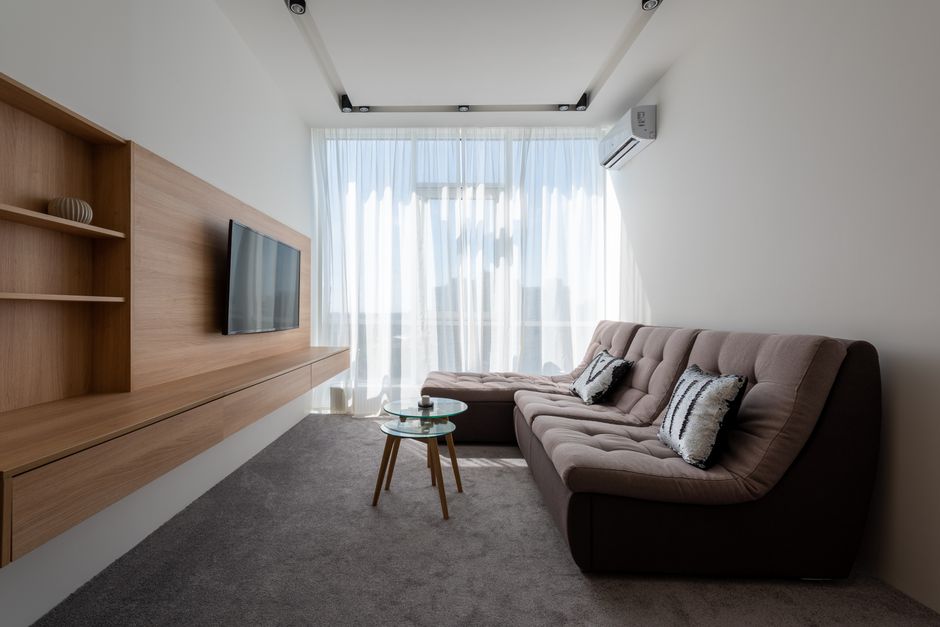
Best default for most households
Choose a seat height of 17–19 inches and an overall depth of 32–36 inches because this range supports normal sitting, keeps the visual mass under control, and works for more people than an ultra-low lounge sofa; a 17-inch seat suits relaxed rooms and taller users who like a lower profile, while an 18- or 19-inch seat makes daily standing easier for older adults, people with knee pain, and anyone who uses the sofa for reading rather than only for stretching out.
Why the shallowest option can fail
A 30-inch-deep sofa may save a few inches on the floor plan, but it can force your knees high, leave your back unsupported, and make the room feel like a waiting area, so a better small-room choice is often a slim-armed sofa with a normal 21-inch seat depth rather than a tiny sofa with oversized cushions that disappear under your legs.
How to match sofa dimensions to the way you sit
Start with posture, not style
Measure your favorite chair before you measure furniture online. Sit with your back against the support, place both feet on the floor, and measure from the back of your knees to the point where your lower back feels supported. Subtract about 2 inches for movement. That gives you a useful seat-depth target. If your result is 20 inches, a deep 25-inch seat will probably make you perch forward or add several cushions. If your result is 23 or 24 inches, a shallow apartment sofa may feel restrictive after an hour.
Seat height works the same way. Sit on a firm surface and measure from the floor to the underside of your knee. A sofa seat close to that height lets you plant your feet and rise without rocking forward. Soft cushions compress, so a listed 18-inch seat may behave like a 16-inch seat after you sit down. Ask about cushion firmness and test the sofa for at least ten minutes, not just the thirty seconds it takes to decide that the fabric looks good.
Use the room as a three-dimensional drawing
Mark the sofa footprint on the floor with painter’s tape, then add the arm width and the depth of any cushions that extend past the frame. Walk around the taped outline while carrying a laundry basket or opening the nearest cabinet. This catches problems that a floor plan misses. Check the sofa’s diagonal depth too: a 36-inch-wide doorway can still reject a sofa with a 40-inch diagonal measurement if the hallway turns immediately.
Pay attention to visual weight. A sofa on 7-inch legs shows more floor and can make a small room feel lighter, even when its actual depth is unchanged. Low block legs do the opposite. Neither choice fixes a bad layout, but the difference matters when the sofa occupies the longest wall. For a narrow room, slim arms, an exposed base, and a back cushion that stays inside the frame usually create more breathing room than a pale color alone.
Four small-room sofa choices worth comparing

Pick the model that matches your constraint
- Best modular choice: Burrow Nomad Loveseat. The listed price is about $1,379, with a 60-inch width, 35-inch overall depth, 33-inch height, 17-inch seat height, and 22-inch seat depth. Its modular construction makes it the strongest choice for apartments where the sofa may need to move later. The verdict: buy this when delivery access and future flexibility matter more than the lowest price.
- Best upright 60-inch option: West Elm Andes 60-inch sofa. In the 34-inch-depth version, it provides a 21-inch seat depth, an 18-inch seat height, and a 31-inch overall height. The 39-inch version keeps the same seat height but increases seat depth to 25 inches, so the 34-inch version is the clear pick for a small living room. Prices vary by fabric and sale period. Choose it for a cleaner sitting posture and thin visual profile.
- Best budget-friendly deep lounger: IKEA SÖDERHAMN. The listed price is $919, and the sofa measures 78 inches wide by 39 inches deep, with an 18 7/8-inch seat depth and a low 15 3/4-inch seat height. The verdict: choose it only when you have room for its deep footprint and prefer lounging; it is a poor fit for a narrow walkway or anyone who dislikes low seating.
- Best compact style reference: Article Sven 72-inch sofa. Its 72-inch width and mid-century frame suit a modest wall, but check the full depth, arm width, and delivery dimensions before ordering because the rounded arms can consume more visual and usable space than a flat-armed sofa. Pick it for style when your taped floor outline leaves a clear route; skip it if the room only works with a sofa under 34 inches deep.
When not to buy a sofa at all
If the only usable wall is shorter than 68 inches, a loveseat plus a movable chair may work better than forcing in a 72-inch sofa. If the sofa blocks a radiator, door swing, or the route to the kitchen, buy two compact chairs instead. More seats do not improve a room when nobody can move through it comfortably.
Small living room sofa questions answered

How much space should sit between a sofa and a coffee table?
Leave 16 to 18 inches from the front of the sofa cushion to the edge of the coffee table. Measure from the cushion, not the frame, because a loose cushion may extend several inches forward. If the room doubles as a walkway, push the table toward 18 inches or choose a narrower table with rounded corners.
Is a 16-inch seat height too low?
It is low for many people, but not automatically wrong. A 16-inch seat can feel comfortable for relaxed lounging, shorter adults, and rooms with a low visual profile. It becomes a mistake when the cushion is very soft, the user has trouble standing, or the sofa sits opposite a standard-height dining chair and makes the room feel uneven. Test the compressed height, not just the number on the product page.
What is the most common buying mistake?
People measure the wall and stop there. A sofa can fit the wall while blocking the door, crowding the coffee table, or failing at the building entrance. Tape the full footprint, measure the diagonal, and sit on a sofa with the same seat depth before paying. The tiny room from the opening does not need the shallowest sofa; it needs a sofa that keeps its walking lane while giving the people inside it proper support.