A family dining table faces spills, homework, hot plates, chair bumps, and daily cleaning. The material matters, but construction and finish quality often decide which table still looks good after five years.
Solid wood wins repairability; veneer wins value
For long-term family use, solid wood has the stronger repair case because a damaged surface can often be sanded and refinished. Veneer gives you a real wood surface at a lower weight and price, but deep scratches can expose the core below it.
Solid wood: repairable, but not indestructible
A solid wood top is made from wood throughout its thickness. Small scratches, cloudy finish patches, and shallow dents can often be corrected during a professional refinish. Wood also moves with humidity, so a solid table can develop hairline splits or seasonal gaps if the room swings between very dry and damp conditions.
Veneer: stable and attractive when the layer is thick
Veneer is a thin layer of real wood bonded to a stable core such as plywood, MDF, or particleboard. A quality veneer top resists seasonal movement better than a wide solid plank, but it cannot absorb repeated deep sanding. The IKEA MÖRBYLÅNGA, for example, uses oak veneer over a particleboard top, measures 86 5/8 by 39 3/8 inches, and was listed at $899.99 on the U.S. site checked in 2026.
| Factor | Solid wood | Veneer | Family-use verdict |
|---|---|---|---|
| Surface repairs | Can usually be sanded and refinished | Limited sanding depth | Solid wood |
| Humidity movement | More seasonal movement | More dimensionally stable | Veneer |
| Heat and spills | Depends heavily on finish | Depends heavily on finish | Tie |
| Weight | Often heavier | Often easier to move | Veneer |
| Typical cost | Higher for thick, well-built tops | Lower at similar sizes | Veneer |
My verdict: choose solid wood if you want a table to repair and keep for decades; choose thick veneer if price, stability, and easier handling matter more than deep refinishing.
Daily spills do not decide the winner
The verdict
Neither material automatically survives family life better. A well-sealed veneer table can handle years of meals, while a poorly finished solid wood table can stain after one forgotten glass of water. For daily use, finish quality matters more than the label on the material because the finish controls how quickly water, oil, tomato sauce, and heat reach the wood.
Why the gap appears
Solid wood absorbs and releases moisture through its exposed edges and end grain, which creates movement but also gives the material a path to recover during refinishing. Veneer stays flatter because its core is engineered for stability, yet a swollen edge or lifted sheet is difficult to repair invisibly. Use coasters, wipe standing water within a few minutes, and place hot cookware on a trivet; those three habits protect both materials better than paying extra for a thicker top.
The failures that shorten a table’s life
The biggest mistake is treating material as a durability guarantee. Tables fail through weak joints, trapped moisture, careless cleaning, and poor sizing long before the wood itself reaches the end of its useful life.
Failure one: a weak base under a good top
Rock the table from each corner before buying. If the frame flexes or the legs shift, tightening hardware may help once, but repeated movement can loosen threaded inserts and enlarge screw holes. A solid top attached to a weak base is still a poor family table.
Failure two: water trapped at the edge
Most visible veneer damage starts at an unprotected seam, corner, or underside edge. A wet placemat left overnight can swell the core, and a raised bubble rarely presses flat again. Solid wood avoids that exact core failure, but it can still darken around spills if the finish has worn thin.
Failure three: using the wrong cleaner
Wax sprays, abrasive powders, bleach, and strong degreasers can leave a dull or sticky surface. Clean with a barely damp cloth and a mild soap when needed, then dry the table. Never use a dining surface as a cutting board, ironing station, or workbench; knife marks and concentrated heat create damage no material choice can erase.
Buyers should also check the warranty exclusions. Many furniture warranties exclude commercial use, outdoor exposure, liquid damage, moving damage, and changes caused by normal wood movement. Those exclusions are not proof that a table is weak, but they define what the maker will refuse to repair.
Inspect the construction before you pay
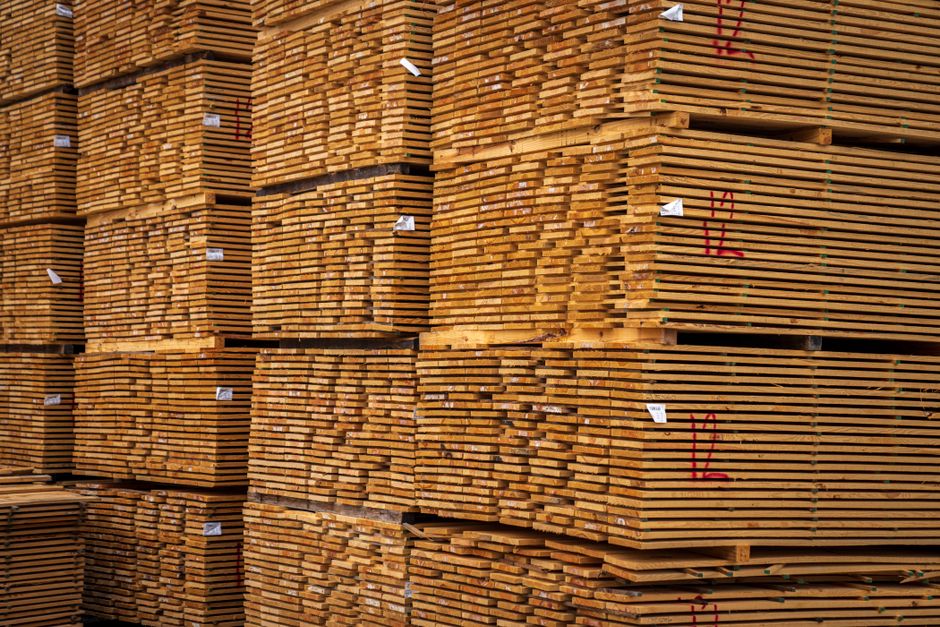
The fastest way to avoid a bad purchase is to inspect the table in a fixed order. Photos show style; the underside and joinery show risk.
Use this five-step inspection
- Measure the room. Leave at least 36 inches between the table edge and walls or major furniture. For a six-seat rectangular table, a 72- to 84-inch length usually gives adults usable elbow room.
- Check the top edge. Look for lifted veneer, open seams, rough end grain, or a finish that feels tacky. Run a fingertip along the corners where moisture damage begins.
- Test for movement. Push opposite corners and sit briefly in a chair. A table should not rock, twist, or shift when someone leans on it.
- Inspect the hardware. Confirm that bolts, corner blocks, stretchers, and leg attachments are accessible for tightening. Glued or hidden joints are not automatically stronger.
- Read the exclusions. Ask how spills, refinishing, relocation, and accidental damage are handled. Get multiple quotes for delivery and assembly if those charges change the total cost.
Why familiar ratings do not settle this purchase
AM Best ratings and J.D. Power scores apply to insurers and service categories, not wood furniture. Insurance premiums vary by state and individual factors, and state-specific coverage requirements cannot predict whether a tabletop will warp. For furniture, compare the warranty, return window, finish instructions, construction details, and delivery terms instead.
My family-use pick: solid wood with a durable finish
For a family that eats at the table every day, I would buy solid wood with a sealed finish and a repairable base. The higher upfront price earns its place when children scratch the surface, chairs hit the legs, or the table needs a new finish years later. I would not pay extra for solid wood with delicate raw edges, an unstable pedestal, or a finish the maker says must be treated like display furniture.
Best solid-wood profile
The West Elm Anton Solid Wood Dining Table is a useful benchmark because the collection lists 72-, 86-, and 120-inch sizes and a 2026 U.S. price range of $1,299 to $2,299. That size spread suits families who need either six seats or a larger table for gatherings. The Room & Board Ventura shows another solid-wood profile: an 84 by 42 by 29-inch table with a 1-inch top, seating for six, and a lacquer finish. For households planning to keep one table through several moves, the Ventura-style construction is my clear premium pick.
When veneer is the smarter purchase
Buy veneer when the table must stay flatter in a dry or humid home, when stairs make a heavy solid top impractical, or when the budget needs to cover chairs and lighting too. The MÖRBYLÅNGA is a strong value example because IKEA lists it as tested to ANSI/BIFMA standards, with a thick oak veneer surface and an 86 5/8-inch length. It is the better choice than a cheap solid table with loose joints or a thin, easily damaged finish.
The specific winner is clear: solid wood for repairability and long ownership, thick veneer for stable value. Construction quality decides the final purchase.
Questions buyers ask before choosing
Is veneer less durable than solid wood?
Not automatically. A thick veneer over a stable core can resist warping better than a poorly assembled solid table. Veneer loses when a scratch cuts through the wood layer or moisture reaches an exposed edge, while solid wood loses when movement, weak joinery, or a worn finish goes unchecked.
Can a veneer dining table be refinished?
Sometimes, but only lightly and with a professional approach. Confirm the veneer thickness before sanding. Aggressive refinishing can cut through the wood layer and reveal the core, so a damaged veneer table may need a replacement top rather than a full restoration.
What should a daily family buyer choose?
Choose solid wood with a stable base if the table will stay for ten years or more and the budget supports it. Choose thick veneer when you want a lower-cost table with less seasonal movement and accept that deep surface damage may not be repairable.
| Priority | Best choice | Reason |
|---|---|---|
| Repair scratches and keep the table for decades | Solid wood | More sanding and refinishing potential |
| Control cost and reduce seasonal movement | Thick veneer | Stable core and lower entry price |
| Protect against daily spills | Either with a durable finish | Finish and care matter most |
| Family-use recommendation | Solid wood with sealed finish | Best long-term repairability |