A bedroom assembled one piece at a time usually feels more personal than a matching suite. The trick is giving the bed, dresser, and nightstand enough in common to look related – and enough difference to avoid the furniture-showroom effect.
Warm wood is forgiving, but it is not neutral. Its grain, undertone, sheen, and visual weight all register at once. Put three substantial wooden pieces in a room and the result can become heavy even when every item is individually attractive. The answer is not to hunt for an exact finish match. It is to repeat a few quiet characteristics, then create deliberate pauses with fabric, paint, empty wall, and lighter surfaces.
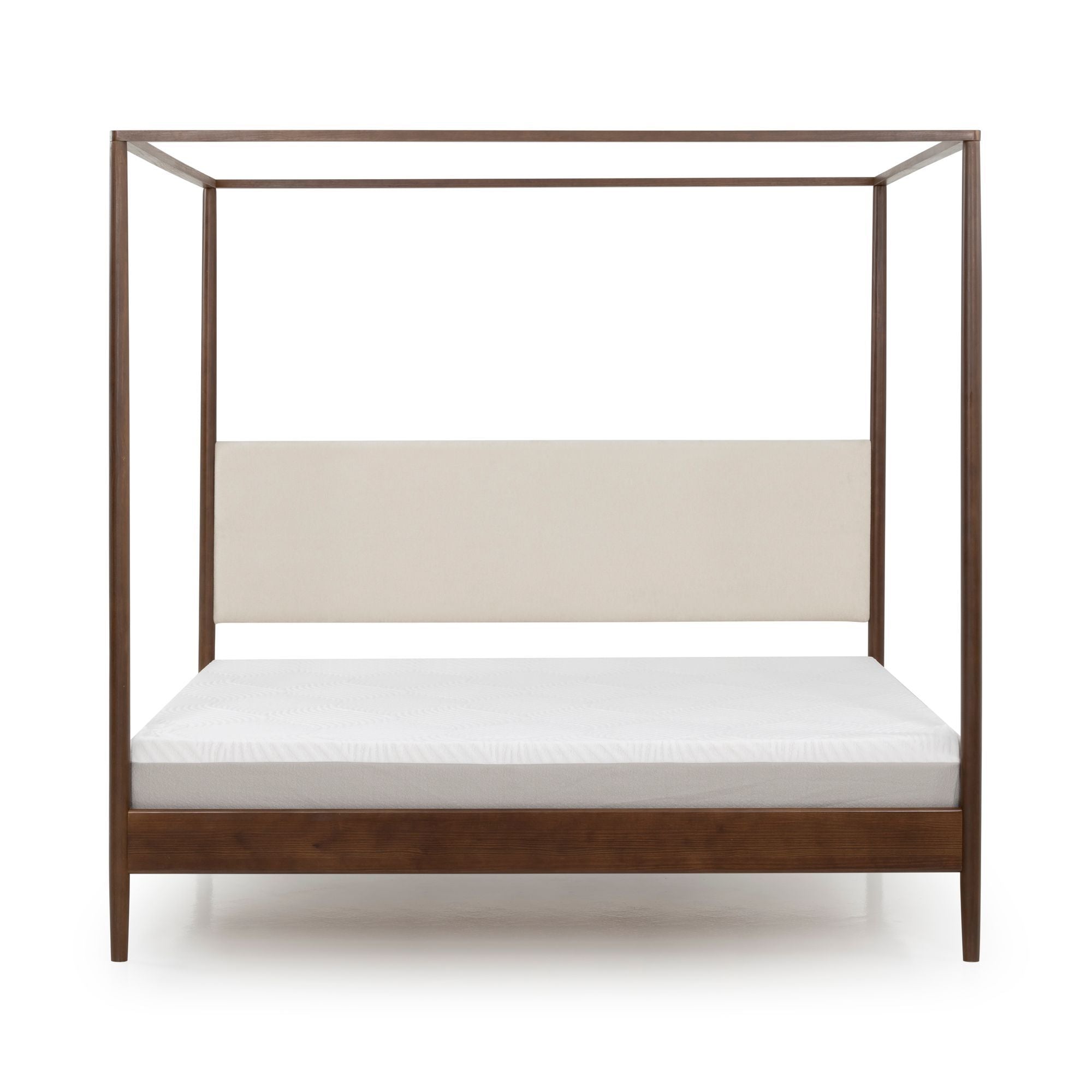
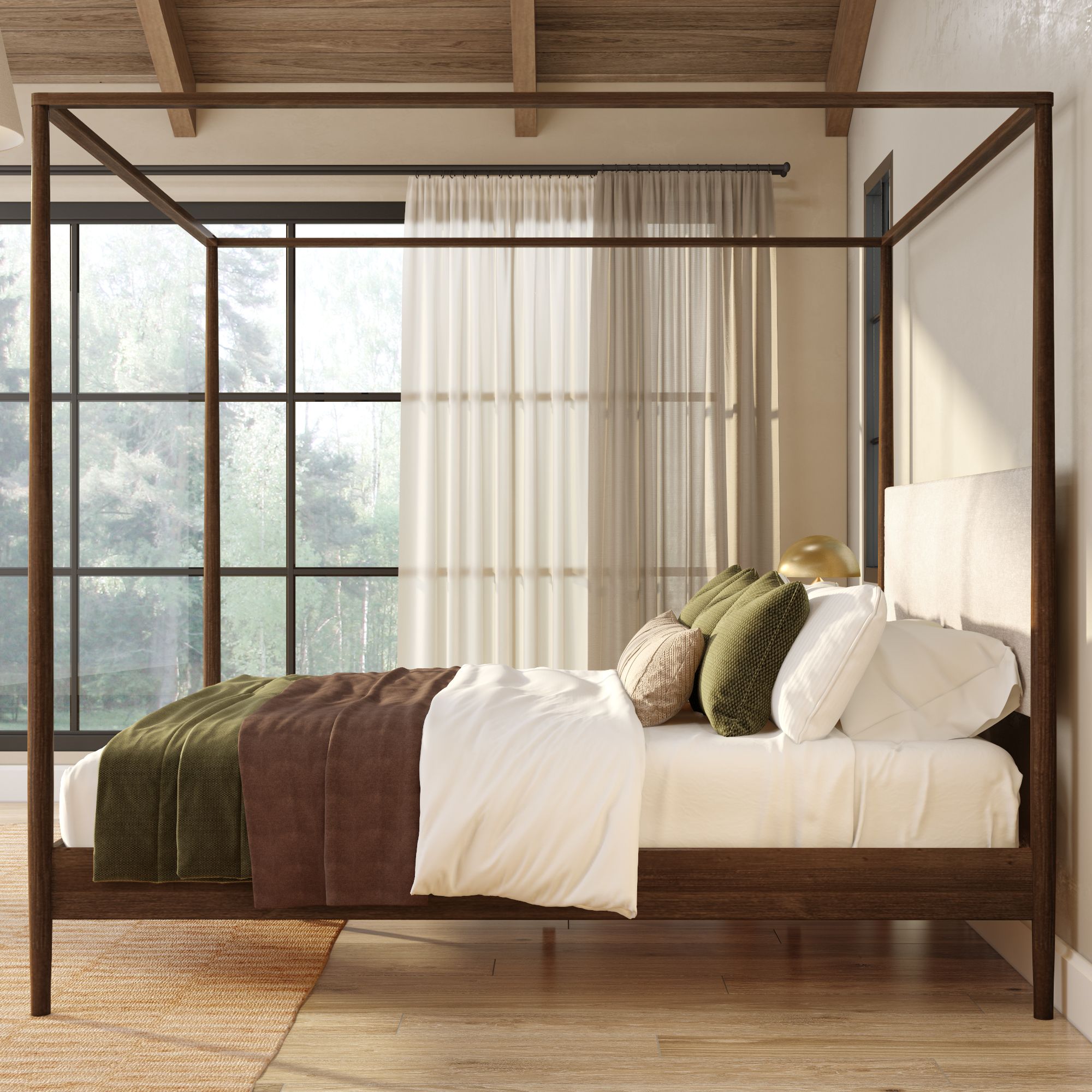
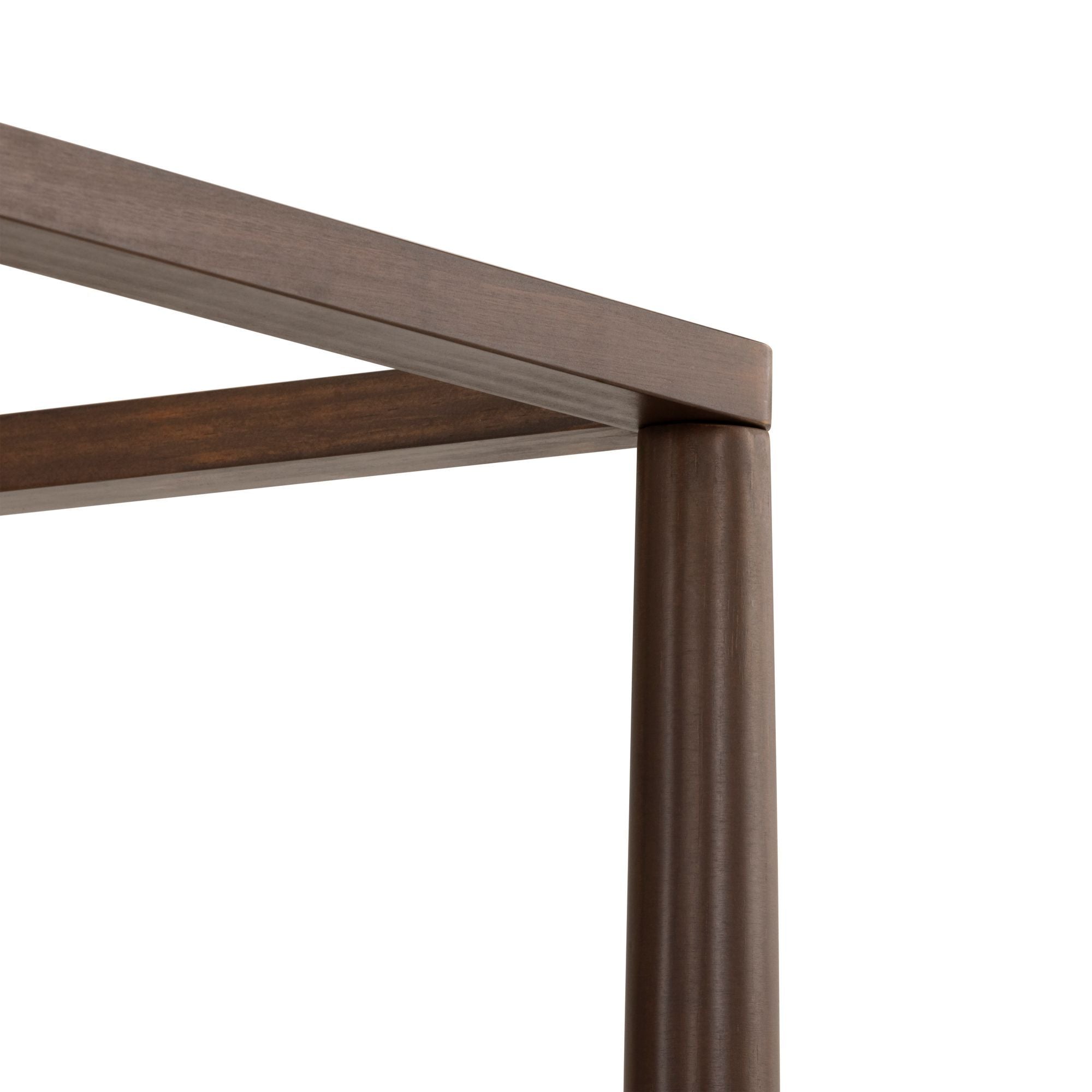
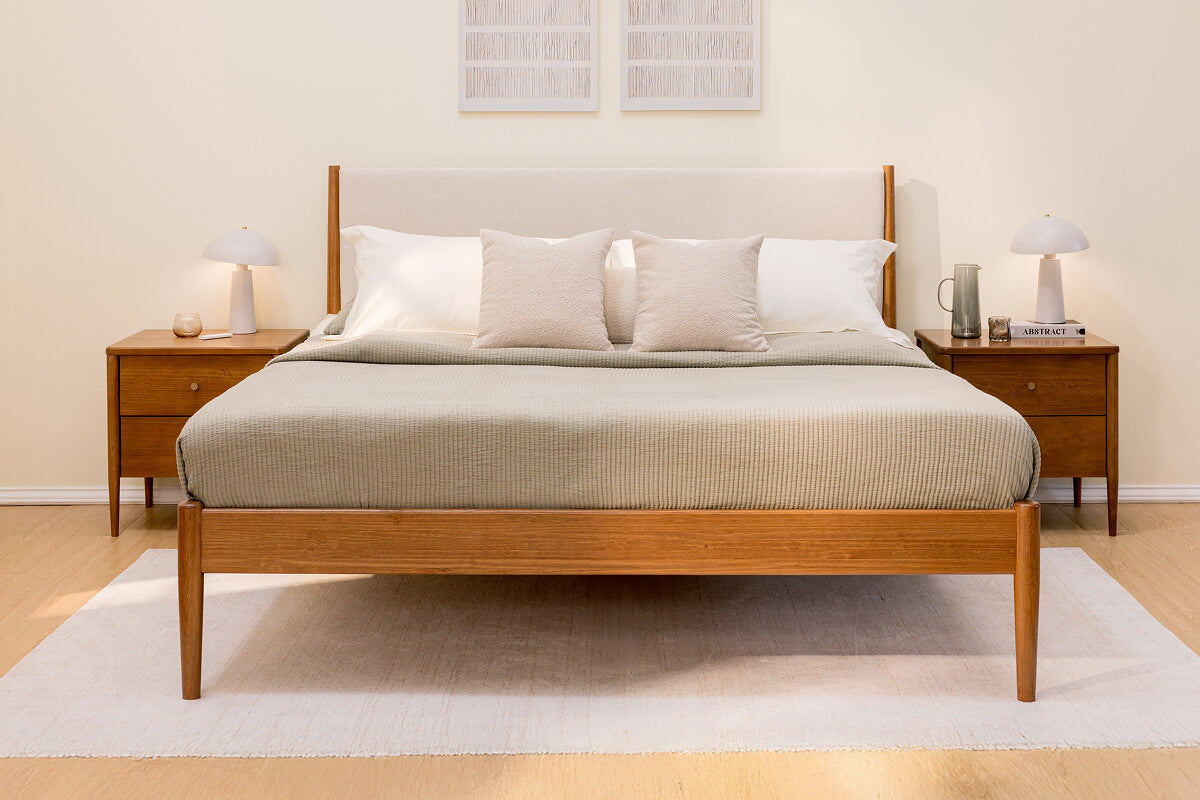
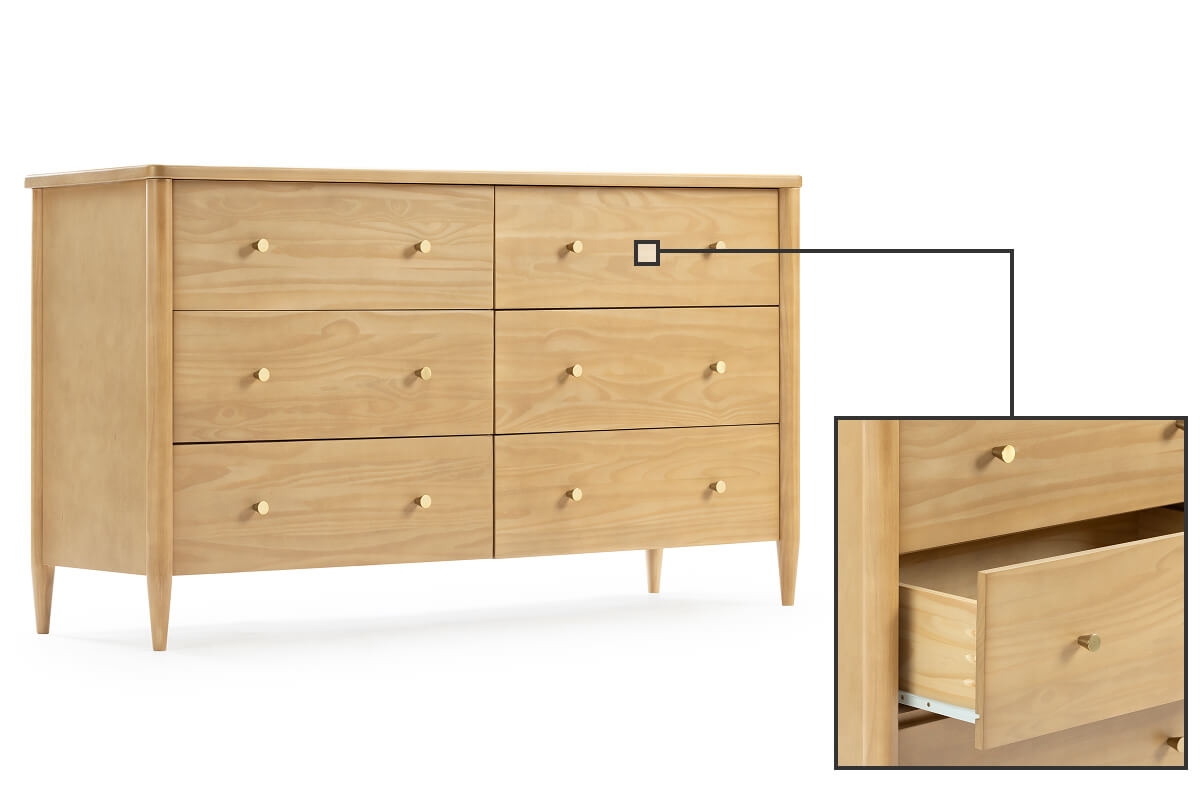
The Plank+Beam Harbor collection provides a useful visual reference: straight wood frames, tapered legs, upholstered panels, and small brass-colored details appear across different furniture types. Those shared notes show how continuity can work without making every outline identical.
Choose the room’s dominant wood job
Before matching anything, decide which piece should carry the visual weight. In most bedrooms that is the bed, because it occupies the largest area and sits near the center of the view. If the bed has a tall frame or dark finish, the dresser and nightstand can be quieter. If the bed is visually light, a larger dresser may become the anchor instead.
This hierarchy prevents a common mistake: three pieces all asking to be the focal point. A canopy bed, highboy dresser, and bulky two-drawer nightstand might each be practical, but together they create a row of monuments. Mix heights and volumes. Let one piece rise, one stretch horizontally, and one nearly disappear beside the mattress.
Use textiles as the transition material
Fabric sits directly between the bed frame and the rest of the room, which makes it the easiest place to manage contrast. An upholstered headboard introduces a soft, low-sheen surface inside a strong wood outline. Bedding can then pull the palette toward calm neutrals or toward deeper color without changing the furniture.
Start with the least flexible item. If the headboard fabric is a warm oatmeal, test wall paint and sheets beside it before choosing an icy white. Warm white, stone, flax, and muted green tend to bridge naturally between fabric and wood. Use brighter white in smaller doses if the room needs a cleaner edge.
Change the scale before changing the finish
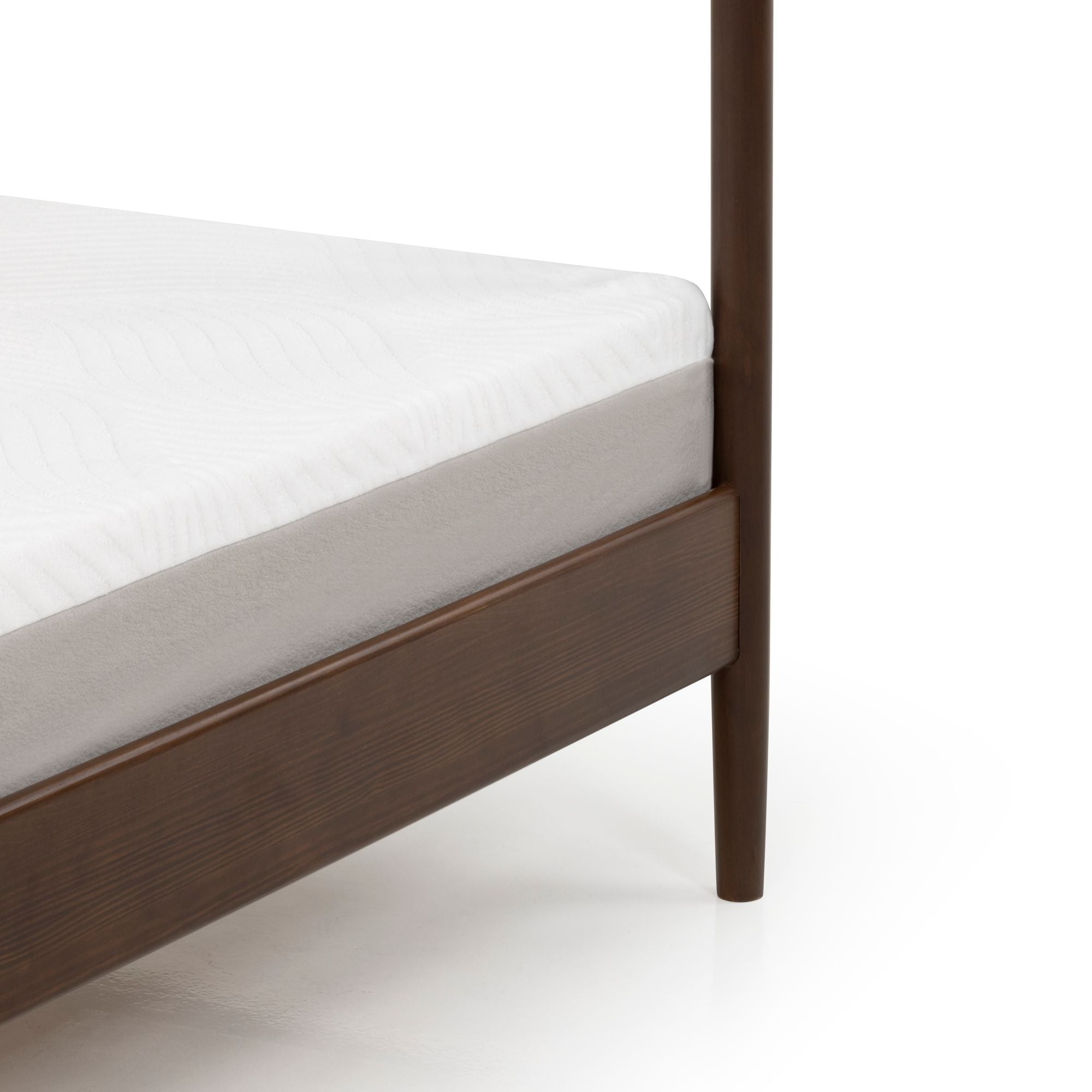
When a bedroom feels too matched, people often reach for a new color. Scale is usually the more effective adjustment. A broad bed benefits from a nightstand with visible floor beneath it. A tall dresser looks calmer beside a low bench or an open-legged chair. The pieces can share a finish and still feel varied because their masses are different.
Open floor beneath tapered legs also matters in a smaller room. It lets the eye read the wall and rug behind the furniture, which reduces apparent weight. Closed plinth bases and low blocky forms can be beautiful, but using them on every piece makes the perimeter feel crowded.
Build the dresser wall as a separate composition
A dresser does not need to match the bed to belong in the room. It needs the right proportion for its wall and a visual link back to the main furniture. Measure the blank wall after accounting for the door casing, switch plates, and the arc of any nearby door. Leave enough empty wall at each side that the dresser looks placed rather than wedged.
Then decide what happens above it. A mirror adds another large shape and is useful when the dresser doubles as a dressing station. Art keeps the zone quieter. Whichever you choose, avoid filling the surface from edge to edge. A lamp, a tray, and one taller object are usually enough. Empty wood is not wasted storage; it is what allows the piece to read as furniture instead of a shelf.
Let the nightstand be the bridge
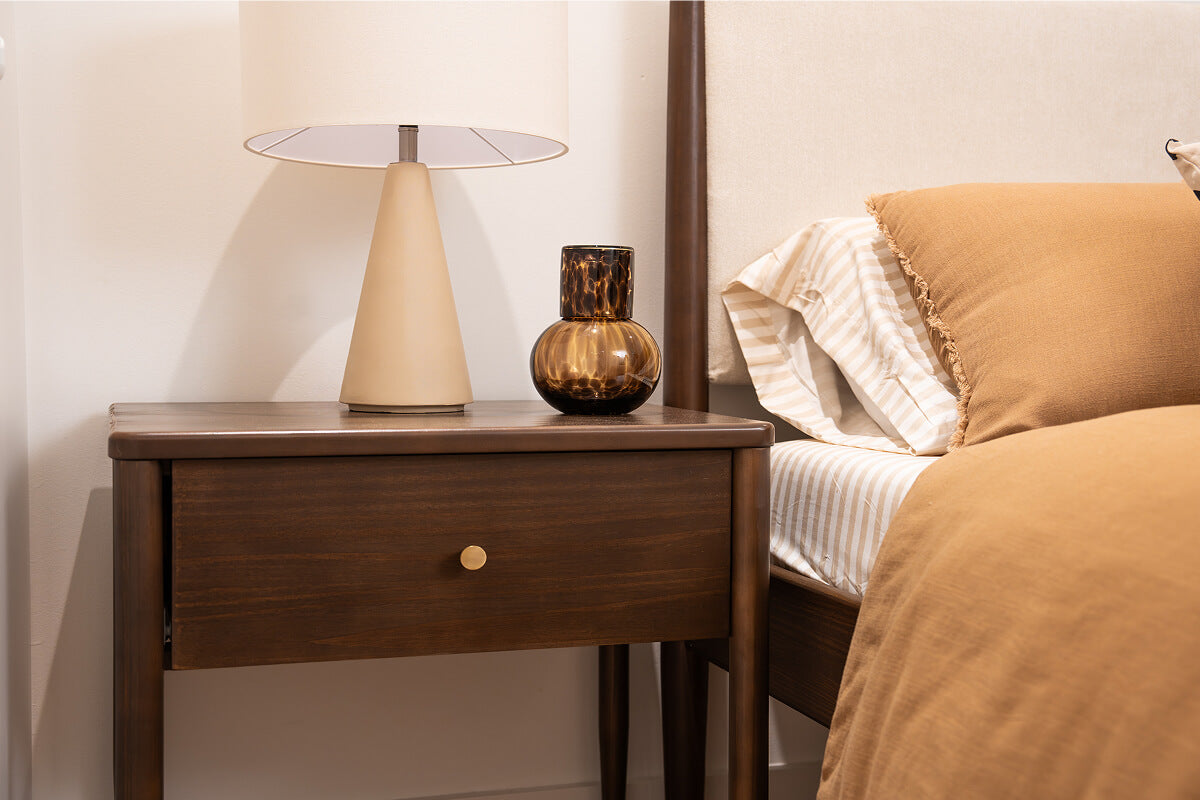
The smallest case piece is the safest place to connect unlike finishes. A nightstand can repeat the bed’s dark wood while the dresser stays lighter, or repeat the dresser’s brass detail beside a darker frame. Because it is partly covered by bedding and lamp light, the connection feels natural rather than over-planned.
Height is more important than an exact color match. The useful surface should sit close to the top of the mattress so a glass, phone, or book is easy to reach. Drawer handles must clear the bed frame, and a lamp should leave enough open surface for the objects that actually appear there at night.
A quick finish audit
Photograph the room in daylight, then convert the photo to black and white. If every furniture piece becomes the same dark block, the problem is value and scale rather than color. Introduce a lighter textile, more visible floor, or a piece with slimmer legs before replacing a finish.
Repeat the photograph at night. Warm bulbs can pull different woods closer together, while cool bulbs can make one piece suddenly look grey. Lighting belongs in the furniture plan.
A collected bedroom does not announce that every piece was chosen from the same page. It feels consistent because the decisions repeat: warm wood, tapered legs, quiet hardware, soft upholstery, and enough open space for each shape to register. Choose the bed for the room’s main gesture, the dresser for storage and wall proportion, and the nightstand as the small link between them.
Compare the pieces as a room, not as isolated products. Review the current wood finishes, dimensions, drawer layouts, and bedroom collections before deciding which piece should lead your scheme.