Children spend up to 60% of their waking hours on the floor. That is not a parenting insight — it is a design problem most homes overlook. Parents research strollers for weeks while the 25 square feet where a toddler learns the alphabet sits covered by whatever rug was cheap and available. This review treats floor coverings like any considered purchase: specific numbers, honest tradeoffs, a clear verdict for each use case. This is not interior design advice — your space, your call.
Why the Floor Is Your Kid’s Most Underrated Learning Surface
Think about how toddlers actually process the world. They crawl toward objects that interest them. They sit cross-legged and trace patterns with their fingers. They point at pictures from 18 inches away and ask “what’s that?” until you lose count. The floor is not just where they play — it is where they operate, at eye level with everything in it.
Pediatric occupational therapists have noted for decades that tactile floor surfaces — ones with visual patterns, color differentiation, and texture — support sensory processing in children under six. That is the developmental principle behind educational play mats. Not marketing copy.
What makes a rug educational versus just colorful
Most “educational” rugs are bright rugs with the alphabet printed on them. That is the baseline. Genuine educational value requires more:
- Multiple learning domains on one surface — letters, numbers, colors, shapes, or vocabulary combined
- Visual contrast high enough for young eyes to distinguish elements at sitting distance
- Print durability through repeated washing — faded letters are functionally useless
- Scale appropriate for toddler eye level when sitting or lying down (55″ square hits this; 36″ square does not)
Smaller play mats compress content to the point where a 3-year-old cannot read letter blocks from 18 inches away. If you are choosing between a 36″ rug and a 55″ rug at similar price points, the size difference matters more than almost any other spec.
When NOT to buy an educational rug
If your child is over 7, skip the alphabet rug. They have moved past letter-tracing development. Older kids need either a neutral surface for imaginative play or a themed rug — road maps, nature scenes — that supports different cognitive stages. An ABC rug for a second-grader is a product-to-need mismatch, full stop.
Also skip if you do not have a dedicated play corner. Educational rugs work best as spatial signals — “this is the learning space.” In a living room where the rug competes with foot traffic and furniture, that signal disappears.
The pile height question nobody answers directly
Short pile, under 0.4 inches, is better for kids’ play surfaces. Every time. Long-pile and shag rugs photograph well but are maintenance nightmares. Crumbs bury themselves. They are poor surfaces for puzzles, building blocks, or any activity requiring a stable flat base. Flat-weave or low-pile wins in every play space scenario without exception.
Kids’ Rug Buying Guide: What the Specs Actually Mean
Run any kids’ rug through these six filters before buying. A product that fails two or more will likely disappoint within a year.
| Feature | What to Look For | Red Flag |
|---|---|---|
| Washability | Machine washable, stated explicitly by the brand | “Spot clean only” — not practical with toddlers |
| Non-slip backing | Rubber or TPR grip layer confirmed on the underside | No mention of backing material anywhere in product info |
| Size | Minimum 48″x48″ for functional play use | Under 36″ — decorative, not functional |
| Material | Polypropylene or polyester (easy clean, dries fast) | Wool or natural fibers (absorb spills, harder to wash) |
| Print durability | Heat-set or solution-dyed colors confirmed | No information about colorfastness after washing |
| Pile height | Low-pile, under 0.4 inches | Shag or deep-pile construction |
The single most important feature is machine washability. A kids’ rug that cannot go in a washing machine is not a kids’ rug — it is a liability. Budget $30–$50 for washable rugs in the 48″–60″ range. Anything significantly cheaper usually means the non-slip backing deteriorates after three wash cycles.
Size math for play spaces
A 55″x55″ rug gives roughly 25 square feet of usable surface — enough for one child with room to spread out, or two toddlers playing side-by-side without crowding. In a dedicated 10’x10′ play corner, a 55″ rug leaves about 18 inches of clearance to the walls. That is the visual sweet spot: defined without being cramped.
Brand landscape in the $30–$60 range
At this price tier, the main options are UKISS, Ladole Rugs, and various Amazon-direct generics. UKISS leads on washability documentation and non-slip backing specifics. Ladole Rugs offers better aesthetic variety but typically smaller sizes at the same price. Generic brands are a gamble — some hold up fine, many have adhesive-based backings that peel within weeks of first washing. Pay attention to whether the brand explicitly states the backing construction. If they do not mention it, assume the worst.
The UKISS ABC Kids Rug: What $32.99 Gets You
At $32.99, the UKISS ABC Kids Rug is one of the better-value educational play mats in the 55″ size class. That is not vague praise — here is the breakdown.
The rug covers five learning domains simultaneously: alphabet (A–Z with animal illustrations), numbers (0–9), colors, seasons, and animal vocabulary. That content is typically split across two or three separate products. A set of Melissa & Doug ABC flash cards alone runs $12–$15. The Garland Rug Kids’ Confetti collection — a frequently compared alternative — runs 54″x78″ for $65–$80. You get a larger rectangular footprint there, but for a square play corner, the UKISS 55″x55″ is sufficient at half the price.
Washability in practice
With a 4.8/5 rating across 43 reviews, the UKISS ABC rug has a small but consistent feedback base. Recurring positives: colors hold after machine washing, non-slip backing stays intact through multiple cycles. The one recurring complaint in lower ratings: slight shedding in the first few washes. This is normal behavior for polypropylene construction and stops after the second or third wash. For home use with monthly washing, it is a non-issue. For weekly washing in a classroom or daycare setting, expect a 6–8 week break-in period.
Pricing has held steady at $32.99 for several months — a reasonable indicator it is not being discounted as clearance inventory. Current specs and size options are listed on the UKISS ABC Kids Rug product page if you want to confirm dimensions before ordering.
Bottom Line
For kids aged 1–6 in a dedicated learning corner or playroom, this rug delivers meaningful educational content at a price that does not require justification. It is not the most durable rug on the market — at $32.99, you are paying for the developmental years where alphabet and number content matters, not for a lifetime purchase. That is exactly the right frame for this product category.
Four Placement Rules That Improve Any Kids’ Rug Setup
Even a well-chosen rug underperforms if it is placed incorrectly. These are functional principles, not aesthetic opinions.
- Measure the zone before buying the rug. Decide where the play space lives, measure it, then buy accordingly. Buying a rug and hoping it fits is how you end up with a mat sliding under a bed frame or bunching at a doorway.
- Float the rug at least 18 inches from walls. Rugs pushed flush against walls read as filler. A floating rug in a corner reads as intentional. Same rug, completely different visual result.
- Add a rug pad even when the rug claims non-slip backing. Budget-rug non-slip backings degrade within 12–18 months of regular use. A $10–$15 rug pad from IKEA extends grip life by 2–3 years. Cheap insurance with real payoff.
- Do not layer educational rugs over thick carpet. On thick carpet, rug edges curl and corners create trip hazards. Educational play mats work best on hard flooring or low-pile carpet where the surface stays completely flat.
One maintenance point worth knowing: rotate the rug 180 degrees every three months if it sits in a sun-exposed area. UV exposure fades printed colors unevenly. Rotation evens out exposure and extends the print life — especially relevant for rugs with letter and number content where readability is the entire point.
Do Anti-Fatigue Mats Actually Work?
Ergonomics research confirms measurable reductions in lower-back discomfort after 60–90 minutes of continuous standing on cushioned surfaces versus hard floors. The mechanism is real: slight surface instability triggers micro-movements in leg muscles that improve circulation and reduce static joint load. But the benefit is threshold-dependent — if your kitchen sessions run under 30 minutes, a standard rubber-backed rug delivers nearly the same result at lower cost. The marketing oversells it, but the core claim holds for sustained standing scenarios.
Kitchen Mats: Specific Questions, Specific Answers
What size kitchen mat do you actually need?
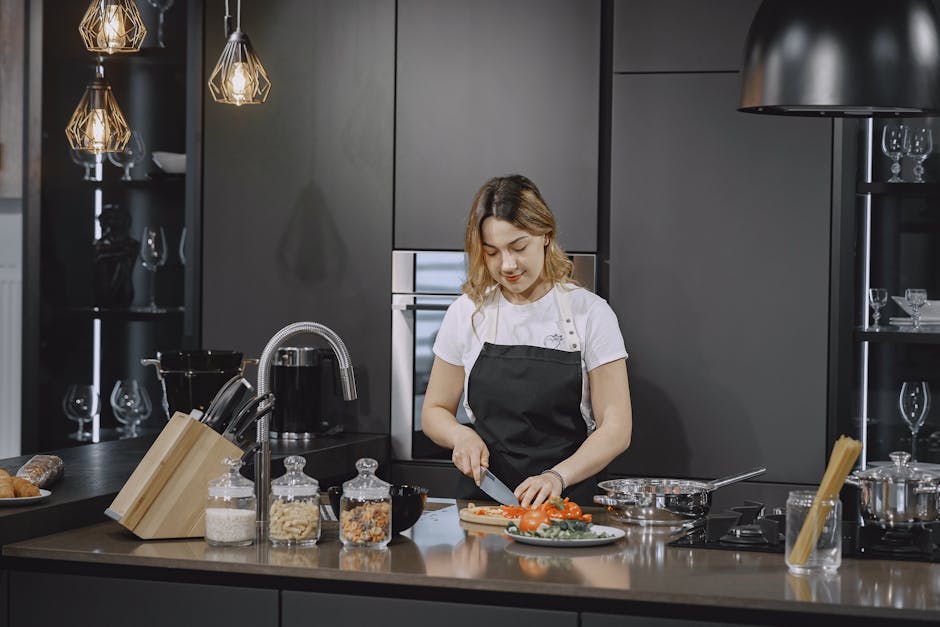
Kitchen mats need to cover two distinct high-traffic zones: in front of the sink and in front of the stove or prep counter. These zones are almost never the same spot, which is why two-piece kitchen mat sets exist — you get coverage for both without buying two separate products at full individual price. Standard kitchen mat widths run 17″–20″, narrow enough to fit without blocking base cabinet drawers. Lengths run 28″–60″ depending on the counter run. A 17.3″x28″ mat covers a single-sink station. A 17.3″x60″ mat covers a longer counter run or a double-sink setup. Buying the wrong length is the most common kitchen mat sizing error — measure your actual counter run before ordering.
Waterproof versus water-resistant: not the same thing
Water-resistant mats repel light splashes. Waterproof mats have a sealed backing that prevents moisture from reaching your floor. In kitchens, where spills are daily and steam from cooking is constant, waterproof backing is the correct specification. A water-resistant mat that lets moisture seep through creates mold risk under the mat — which is worse than having no mat at all.
The UKISS 2-piece kitchen mat set in grey (17.3″x28″ + 17.3″x60″, $32.99) carries a 4.6/5 rating across 80 reviews — a more statistically meaningful sample than most kitchen mat listings at this price range. Consistent positives: waterproof performance holds through repeated exposure, cushioning remains functional after months of daily use. The most cited complaint: the grey reads slightly darker in person than in product photography. That is a lighting issue in the listing photos, not a functional problem.
When the two-piece format does not fit your kitchen
If your kitchen has an island layout where the cooking and sink zones are separated by more than 6 feet, two shorter mats will not bridge the gap effectively. A single long runner — 60″–96″ — placed along the main work wall is the better solution in that layout. The UKISS two-piece configuration works best in L-shaped or straight kitchens where both mats sit within the same visual zone and within comfortable reach of each other.
How does UKISS compare to Gorilla Grip and Sky Solutions?
Gorilla Grip kitchen mats ($25–$40 per single piece) have a stronger brand reputation for non-slip performance specifically, built on a significantly larger review base. Sky Solutions anti-fatigue mats run $35–$55 per single piece and offer better foam density documentation if you want to compare cushioning specs precisely. For a two-piece set under $35 total, the UKISS set has few direct competitors — most comparable two-piece kitchen mat sets run $45–$60. On a per-mat basis, the value math strongly favors the UKISS configuration for standard L-shaped or galley kitchens.
Rug and Mat Care: The Mistakes That Shorten Their Life
Washing errors that destroy backings
Hot water is the primary enemy of synthetic rug backings. Polypropylene and rubber-backed rugs require cold water on a gentle cycle. Hot water degrades the latex or rubber adhesive that bonds the backing to the rug face, causing separation, shedding, and structural failure over time. This is the root cause behind the reputation some “machine washable” rugs develop for falling apart. The rug is washable — just not in hot water at high spin speeds. Read the care label and follow it exactly.
Air dry flat when possible. If a dryer is necessary, use the lowest heat setting and remove while still slightly damp. High dryer heat causes the same backing degradation as a hot wash cycle.
Extending kitchen mat life beyond the first year
Kitchen mats accumulate grease on their surface over time. Even fully waterproof mats develop a surface coating that standard laundry detergent does not fully cut. Every 2–3 months, apply a tablespoon of dish soap directly to the mat surface before washing. Dish soap is formulated to cut grease in a way that standard detergent is not — this one step meaningfully extends mat surface cleanliness.
Check the backing every six months. If the non-slip material shows flaking or separation from the face, the mat has reached end-of-life. Replace it. A mat that slides is a fall hazard regardless of how good the surface still looks.
For both play rugs and kitchen mats: vacuum before washing every time. Washing a rug loaded with crumbs and debris reduces cleaning effectiveness and strains the machine filter. A 60-second vacuum pass before each wash costs nothing and extends mat life measurably.
The same parent who started this read wondering whether a $33 kids’ rug could genuinely support a toddler’s learning environment now has a specific answer: yes, if the rug matches the developmental stage, sits on a flat surface, and gets washed in cold water. The kitchen mat question that follows most households into adulthood has an equally direct answer — your back hurts because you stood on hard tile for 90 minutes, not because cushioned mat technology is a myth. Both problems have real, sub-$35 solutions that perform well beyond their price point, provided you do not ruin them in the dryer.