When a Regular Collar Becomes a Safety Risk
Here is a scenario that plays out in parks and on sidewalks more than most dog owners expect: you are walking your dog near a busy intersection when a truck backfires, another dog lunges from across the street, or a child sprints past. Your dog panics. Instead of freezing, the dog drops weight, backs up hard, and within two seconds the collar slips right over the head.
Dog loose. Leash dangling. Depending on where you are, that scenario ends badly.
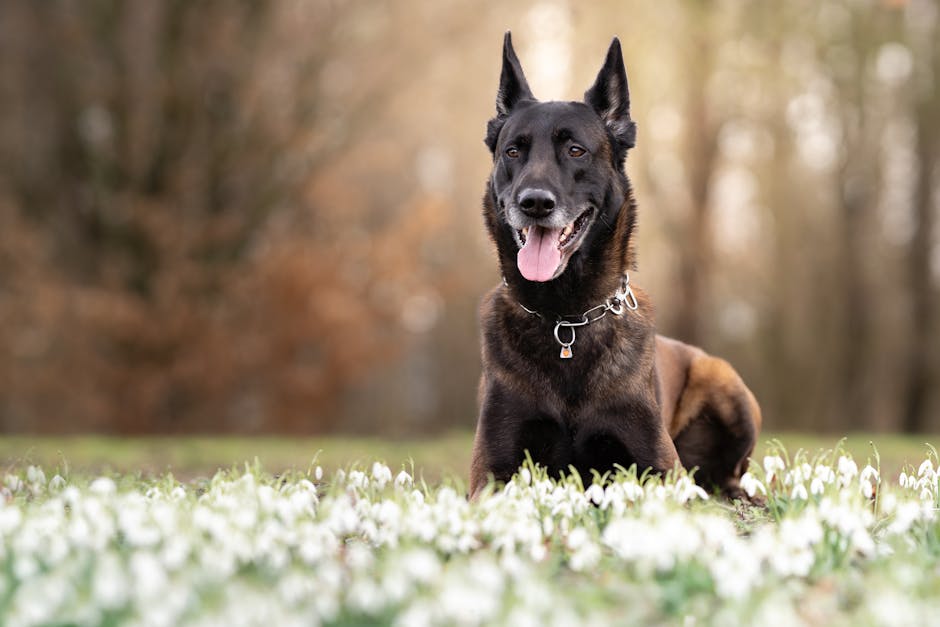
This is not limited to sighthound breeds, though greyhounds, whippets, and Italian greyhounds are the classic example — their necks are literally wider than their skulls, which makes any standard flat collar escapable by physical design. The same failure mode shows up in anxious rescues, dogs with thick neck fur that compresses under pressure, and any dog that has learned backing up is a reliable exit strategy.
The flat collar does two things well: it holds ID tags and it looks tidy. It is not a containment device. A determined dog with the right build can exit a properly fitted flat collar without much effort. This is a mechanical fact, not a training failure on the owner’s part.
The fix is not complicated and does not require spending $40 on a specialty harness. A martingale collar — a design standard in dog training and greyhound rescue for decades — addresses the escape problem through simple mechanical logic at a price point around $10. But not all martingale collars are built the same, and buying the wrong one creates a new set of problems that are worth understanding before you add one to your cart.
Understanding the mechanics before buying matters because a martingale fitted incorrectly is functionally identical to a flat collar — the design only prevents escape when sized to spec, and most buyers skip that step entirely.
How a Martingale Collar Actually Works
The design has two loops instead of one. The large loop sits around the dog’s neck, loose at rest. A smaller loop — the control loop — threads through two metal rings on the large loop and connects to the leash clip.
When the dog pulls forward or tries to back out, leash tension pulls the control loop tighter. That draws the two metal rings on the large loop toward each other, which tightens the large loop around the neck. The critical detail: those two rings touching is the mechanical hard stop. The collar cannot tighten beyond that point. This is what separates a martingale from a slip collar or a traditional choke chain.
Why This Is Not a Choke Chain
A choke chain has no stopping point. The chain tightens as long as force is applied, with no physical limit. That is why veterinary organizations and most certified trainers have moved away from them. The risks are documented in peer-reviewed veterinary literature: cervical vertebrae subluxation, nerve damage in the neck, and tracheal injury in dogs that lunge repeatedly against the chain. These are not hypothetical concerns — they show up in clinical practice.
A martingale sized correctly tightens only to the point where the neck is snug. Pressure is light, brief, and self-limiting. That is the reason shelters and rescue organizations — particularly greyhound rescues, which deal with escape artists as their entire operating population — standardized on martingales rather than flat collars or slip leads decades ago.
The Leash Feedback That Supports Training
The gentle tightening under tension gives the dog tactile feedback. It does not hurt. It communicates. For dogs in early leash training, this feedback interrupts the pull-and-ignore pattern that develops when a flat collar provides zero information regardless of leash tension.
The Association of Professional Dog Trainers (APDT) includes martingale collars among recommended equipment for loose-leash work specifically because the design applies a brief, gentle correction that releases the instant the dog reduces tension. The collar naturally rewards a slack leash the same way it responds to a tight one. It is not a replacement for proper loose-leash training, but it supports it more effectively than equipment that provides no feedback at all.
The One Hard Limitation You Cannot Ignore
Martingale collars must not be worn unsupervised. The dangling control loop catches on crate bars, fence hardware, door hinges, and furniture. Dogs have been seriously injured — and in documented cases killed — when a loose martingale caught on something and tightened as the dog struggled to free itself. This collar is for walks. It comes off when the walk ends. Non-negotiable.
Getting the Fit Right: Sizing and the Two-Finger Rule
Sizing by weight or breed label is how most buyers get this wrong. A 60-pound Labrador and a 60-pound Greyhound can differ by four or more inches in neck circumference. Always measure the actual neck with a flexible tape measure at the widest point — typically mid-neck — before ordering.
Your collar’s fully-tightened limit should sit 1.5 to 2 inches larger than that measurement. When fully loose, the collar should have 3 to 4 inches of additional slack so it can be slipped over the head easily. If you are between sizes, always size up and adjust down — a collar that is slightly large can be tightened to spec, while a collar that is too small cannot accommodate the dog’s actual neck at all.
| Neck Circumference | Collar Size | Typical Breeds |
|---|---|---|
| 10–12 inches | Small (S) | Chihuahua, Toy Poodle, Miniature Pinscher |
| 12–16 inches | Medium (M) | Beagle, Cocker Spaniel, Shiba Inu, Whippet |
| 16–20 inches | Large (L) | Labrador, German Shepherd, Boxer, Greyhound |
| 20–24 inches | Extra Large (XL) | Great Dane, Mastiff, Saint Bernard |
The Two-Finger Test
After putting the collar on your dog, pull the control loop gently until the martingale reaches maximum tightness. At that point, try to slip two fingers underneath the fabric at the front of the neck. Two fingers fit snugly: correct. Three fingers fit easily: too loose, the dog can still back out. One finger barely fits: too tight, causing discomfort and potential airway pressure. This test takes five seconds. Shelters run it before every adoption. It is the most reliable field check available and does not require measuring tape once you have set the collar correctly for your specific dog. Nylon collars stretch slightly with use — recheck the fit monthly.
Martingale vs. Flat Collar vs. Harness: A Straight Comparison
| Collar Type | Escape Prevention | Neck Pressure | Best Use Case | Skip If |
|---|---|---|---|---|
| Flat Collar | Poor | None (fixed width) | ID tags, casual supervised wear | Dog has escaped before |
| Martingale | Strong | Low, mechanically limited | Walks, training, sighthounds | Dog worn unsupervised |
| Choke or Slip Chain | Strong | High, no limit | Not recommended | Nearly all situations |
| Front-Clip Harness | Strong | None on neck | Heavy pullers, brachycephalic breeds | Budget under $20 |
| Back-Clip Harness | Moderate | None on neck | Small dogs, gentle walkers | Escape-artist dogs |
Front-clip harnesses like the Ruffwear Front Range ($44.95), PetSafe Easy Walk ($24.99), and Blue-9 Balance Harness ($49.99) outperform martingales for dogs with respiratory issues, chronic pullers, or brachycephalic breeds — bulldogs, French bulldogs, pugs — where any neck pressure adds risk on top of existing airway compromise. For the average adult dog on a standard walk with moderate leash behavior, the martingale handles it at a fraction of the cost.
Bottom Line: Flat collars for ID tags and casual wear. Martingales for escape prevention and training walks. Front-clip harnesses for pullers and airway-sensitive breeds. These tools solve different problems — picking the wrong one for the situation is the actual mistake.
Three Mistakes That Guarantee Collar Failure
- Sizing by breed chart instead of measuring the neck. Breed size guides are averages. Individual dogs within any breed vary significantly, and mixed breeds especially. Measure the actual neck, add 1.5 to 2 inches for the tightened limit, do the two-finger test after putting it on. A collar that passes on your specific dog is worth more than any chart recommendation. This step takes under three minutes and eliminates the most common failure mode.
- Leaving the martingale on between walks. The control loop catches on things — crate bars, fence latches, door hardware, the leg of a chair, another dog’s tooth during play. Experienced dog owners use a flat collar for around-the-house wear and ID tag purposes, switching to the martingale only for active supervised walking. Two collars, different jobs, zero overlap. This is not overthinking it — this is standard practice in rescue and shelter environments for good reason.
- Trusting cheap hardware. The metal rings where the control loop attaches to the large loop are the structural weak point of every martingale collar. Stamped sheet metal rings deform under repeated stress. A medium-sized dog hitting the end of a leash generates 20 to 50 pounds of force depending on speed and mass. Welded or cast rings hold that load. Thin stamped rings flatten and eventually fail. You can get cast hardware at the $9.99 price point — it exists — but the $3 and $4 listings on discount marketplaces almost universally use stamped rings. The difference is visible: cast rings have rounded cross-sections; stamped rings look flat and thin.
A fourth failure mode specific to breed type: using any neck collar on brachycephalic dogs. English bulldogs, French bulldogs, pugs, and Boston terriers have compressed airways as a baseline anatomical condition. Any neck pressure — even the brief, limited kind a martingale provides — adds risk that is not present in structurally normal dogs. Every walk for these breeds should use a harness, full stop.
Two Martingale Collars Worth the $9.99
Most of what is available under $15 is interchangeable nylon with mediocre stamped hardware. These two are worth separating from the generic listings.
Leopard Pattern, Large — The Primary Recommendation
The heavy-duty leopard print martingale for large dogs is priced at $9.99 and carries 242 reviews at a 4.5 out of 5 average. That review volume matters — products under 50 reviews with high ratings are easy to inflate through early purchaser incentives. 242 reviews at 4.5 is a harder number to fake and reflects sustained real-world performance.
The nylon webbing uses reinforced stitching at the attachment rings, which are the failure point on cheaper collars. The adjustment range covers the full large-size category with room to fine-tune, which matters because two dogs both labeled “large” can differ by several inches in actual neck circumference. Heavy-duty nylon holds up to regular outdoor use, UV exposure, and repeated washing better than thinner webbing alternatives at the same price.
The leopard print is a design choice — some owners care about this, most don’t. The functional specs are what make it a clear buy. For any large-breed dog that has slipped a flat collar even once, this collar at this price solves the problem directly.
Pink Daisy, Medium — Best for Collar-Sensitive Dogs
The pink daisy martingale with quick-release buckle at $9.99 adds a feature the first collar does not have: a side-release clasp that lets you fasten and remove the collar without slipping it over the dog’s head.
For rescue dogs, dogs that are face-sensitive, or high-anxiety dogs that stress during collar removal, the buckle removes a daily friction point that can otherwise erode trust during handling. The clasp holds under leash pressure — which is not guaranteed on all quick-release martingales, where the buckle itself can become the weak point under sudden load. At 4.6 out of 5 across 89 reviews, the rating holds at a sample size that is meaningful. Covers medium neck sizes, appropriate for dogs in the Beagle-to-Staffordshire range. Choose between the two based on your dog’s actual neck measurement and whether quick-release addresses a real need — not based on pattern preference.
This article reflects product specifications and user review data. It is not veterinary advice. For dogs with specific health conditions or training challenges, consult a veterinarian or certified professional trainer before selecting training equipment.
The Bottom Line
A martingale collar is a mechanical solution to a mechanical problem. If a flat collar can be backed out of, a correctly sized martingale cannot — the physics prevents it. The design has a multi-decade track record in professional training and greyhound rescue precisely because it works at the fundamental level, not because of marketing.
For large-breed dogs that have ever slipped a flat collar, the leopard print heavy-duty martingale at $9.99 is the most direct, cost-effective fix available — size it with the two-finger rule, use it only on walks, and the problem is solved.