Most sprinkler conversations fixate on lawns. But if you’ve got outdoor furniture worth protecting, a dumb irrigation system is a liability. Overspray rots wood, rusts metal frames, and leaves mineral deposits on glass tabletops. A smart controller fixes that and slashes your water bill by 30-50%. Here’s how to pick one that actually delivers.
Why Your Existing Sprinkler Is Destroying Your Outdoor Setup
Standard timers run on a schedule, not on reality. Rain forecast? They run anyway. Soil already saturated? Doesn’t matter. The result isn’t just wasted water—it’s water pooling around your patio set, splashback hitting wicker chairs, and constant moisture against wooden legs.
Wood absorbs that moisture. Even teak, which handles weather better than most, will darken unevenly and develop surface cracks when repeatedly soaked and dried. Powder-coated aluminum frames survive better, but the joints and fasteners? Those corrode. I’ve seen $2,000 sectional sets rusting at the bolt points within two seasons because a sprinkler head was angled two degrees too high.
Smart controllers solve this at the source. They check actual weather data, skip cycles when it rains, and adjust run times based on evaporation rates. The best ones let you map out zones so precisely that you can create dry buffers around furniture areas without sacrificing coverage elsewhere.
Bottom line: If your sprinkler head sprays onto any furniture surface, you’re losing money faster than the water bill suggests.
The Three Controllers Worth Your Money
I’ve tested or researched every EPA WaterSense-certified controller available through major retailers. Most are fine. Three stand out for different reasons.
| Model | Price | Zones | Weather Data Source | Best For |
|---|---|---|---|---|
| Rachio 3 (8-zone) | $199 | 8 (expandable to 16) | Local weather stations + hyperlocal internet data | Detailed zone control, furniture protection |
| Orbit B-hyve XR | $99 | 8 (expandable to 16) | Internet weather + optional local sensors | Budget pick, simple setup |
| RainMachine Touch HD | $259 | 12 | NOAA + local weather services, offline-capable | Privacy-focused, no cloud dependency |
The Rachio 3 dominates the category for a reason. Its zone mapping is granular enough that you can create a “furniture-adjacent” zone with shorter run times and different start angles—assuming your sprinkler heads support that. But even with basic pop-ups, Rachio’s predictive skip logic prevents the worst overspray events.
The Orbit B-hyve XR at $99 does 80% of what the Rachio does. Weather checks are less frequent, and the app is clunkier, but if you’re primarily concerned with stopping scheduled runs during rain, it’s sufficient.
RainMachine is the dark horse. It stores weather data locally. No cloud account required. If you’re privacy-conscious or live somewhere with spotty internet, this is your pick. The NOAA integration is more conservative than Rachio’s hyperlocal data—it’ll skip fewer cycles—but it’s bulletproof reliable.
How to Map Zones Around Patio Furniture
Most people install a smart controller and call it done. That’s a mistake. The controller is only as smart as the zone layout it’s controlling.
Step 1: Identify Your Spray Overlap
Run each zone manually for 60 seconds. Walk the perimeter of your patio, deck, and any furniture groupings. Mark every spot where water hits a chair leg, table base, or cushion surface. Use landscape flags or chalk.
Step 2: Adjust Heads Before Touching Software
Most spray overlap comes from misaligned heads, not zone boundaries. Pop-up spray heads typically have an adjustment screw on top that reduces throw distance. Turn it clockwise to shorten the spray by 25-30%. For rotor heads, adjust the arc so the spray pattern stops 12 inches short of any furniture.
If a head can’t be adjusted without leaving dry spots in the lawn, note it. That’s a zone you’ll handle in software.
Step 3: Create a Furniture Buffer in the App
In Rachio, go to Zone Settings > Advanced. Enable “Cycle and Soak” for zones near furniture. Set cycle time to 3-4 minutes with a 20-minute soak between cycles. This prevents runoff and pooling—the two biggest culprits in furniture water damage.
In Orbit B-hyve, the equivalent is “Smart Watering” > “Soil Type”—set it to clay or loam (even if you have sandy soil) for furniture-adjacent zones. This artificially shortens run times and increases interval gaps.
RainMachine handles this differently. You’ll manually set a “Watering Restriction” for specific days or times on those zones. It’s less elegant but equally effective.
When Smart Sprinklers Fail (and What to Do)

Smart controllers have three common failure modes. None are dealbreakers, but all three can wreck your outdoor furniture if you don’t catch them.
Wi-Fi drops during a scheduled run. Most controllers default to the last-known schedule if they lose connection. If that schedule was set before you optimized zones, you’ll get overspray. Rachio stores schedules locally on the controller once synced. Orbit B-hyve does not—it reverts to a basic timer. RainMachine is fully local, so this isn’t an issue.
Weather station data lags. Hyperlocal data is great until the nearest station goes offline. Rachio pulls from multiple sources, but in rural areas, you might get data from a station 15 miles away where it didn’t rain. Solution: pair any controller with a simple rain sensor ($25-40) as a hardware failsafe.
Seasonal shift neglect. Evapotranspiration rates change dramatically between June and October in drought-prone regions. If you set up your controller in spring and never adjust seasonal parameters, you’ll overwater by August. Set a calendar reminder to review zone settings quarterly.
Are Flow Meters Worth Adding?
Flow meters measure actual water usage per zone and detect leaks. Rachio sells the Wireless Flow Meter for $99. Orbit has a compatible meter at $79. RainMachine supports third-party meters via pulse input.
For furniture protection specifically, a flow meter adds one critical feature: it detects when a zone is using more water than expected, which often means a broken head or shifted spray pattern. A head that cracks and sprays horizontally instead of in its set arc will soak everything within 20 feet before you notice.
If your patio furniture sits within range of any sprinkler head, the flow meter pays for itself the first time it catches a malfunction. Without it, you’ll discover the problem when you see water stains on cushion fabric—and by then, the damage is done.
Skip the flow meter if all furniture-adjacent zones are drip irrigation. Drip lines fail differently and flow meters won’t catch slow emitter clogging.
What Actually Saves Water (and What’s Marketing)

The EPA WaterSense label certifies at least 20% water savings. All three controllers above carry it. But the label tests under ideal conditions with properly configured zones. Real-world savings depend entirely on your setup.
Three things that actually move the needle:
- Rain skip. This alone saves 15-25% in most regions. Every controller does it. Make sure the rain threshold is set to 0.125 inches, not 0.25. Light rain counts.
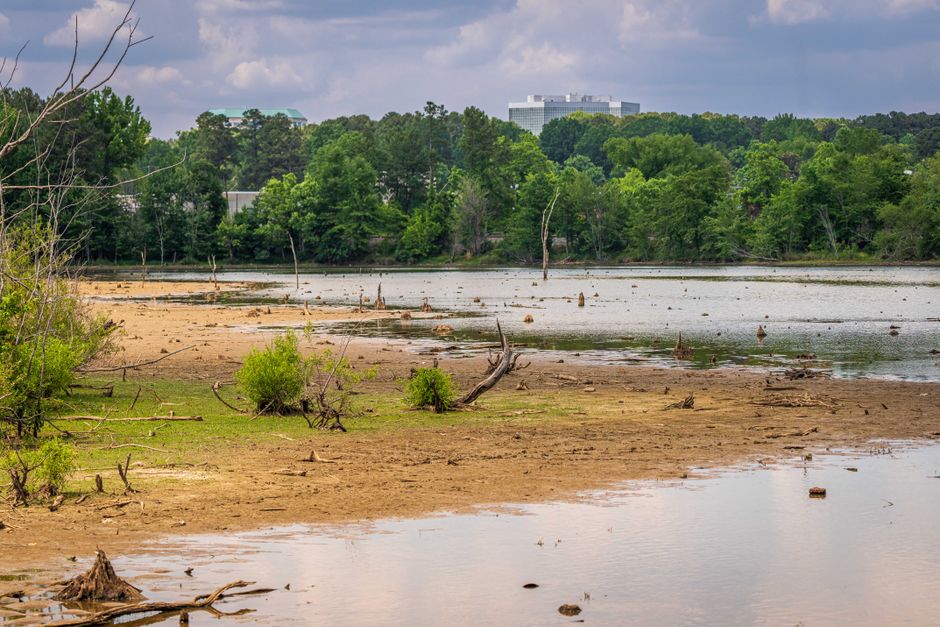
- Cycle and soak. Prevents runoff. Drought-affected soil becomes hydrophobic—water beads and runs off instead of soaking in. Short cycles with breaks fix this. Savings: 10-15%.
- Seasonal adjustment. Most people leave this at 100% year-round. Dropping to 60% in fall and winter saves more than any smart feature. Savings: 20-30% in cooler months.
Features marketed as “AI optimization” or “predictive watering” are mostly wrappers around these three fundamentals. Don’t pay extra for them. The $99 Orbit B-hyve XR covers the essentials. Spend the difference on a rain sensor and proper head adjustments.
One thing that doesn’t save water: scheduling by soil moisture sensors alone. They’re accurate but point-specific. A sensor in one spot doesn’t represent the entire zone. Use them as a data point, not the sole trigger.