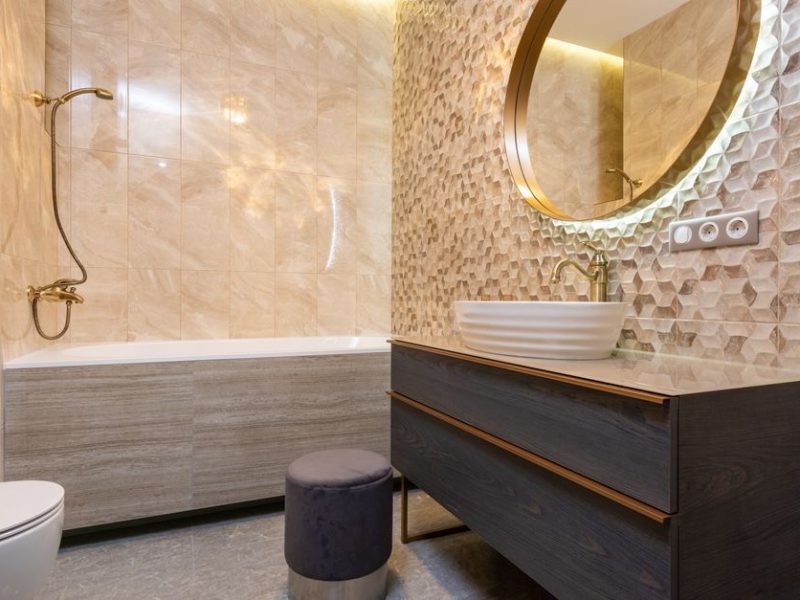
My sister-in-law stayed in a “coastal-themed” rental last summer. She sent photos. The walls were mint green. There were starfish glued to a shadow box. A wooden sign above the bed said “BEACH.” The whole room felt like a gift shop exploded in it.
That’s the problem with coastal design. It goes wrong fast. One anchor motif too many and your guest room looks like a seafood restaurant from 1998.
But done right, a coastal guest bedroom is the best room in the house. It’s calm. It’s crisp. It makes guests feel like they’re on vacation without leaving your home. And you can pull it off for $1,200 to $2,000 total—not the $8,000 a designer would charge.
Here’s how to do it without the kitsch.
The Paint Color That Actually Works (Skip the Aqua)
Most people walk into a paint store and grab a color called something like “Ocean Breeze” or “Seafoam Mist.” Don’t do that.
Real coastal homes—the ones in Nantucket, the Hamptons, the Outer Banks—don’t have turquoise walls. They have white walls. Or very soft neutrals that read white in certain light.
Benjamin Moore White Dove (OC-17) is the safest pick. It’s warm without being yellow. It works in rooms with north and south-facing light. It costs about $55 per gallon. You’ll need two gallons for an average guest room. That’s $110 and a Saturday afternoon.
If you want more depth, Sherwin-Williams Sea Salt (SW 6204) is the exception to the no-color rule. It’s a chameleon—green, gray, or blue depending on the light. But it’s subtle. It whispers “coastal” instead of screaming it. One gallon covers an accent wall easily.
The mistake people make is painting all four walls a saturated color. That shrinks the room. If you’re using Sea Salt, put it on one wall—the one behind the bed. White Dove on the other three. The contrast makes the room feel bigger and calmer.
Furniture: One Solid Piece, Everything Else Flea Market
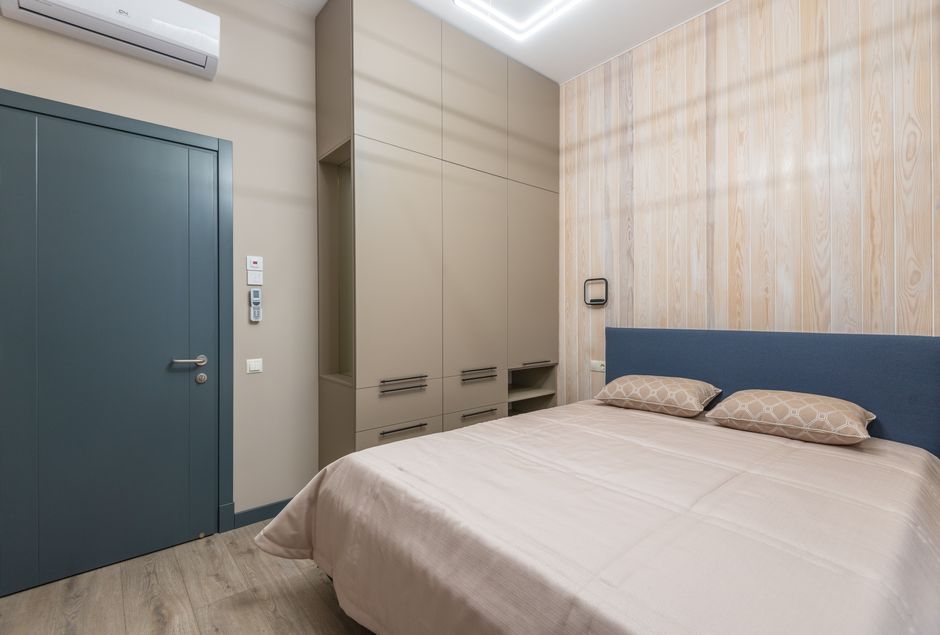
Guest bedrooms need three things: a bed, a nightstand, and somewhere to put a suitcase. You don’t need a full bedroom set.
Spend your furniture budget on exactly one piece: the bed frame. A wobbly bed makes the whole room feel cheap. The IKEA BJÖRKSNÄS bed frame ($299, queen) has clean birch lines that read as Scandinavian coastal. The Zinus Shalini upholstered platform bed ($189, queen) in beige or light gray works if you want something softer.
For nightstands, skip the matching set. Two mismatched tables look more collected and cost less. I found a solid oak end table at a thrift store for $40 last month. Sanded it lightly. Left it unpainted. It looks like something from a Montauk beach house. Facebook Marketplace is full of these—search for “solid wood end table” and filter by distance. People practically give them away.
A luggage rack is non-negotiable. Guests hate putting suitcases on the floor. The Winsome Wood folding luggage rack costs $29 on Amazon. Tuck it in the closet when not in use.
The total furniture spend should be under $600. Bed frame ($200-$300). Nightstands ($50-$100 combined if you go secondhand). Luggage rack ($30). Maybe a small bench at the foot of the bed if you find one cheap.
The Bedding Formula Guests Actually Notice
Guests remember two things about a bedroom: how the bed felt and how dark it was at night. We’ll get to darkness later. Let’s talk bedding.
The coastal look depends on texture, not pattern. Skip the seashell-print duvet. Buy white or cream bedding in three different materials:
- A linen duvet cover. Parachute is the gold standard but costs $200+. Quince’s European Linen Duvet Cover ($99, queen) is the same quality at half the price. Linen wrinkles. That’s the point. It looks effortlessly rumpled, like you just came in from a walk on the beach.
- Cotton percale sheets. Percale is crisp and cool—the opposite of sateen, which can feel sticky in summer. Threshold 300-Thread-Count Percale Sheets from Target ($40, queen) are better than sheets twice their price.
- A cotton quilt or coverlet folded at the foot of the bed. This adds weight and visual layering. The Better Homes & Gardens Washed Cotton Quilt ($45, queen at Walmart) in white or sand works perfectly.
The whole bedding setup runs about $185. That leaves room in the budget for the one decorative pillow that matters: a long lumbar pillow in a textured fabric. The IKEA SANDSLÅN lumbar cushion ($25) in beige has a woven pattern that adds interest without a single anchor in sight.
The Mistake That Kills the Whole Look
Let me be blunt.
Theme decor is the enemy. If you buy one thing shaped like a shell, a starfish, a lighthouse, or a pelican, you’ve lost the plot. Coastal design isn’t about ocean objects. It’s about the feeling of being near water. Light. Air. Space. Calm.
The fastest way to ruin a coastal guest room is to fill it with “beach decor” from the clearance aisle at HomeGoods. Guests don’t want to sleep inside a theme park. They want a room that feels peaceful and intentional.
Instead of a sign that says BEACH, hang a framed vintage map of a coastal town. Instead of a jar of shells, put a piece of sea glass on the nightstand—one piece, not 40. Instead of a rope mirror, use a simple round mirror with a thin wood frame.
Restraint is the whole game.
Texture Over Theme: The 4 Materials That Do the Work
If you can’t use ocean motifs, what makes it coastal? Texture. Four materials carry the entire look.
1. Jute or sisal. A jute rug anchors the room and adds natural warmth underfoot. The nuLOOM Handwoven Jute Rug ($89 for 5×8 on Wayfair) is the right price and the right look. Jute sheds a little at first—vacuum it twice in the first week and it stops.
2. Rattan or cane. One piece of rattan furniture is enough. A chair in the corner. A headboard. A mirror frame. The IKEA AGEN chair ($79) in rattan is a classic for a reason. Put it in the corner with a white cushion.
3. Linen. We covered this with bedding, but extend it. Linen curtains in white or natural. H&M Home’s Linen-Blend Curtains ($49 for a pair) are surprisingly good. Hang them high—mount the rod 6 inches above the window frame—and they’ll make the ceiling feel taller.
4. Unfinished wood. Painted furniture feels fussy. Raw or lightly oiled wood feels beachy. If you buy a secondhand nightstand, don’t paint it white. Sand it. Oil it. Let the grain show.
| Material | Product Pick | Price | Where It Goes |
|---|---|---|---|
| Jute | nuLOOM Handwoven Jute Rug (5×8) | $89 | Floor, under the bed |
| Rattan | IKEA AGEN Chair | $79 | Corner seating |
| Linen | H&M Home Linen-Blend Curtains | $49 | Windows |
| Unfinished Wood | Thrifted oak nightstand | $40 | Bedside |
That’s $257 for the four materials that do 80% of the heavy lifting. The rest is restraint.
Lighting: Two Sources, Both Warm
Overhead lighting is for cleaning. Lamps are for living.
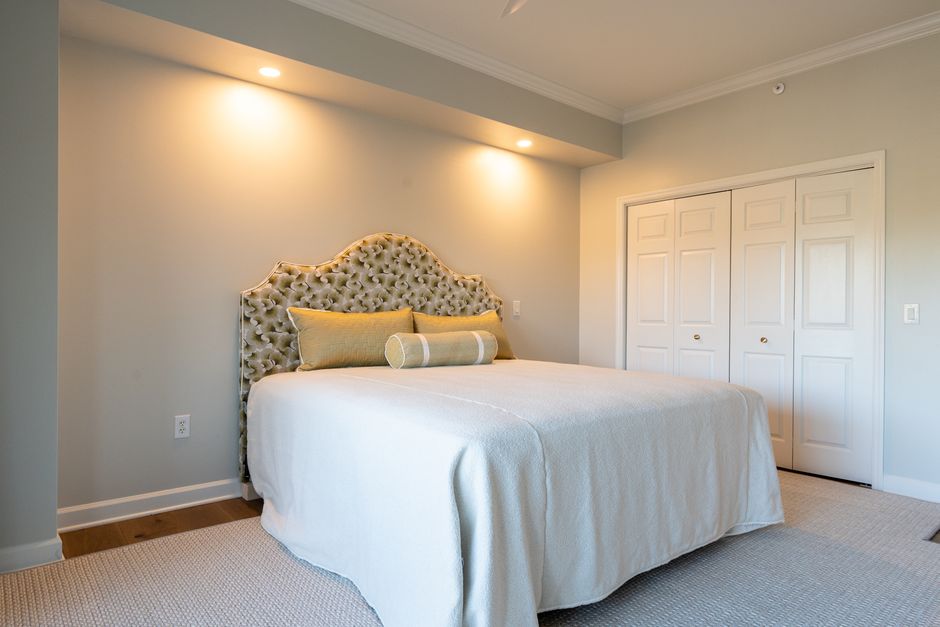
Every guest bedroom needs at least two light sources besides the ceiling fixture. A bedside lamp for reading. And something ambient—a floor lamp in the corner or a small lamp on a dresser.
The bulbs matter more than the fixtures. 2700K LED bulbs only. That’s the warm, golden light that makes skin look good and rooms feel cozy. Anything above 3000K starts to feel like a hospital. Philips Warm Glow LEDs ($15 for a 4-pack) dim warmer as you dim them, which is a nice trick for a guest room.
For the bedside lamp, ceramic or glass bases in white or pale blue work. The Threshold Ceramic Table Lamp ($35 at Target) has a textured base that catches light. For the floor lamp, a simple tripod design in wood. The Brightech Sparq Arc Floor Lamp ($79 on Amazon) curves over a chair and creates a reading nook instantly.
Total lighting spend: about $130. That’s two lamps and good bulbs. Skip the ceiling fixture entirely—guests rarely turn it on.
What Goes on the Walls (and What Doesn’t)
One large piece of art above the bed. That’s it. Not a gallery wall. Not three small prints in a row. One big piece that sets the tone.
The art should reference water or coast without being literal. A large abstract seascape in muted blues and grays. A black-and-white photograph of dunes. A vintage nautical chart of your nearest coastline. Juniper Print Shop sells downloadable prints for $25-$40. Get the largest size, have it printed at a local shop for $30, and frame it in a simple wood frame from IKEA (the FISKBO series, $25). Total: $80-$95 for a piece that looks custom.
What doesn’t go on the walls: word art. Nothing that says “RELAX” or “SEASIDE” or “SANDY TOES.” Your guests can read. They don’t need the wall to tell them what to feel.
One mirror on the opposite wall from the window. It bounces light and makes the room feel twice as big. A round mirror with a thin wood or rattan frame. The IKEA STOCKHOLM mirror ($79, 31 inches) is the right scale and the right look.
The walls are done. Art above bed. Mirror opposite window. Nothing else.
The $1,200 Coastal Guest Room: A Line-by-Line Budget
You can do this room for $1,200. Here’s exactly where the money goes, assuming you already have a mattress and are starting from bare walls.
| Category | Item | Cost |
|---|---|---|
| Paint | 2 gallons Benjamin Moore White Dove + supplies | $130 |
| Bed Frame | Zinus Shalini Upholstered Platform (queen) | $189 |
| Nightstands | Two secondhand wood tables | $80 |
| Rug | nuLOOM Handwoven Jute (5×8) | $89 |
| Bedding | Quince linen duvet + Target percale sheets + Walmart quilt | $185 |
| Curtains | H&M Home Linen-Blend (2 pairs for fullness) | $98 |
| Lighting | Target ceramic lamp + Brightech floor lamp + Philips bulbs | $130 |
| Art + Frame | Juniper Print download + local printing + IKEA FISKBO frame | $90 |
| Mirror | IKEA STOCKHOLM round mirror | $79 |
| Accessories | Luggage rack + lumbar pillow + curtain rod | $84 |
| TOTAL | $1,154 |
That leaves $46 for the sea glass on the nightstand. Or a bottle of wine for your first guests.
The thing about this budget: you can flex it up or down. Swap the Quince duvet for an IKEA one and save $50. Buy both nightstands at a thrift store instead of one at retail and save $100. Or spend more on the bed frame—the West Elm Quinn Bed ($599) in whitewashed wood is a lifetime piece that’ll outlast every trend.
The point isn’t the exact numbers. It’s the hierarchy: paint and bedding first. Lighting and rug second. Art and accessories last. Spend where guests feel it, save where they don’t.