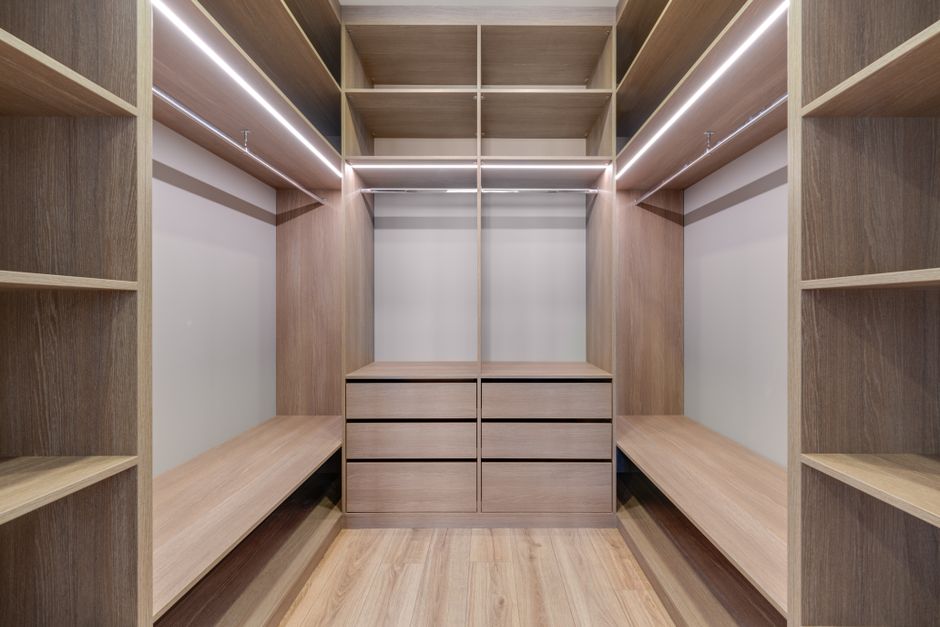
I’ve ripped out three closet systems in six years. Not because I enjoy demolition. Because they failed.
The first was a white wire rack from a big box store. Shelves bowed under the weight of folded sweaters. The second was a laminate particle board unit. The shelves swelled in summer humidity and the laminate peeled off in sheets. The third was a “premium” MDF closet kit with drawers. The drawer bottoms dropped out. Literally. One day I pulled a drawer open and my socks hit the floor through the bottom panel.
Here’s what I learned: most home organization storage is designed to look good in a showroom for 20 minutes, not to hold weight for 20 years. The materials are garbage. The engineering is an afterthought. And the prices keep climbing while quality plummets.
This guide covers the storage furniture that actually lasts. I’ll name specific brands, exact materials to look for, and the stuff you should never buy no matter how good the Instagram ad looks.
The Material Problem: Why Most Storage Furniture Fails
Walk through any home store and you’ll see the same three materials over and over. Particle board. MDF. Wire coated in white vinyl. They’re cheap to manufacture, ship flat, and assemble with cam locks. They also fail predictably.
Particle board is wood chips glued together under pressure. It’s heavy, brittle, and hates moisture. A spilled water glass can swell the edge permanently. Shelf pins tear out under moderate weight because there’s no grain structure to hold them. I’ve measured particle board shelves sagging 3/8 inch in the center after six months with 25 pounds of books.
MDF (medium-density fiberboard) is a step up. Finer wood fibers, more glue, smoother surface. It machines well and takes paint beautifully. But it’s still not structural. MDF drawers rely on glued dowels or confirmat screws in end grain. The end grain connection is weak. Pull a heavy drawer open 500 times and the front panel starts to separate. I’ve seen it happen on a $900 MDF dresser in under two years.
Vinyl-coated wire is the worst offender. The wire gauge is usually 14-16, which sounds sturdy until you realize it’s spanning 24 inches unsupported. Place a stack of jeans on a wire shelf and watch it sag into a smile shape. The vinyl coating cracks at stress points, exposing bare steel that rusts in humid closets. Wire shelving is the fast fashion of home organization.
So what actually works? Three materials: solid wood (not veneer over MDF), powder-coated steel (heavy gauge), and marine-grade plywood. Each has tradeoffs. I’ll break them down.
Solid Wood Shelving: Worth the Weight

Solid wood is the gold standard for a reason. Real grain structure means shelf pins bite into something that won’t crumble. A 3/4-inch thick solid maple shelf can span 36 inches with minimal deflection under 50 pounds. Particle board of the same thickness fails at half that span.
But not all solid wood is equal. Pine is soft. It dents easily and shelf pin holes can oval out over time. Poplar is better but still on the softer side. For shelving that holds real weight, you want hard maple, red oak, or birch. These species have a Janka hardness rating above 1200. Pine is around 400.
The Elfa system from The Container Store uses solid wood shelves in their Decor line. They’re 5/8-inch thick solid birch, finished with a clear lacquer. I’ve had these in a pantry for four years now. Canned goods, small appliances, cast iron. No sag. No creaking. The brackets are powder-coated steel rated at 75 pounds per pair. The system isn’t cheap — a 24-inch shelf with brackets runs about $35 — but it’s not coming down until I take it down.
John Louis Home makes solid wood closet systems from red oak. Their 12-inch deep shelves are a full 3/4 inch thick. The mounting rail is a single piece of solid oak, not a laminated strip. I installed a John Louis system in a reach-in closet three years ago. The shelves hold folded denim, shoe boxes, and a small safe. The safe alone weighs 40 pounds. The shelf hasn’t moved.
When you’re evaluating solid wood shelves, check two things: actual thickness (not nominal — “3/4 inch” should measure 3/4 inch, not 11/16) and edge treatment. A rounded-over edge resists chipping better than a sharp 90-degree corner. Also look at the mounting hardware. Good systems use steel brackets with a locking tab that prevents the shelf from tipping forward. Cheap systems use plastic clips. Plastic clips fail.
| Material | Max Span (36″ shelf) | Weight Capacity (per shelf) | Moisture Resistance | Lifespan Expectation |
|---|---|---|---|---|
| Particle Board (3/4″) | 24 inches before sag | 15-20 lbs | Poor — swells permanently | 1-3 years |
| MDF (3/4″) | 28 inches before sag | 25-30 lbs | Fair — swells, but slower | 3-5 years |
| Vinyl-Coated Wire | 20 inches before sag | 20-25 lbs | Poor — rusts at cracks | 2-4 years |
| Solid Hardwood (3/4″) | 36+ inches | 50+ lbs | Good — can be refinished | 20+ years |
| Powder-Coated Steel (16-gauge) | 48+ inches | 100+ lbs | Excellent — no rust | 30+ years |
Steel Storage: The Garage and Basement Solution
For anything that isn’t a living space, steel is the answer. Garages, basements, utility rooms, storage lockers. These spaces have temperature swings, humidity, and heavy loads. Wood can warp. Particle board dissolves. Steel doesn’t care.
The key spec is gauge. Lower numbers mean thicker steel. 16-gauge steel is 1.5mm thick. 20-gauge is 0.9mm. That difference is enormous for load capacity. A 16-gauge steel shelf rated at 800 pounds per shelf will hold it. A 20-gauge shelf rated at 800 pounds is lying to you.
Edsal makes industrial steel shelving that’s ugly but indestructible. Their 48-inch wide, 24-inch deep unit in 16-gauge steel holds 4,000 pounds per shelf. It costs about $200. The finish is a gray powder coat that won’t rust even in a damp basement. I have one in my garage holding engine parts, paint cans, and a spare transmission. It’s been there for seven years. The shelves haven’t deflected a millimeter.
For lighter use, the IKEA BROR system is surprisingly good. The shelves are 18-gauge steel with a powder coat. Weight capacity is 220 pounds per shelf. The uprights are 1.5-inch square steel tube. At $50 for a 43-inch wide unit, it’s a steal. I use BROR in my workshop for power tools and hardware bins. The shelves don’t bend under a miter saw. That’s more than I can say for the “heavy duty” plastic shelving it replaced.
One warning about steel shelving: check the shelf support design. Good units use a full-length steel beam under each shelf. Cheap units use four small clips that slot into keyholes in the uprights. Those clips can shear off under load. Look for shelves that rest on a continuous bracket or have a rolled front edge for stiffness. The rolled edge adds about 30% more load capacity compared to a flat shelf of the same gauge.
Drawers That Don’t Self-Destruct
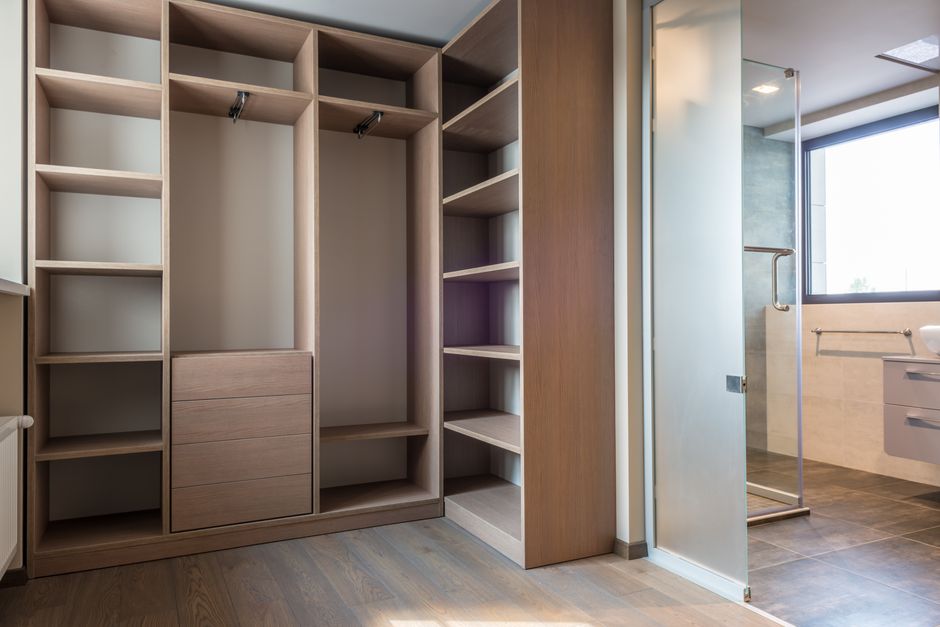
Drawer failure is almost always a joinery problem. The bottom panel drops out because it’s 1/8-inch hardboard floating in a shallow groove. The front separates because it’s butt-joined with dowels and glue. The slides bind because they’re epoxy-coated runners rated for 35 pounds but loaded with 50.
Good drawers use one of two joinery methods: dovetails or box joints. Both create mechanical interlock, not just glue surface. Dovetails are stronger in tension — they resist the front pulling away. Box joints have more glue surface and are easier to machine precisely. Either is fine. What’s not fine is stapled butt joints with a glue block. That’s what failed in my MDF closet drawers.
Drawer slides matter as much as the box itself. Side-mount ball bearing slides are the standard. Look for full extension — the drawer pulls out completely so you can reach the back. Undermount slides are better because they’re hidden and typically have a soft-close mechanism, but they eat up 1/2 inch of drawer width on each side. For a 24-inch wide drawer, that’s a full inch of lost interior space.
Weight rating on slides is per pair, not per slide. A 100-pound rated slide pair means 50 pounds per side. Load your drawer with 80 pounds of pots and pans and you’re at 80% of capacity. That’s fine. Load it with 110 pounds and the slides will start to feel gritty after a few hundred cycles. The bearings brinell — they dent the race — and the smooth action is gone forever.
The Container Store’s Elfa system uses steel drawer frames with mesh baskets. No wood, no glue joints to fail. The slides are ball bearing and rated at 75 pounds. I have six of these in a closet. They’ve held shoes, sweaters, and a frankly irresponsible number of board games for four years. They slide like new. The mesh means you can see what’s inside without opening. That’s a small thing that becomes a big thing when you’re looking for a specific pair of boots at 6 AM.
If you want wood drawers, John Louis Home uses solid maple drawer boxes with dovetailed fronts and 1/2-inch plywood bottoms. The plywood bottom is important — it won’t warp and drop out like hardboard. Their slides are Blum undermount soft-close. Blum is the industry standard for a reason. I’ve installed Blum slides in cabinet projects and they’re still butter-smooth after 15 years of daily use.
When to Skip “Organization” Products Entirely
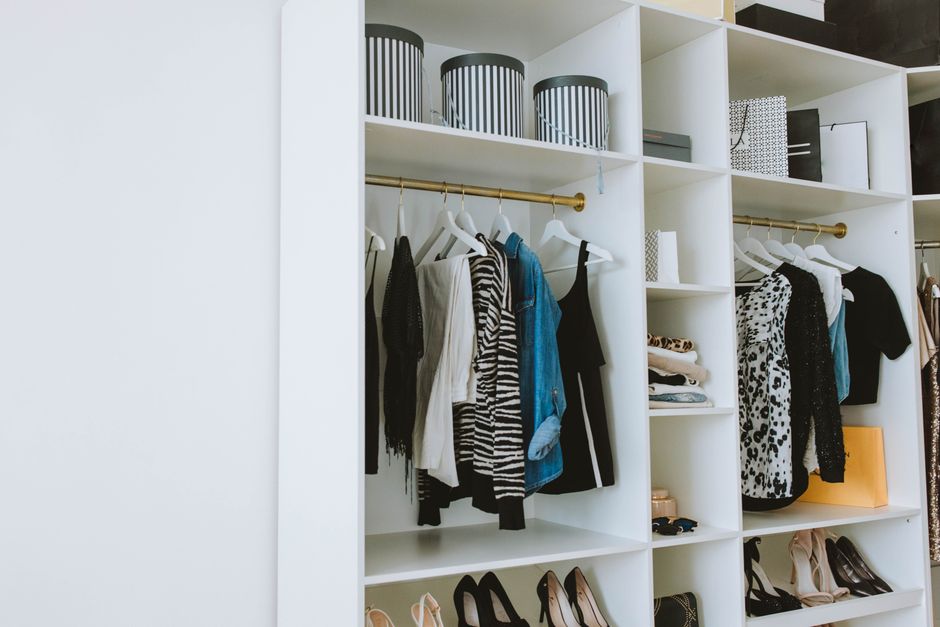
Sometimes the best organization product is no product at all. Or rather, it’s a piece of real furniture that happens to store things.
Those fabric cube organizers with the MDF backing? Skip them. The cubes are 11 inches square, which is too small for sweaters and too big for socks. The fabric collects dust. The MDF backing is 1/8 inch thick and held in with staples. One good shove and it pops out. I bought six of these from Target five years ago. Four are in the basement holding junk. Two collapsed entirely.
Instead, look at a proper sideboard or credenza. Something with a solid wood top, a plywood case, and real joinery. The IKEA STOCKHOLM sideboard is walnut veneer over particle board, but the veneer is thick enough to refinish once, and the legs are solid wood. At $500 it’s not heirloom quality, but it’ll last a decade. A real walnut credenza from a furniture maker will run $2,000+ and last a lifetime.
Over-the-door organizers are another trap. The hooks that go over the door put all the weight on a single point. That point is usually a thin metal bracket that bends. The organizer sags forward and the door won’t close properly. If you must use one, get the kind with a full-width metal bracket that distributes weight across the entire top of the door. The Elfa over-the-door system does this. It costs $80 instead of $15. It works.
Baskets and bins are where people really overspend. A woven seagrass basket from a boutique home store costs $45 and holds the same amount as a plastic storage tote from Home Depot that costs $8. The tote is uglier. It’s also waterproof, stackable, and won’t disintegrate if it gets wet. For anything going in a closet or on a shelf where you can’t see it, use the ugly option. Save the pretty baskets for open shelving where they’re visible. You’ll spend $40 total instead of $300.
Here’s my rule: if a storage product is made primarily of fabric, thin wire, or MDF thinner than 1/2 inch, ask yourself if a real piece of furniture would do the job better. A $200 solid wood bookshelf holds more and lasts longer than a $150 “organizer system” made of laminate and hope.
Six years ago I thought organization meant buying more organizing products. I was wrong. It means buying fewer, better things that don’t fall apart. The three closet systems I ripped out taught me that. The solid wood and steel systems I replaced them with are still there. They’ll be there when I sell this house. That’s the difference between a product and furniture.