Most DIY content is a trap. It sells you a fantasy where a $40 pallet becomes a $2,000 Restoration Hardware coffee table. You spend three weekends, buy $150 in tools you’ll never use again, and end up with something that looks like firewood with ambition.
The projects worth doing are boring. They don’t photograph well. Nobody posts them on Instagram. But they stop your house from slowly falling apart while actually making it more comfortable to live in. These are the projects that pay you back—in lower utility bills, fewer repair calls, and furniture that doesn’t end up on the curb in 18 months.
Here’s what’s actually worth your Saturday.
Air Seal Before You Insulate: The $30 Project That Pays for Itself in 2 Months
Adding insulation is the home improvement equivalent of buying a warmer coat when your zipper is broken. It helps, but you’re still losing most of the benefit through the gaps.
Air sealing fixes the zipper. Most houses have the equivalent of leaving a medium-sized window open year-round, spread across hundreds of tiny cracks, gaps around outlets, attic hatches, and rim joists. The Department of Energy estimates air leaks account for 25% to 40% of heating and cooling costs in a typical home.
This project requires almost zero skill. You need three things: a caulk gun, a case of DAP Dynaflex 230 ($4 per tube), and a few cans of Great Stuff Pro Gaps & Cracks foam sealant ($6 each).
Where to Actually Apply It
Skip the windows. That’s what everyone thinks first, and it’s usually wrong. The big leaks are in your attic floor and basement rim joists. Go into the attic—carefully, walking only on joists—and seal every penetration where wires, plumbing vents, and light fixtures come through the drywall. Use the foam for gaps bigger than a pencil, caulk for smaller ones.
In the basement, seal the gap where the foundation meets the wood frame at the top of the foundation wall. This rim joist area is a sieve in most homes built before 2010. A single can of foam will seal 30 linear feet.
Total cost for a 2,000-square-foot house: under $60. You’ll feel the difference in rooms that were always cold within a day.
When to Skip This
If your house was built after 2018 and has a blower door test score below 3 ACH50, it’s already tight. You’ll get diminishing returns. Focus elsewhere.
Paint Is the Only Cosmetic Upgrade That Recovers Its Cost
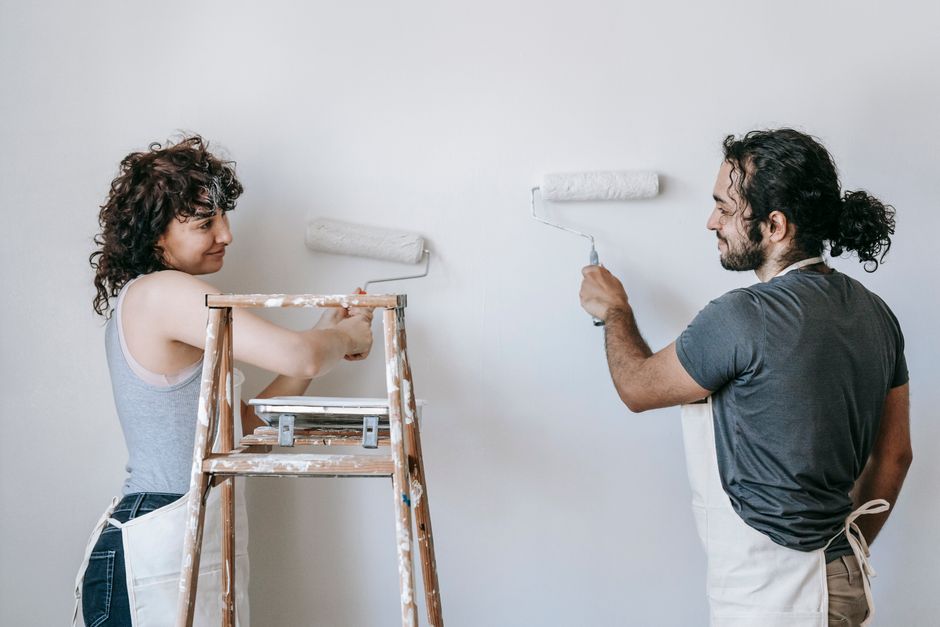
I’m going to say something that will irritate the flooring industry: most cosmetic renovations lose money. New countertops, trendy backsplashes, barn doors—they date fast and buyers don’t pay extra for your taste.
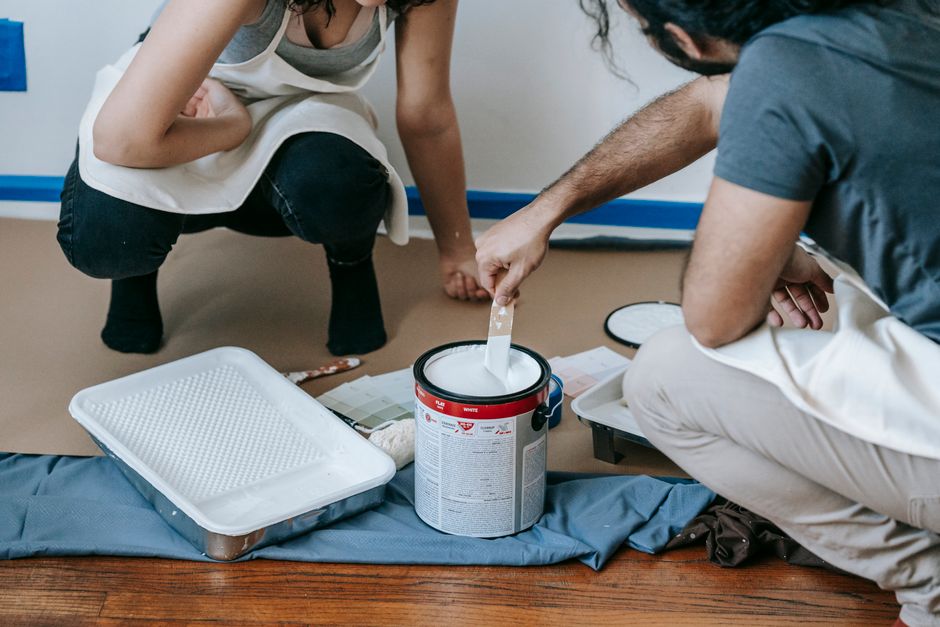
Paint is different. A 2026 Zillow analysis found that interior paint has a 107% return on investment, meaning it slightly increases sale price beyond what you spend. More importantly, it’s the one cosmetic change that makes you feel better about your house every single day.
But most people paint wrong. They buy cheap paint and do three coats, spending more on labor time than they saved on materials. Or they skip prep and wonder why the edges look terrible in six months.
The Paint Worth Buying
Benjamin Moore Regal Select ($55/gallon) covers in one coat on most colors. Sherwin-Williams Emerald ($70/gallon) is slightly better for bathrooms and kitchens because it handles humidity without peeling. Behr Marquee from Home Depot ($45/gallon) is the budget pick that still performs—just don’t expect one-coat coverage on drastic color changes.
Buy good painter’s tape. FrogTape Multi-Surface ($8/roll) is the standard. Cheap tape bleeds, and you’ll spend more time touching up edges than you saved.
One room, done right, takes four to five hours including prep. That’s a Saturday morning. The impact lasts five to seven years.
| Paint Brand | Price/Gallon | Best For | Coverage |
|---|---|---|---|
| Benjamin Moore Regal Select | $55 | Living rooms, bedrooms | 1 coat on similar colors |
| Sherwin-Williams Emerald | $70 | Bathrooms, kitchens | 1-2 coats, moisture-resistant |
| Behr Marquee | $45 | Budget, whole-house repaints | 1 coat claimed, 2 realistic |
| Farrow & Ball Estate Emulsion | $110 | High-end finish, depth of color | 2 coats minimum |
Stop Water Before It Stops You
Water is the enemy. Not in a dramatic, flood-your-basement way—though that happens—but in the slow, boring, caulk-failing, grout-cracking way that turns a $200 fix into an $8,000 remediation.
Two projects here. Both take under two hours. Both prevent misery.
Re-Caulk Your Tub and Shower
Caulk fails. It gets moldy, cracks, pulls away from the tile. When that happens, water seeps behind the wall and feeds mold you can’t see. By the time you notice the smell or the soft drywall, you’re tearing out tile.
Remove old caulk with a utility knife and a $10 caulk removal tool. Clean the joint with rubbing alcohol. Apply GE Advanced Silicone II Kitchen & Bath ($9/tube)—it’s mold-resistant for 10 years. Smooth with a wet finger. Don’t use the shower for 24 hours.
This is the highest-ROI hour you’ll ever spend on home maintenance.
Seal Grout Lines
Grout is porous. Unsealed grout in a shower absorbs water like a sponge, and that water migrates sideways into the wall assembly. A bottle of Aqua Mix Sealer’s Choice Gold ($20) and a small foam brush will seal a standard shower in 30 minutes. Reapply every two years.
If your grout is already crumbling, skip the sealer. You need to re-grout first. That’s a bigger project but still DIY-able with a $30 grout saw and a bag of Mapei Keracolor U ($15).
Your HVAC Filter Is Costing You Money Every Month You Ignore It
This barely qualifies as a project. It takes 90 seconds. And yet roughly 40% of households run filters past their replacement date, based on service data from HVAC contractors.
A clogged filter makes your blower motor work harder, which increases electricity use by up to 15% and shortens the life of the motor. Replacement blower motors run $400 to $900 installed. A filter costs $8 to $20.
Which Filter to Buy
Do not buy the $30 “allergen defense” 3M Filtrete 1900 unless someone in your house has severe allergies. Those high-MERV filters are so restrictive they can reduce airflow and strain older systems. For most homes, a MERV 8 filter is the sweet spot—it catches dust and pollen without choking the system.
The specific pick: FilterBuy MERV 8 pleated filters ($40 for a 6-pack). Change every 90 days. Set a recurring phone reminder. That’s the whole project.
If you have pets or live in a dusty area, check it monthly. Hold it up to a light. If you can’t see light through it, it’s past due regardless of the calendar.
Furniture Repair That Actually Lasts
Most furniture sold today is designed to fail. Particle board with a wood-veneer sticker. Joints held together with cam locks that loosen every time you move the piece. Drawers on plastic slides that snap.
But you can extend the life of this stuff significantly with two techniques that take almost no skill.
Tighten Everything, Then Glue It
Flip your wobbly IKEA MALM dresser or Target side table upside down. Tighten every cam lock and screw you can find. Then—and this is the part people skip—apply a drop of Loctite Threadlocker Blue 242 ($7) to any metal-on-metal fastener. For wood dowels and cam locks, use Titebond Original Wood Glue ($5).
The threadlocker stops screws from vibrating loose. The wood glue turns a mechanical joint into a permanent one. This will add years to flat-pack furniture.
One warning: once you glue cam locks, you’re not disassembling that piece again without destroying it. Only do this on furniture you plan to keep.
Fix Veneer Chips Instead of Hiding Them
That white MDF edge showing through a chipped corner makes the whole piece look like garbage. You can buy iron-on edge banding from Edge Supply ($15 for a 25-foot roll) that matches common finishes like white, oak, and walnut. Cut a piece slightly oversize, iron it on, trim with a utility knife. It’s genuinely hard to see the repair when done right.
For deeper chips in the surface, Mohawk Fil-Stik putty sticks ($6 each) come in matched wood tones. Fill, level with a credit card, and the damage disappears from six feet away.
These repairs won’t turn a $100 dresser into an heirloom. But they’ll keep it out of the landfill for another five years, which is better than what most furniture achieves.
The through-line in all of these projects is the same: they solve problems that get worse with time. A drafty house doesn’t fix itself. A leaky shower only gets more expensive. Wobbly furniture eventually collapses. The projects worth doing are the ones where inaction has a compounding cost. Everything else is just keeping busy.