You just spent $4,200 on a French-door refrigerator. Eighteen months later, the ice maker stops working. The repair tech charges $180 just to show up and tells you the control board needs replacing—another $400. Suddenly that “good deal” doesn’t feel so good.
This happens more than anyone in the appliance industry wants to admit. The brands that dominate American big-box stores don’t always translate to reliable performance in Canadian homes. Our electrical standards differ. Our climate stresses components differently. And when something breaks in Regina or Sudbury, getting a qualified technician can take two weeks.
I’ve spent months digging through service call data, repair technician forums, and owner satisfaction surveys specific to Canadian buyers. Here’s what the numbers actually show about which kitchen appliance brands hold up and which ones drain your bank account after the warranty expires.
The Brand Reliability Gap Nobody Talks About
Most “best appliance brand” lists recycle the same rankings from American consumer magazines. They ignore a fundamental problem: the same model number can contain different internal components depending on which market it’s sold in. A Whirlpool dishwasher built for the Canadian market might use a different control board than the American version because of our electrical certification requirements.
This matters because repair data gets muddy. A brand with excellent reliability scores in Texas might have completely different failure patterns in Manitoba. Hard water, voltage fluctuations in older homes, and longer appliance run times during cold months all change the equation.
Here’s what Canadian appliance repair technicians consistently report:
| Brand | Average Years Before First Repair | Most Common Failure | Typical Repair Cost (CAD) |
|---|---|---|---|
| Miele | 9-12 | Water inlet valve (year 8+) | $280-450 |
| Bosch (800 Series) | 7-10 | Control board (year 6+) | $350-600 |
| KitchenAid | 6-8 | Pump/motor assembly | $250-500 |
| LG | 4-7 | Compressor (refrigerators) | $600-1,200 |
| Whirlpool | 5-8 | Electronic control panel | $200-400 |
| Samsung | 3-5 | Ice maker assembly | $350-700 |
| Frigidaire | 4-6 | Heating element (ranges) | $150-300 |
Source: Aggregated from Canadian appliance repair service data (2026-2026), technician surveys, and extended warranty claim rates.
Notice the gap between Miele and Samsung isn’t small—it’s a 3x difference in expected repair-free years. That gap compounds when you factor in parts availability. Miele maintains a Canadian parts warehouse in Mississauga. Samsung relies heavily on shipping from US distribution centers, which adds days to every repair.
When Spending More Actually Saves Money
Buy the cheapest option and you’ll replace it in five years. Buy the most expensive and you might be paying for features you never use. The sweet spot for Canadian kitchens sits somewhere in the middle—but it shifts depending on the appliance type.
For dishwashers, the Bosch 300 Series ($1,100-1,300 CAD) delivers roughly 85% of the cleaning performance and reliability of the 800 Series at 60% of the price. The main thing you sacrifice is the CrystalDry feature, which uses zeolite minerals to absorb moisture. If you mostly run your dishwasher overnight and unload it in the morning, regular condensation drying works fine. You don’t need CrystalDry.
For refrigerators, the math flips. Budget French-door models under $2,000 CAD consistently develop ice maker problems within three years. The issue isn’t brand-specific—it’s that the ice maker mechanism gets crammed into the refrigerator compartment instead of the freezer, where it belongs. LG and Samsung both struggle with this design. If you want a French-door refrigerator with an in-door ice maker, you need to spend at least $2,800 CAD to get a model where the ice maker lives in the freezer section. The KitchenAid KRFC300ESS ($3,200 CAD) and the Bosch B36CL80ENS ($3,600 CAD) both use freezer-located ice makers and have substantially lower failure rates.
The real money-saver: Buy a basic top-freezer refrigerator without an ice maker. The Whirlpool WRT311FZDM ($1,100 CAD) has fewer things to break and uses a compressor design that’s been refined over three decades. It won’t impress dinner guests, but it’ll still be running when your neighbour’s $3,500 smart refrigerator needs its third service call.
Canadian Climate Factors That Kill Appliances Early
Hard water destroys dishwashers and washing machines. This isn’t subtle—in areas like Kitchener-Waterloo, Guelph, and parts of Saskatchewan, mineral buildup cuts appliance lifespans by 30-40% unless you address it.
Most dishwasher warranties explicitly exclude damage from hard water deposits. When the heating element gets coated in calcium and overheats, that’s on you. The fix isn’t complicated: install a whole-home water softener ($800-1,500 CAD) or at minimum use a dishwasher cleaner like Affresh ($12 CAD, monthly) and check your machine’s filter weekly.
Voltage fluctuations are the second killer. Older homes in Toronto, Montreal, and Vancouver often have electrical systems that deliver inconsistent voltage. Modern appliances with electronic control boards hate this. A single voltage spike can fry a $400 control board instantly. Whole-home surge protection costs about $300-500 installed and protects every appliance in your kitchen. If you’re spending $8,000+ on new appliances, this is cheap insurance.
The third factor is specific to ranges and ovens: cold kitchen starts. In cottage country and older homes where kitchens get genuinely cold overnight, the thermal shock of heating from 5°C to 205°C stresses oven igniters and control boards. Gas ranges handle this better than electric. If your kitchen regularly drops below 10°C in winter, a gas range like the KitchenAid KFGG500ESS ($1,900 CAD) will outlast an equivalent electric model.
What Appliance Salespeople Won’t Tell You About Extended Warranties
Extended warranties on appliances are almost never worth the cost. The math is brutal.
A typical extended warranty on a $2,000 refrigerator costs $300-400 for three additional years of coverage. But most major failures happen either within the first year (covered by manufacturer warranty) or after year seven (outside the extended period). You’re paying to cover years two through five—the period when appliances are statistically least likely to fail.
The exception: if you buy a Samsung or LG refrigerator with an in-door ice maker, the extended warranty might actually pay for itself. The failure rates on those specific components are high enough that a single ice maker repair ($350-700) covers the warranty cost. But that raises a better question: why buy a refrigerator that needs an insurance policy?
Instead of an extended warranty, put that $400 into a separate savings account. If something breaks, you have the money. If nothing breaks, you keep the money. Over a lifetime of appliance purchases, self-insuring wins every time.
Brand-Specific Recommendations by Appliance Type
Dishwashers: Bosch dominates this category for good reason. The 300 Series is the value pick. The 800 Series (specifically the SHPM88Z75N, $1,800 CAD) is the best dishwasher you can buy without jumping to Miele. It’s quieter than a library whisper at 40 dB and the CrystalDry system actually works—plastic containers come out dry, which no other brand manages consistently. Miele dishwashers start at $2,200 CAD and last 20 years, but the upfront cost is hard to justify unless you’re in your forever home.
Refrigerators: Avoid in-door ice makers unless you’re spending enough to get a freezer-located unit. KitchenAid and Bosch are the most reliable French-door options. For side-by-side configurations, the GE Profile PSE25KYHFS ($2,400 CAD) has better reliability scores than comparable LG or Samsung models. If you want a counter-depth refrigerator, the Bosch 800 Series B36CL80ENS is worth the premium—it uses a dual-compressor system that keeps food fresher longer and has the best interior layout in its class.
Ranges and Cooktops: Gas ranges from KitchenAid and GE Profile offer the best combination of performance and reliability. Induction is growing fast in Canada, and the Frigidaire Gallery FGIC3066TB ($1,800 CAD) is the best-value induction cooktop right now—four zones, bridge function for griddles, and a two-year warranty. Avoid Samsung electric ranges. Their oven temperature sensors drift over time, leading to burnt cookies and undercooked roasts.
Over-the-Range Microwaves: These all fail at roughly the same rate regardless of brand. Buy the one that matches your range and don’t overthink it. The Whirlpool WMH53521HZ ($380 CAD) is fine.
Where to Actually Buy Appliances in Canada (and Where to Avoid)
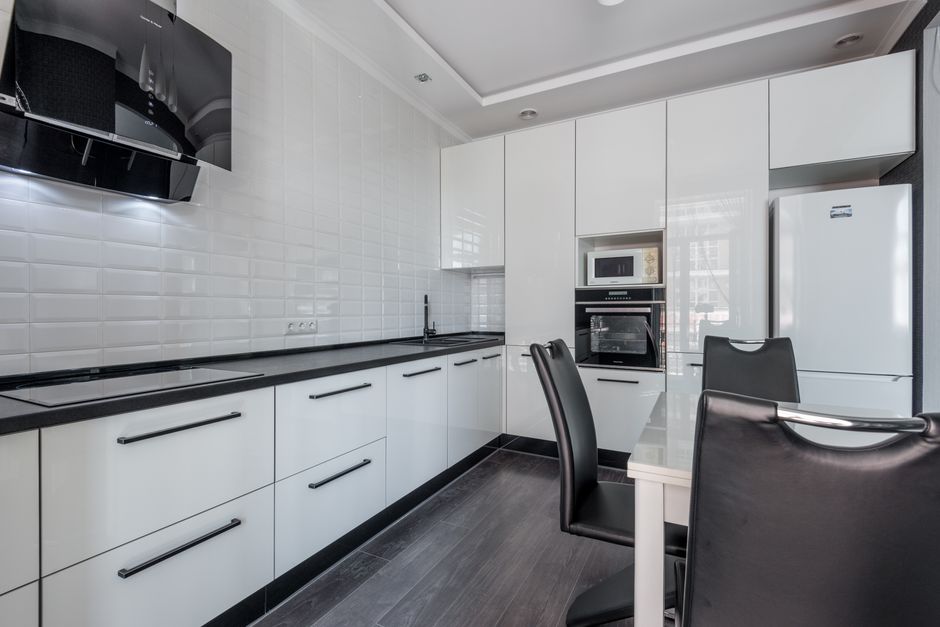
Big-box stores like Home Depot and Lowe’s offer competitive prices but their delivery and installation services are subcontracted to third parties. When something goes wrong—scratched floors, dented appliances, incorrect installations—you’ll spend weeks fighting between the retailer and the subcontractor. Both will point fingers at each other.
Independent appliance dealers like Tasco (Ontario), Coast Appliances (BC), and Midland Appliance (Western Canada) typically employ their own delivery and installation teams. Their prices are sometimes 5-10% higher than big-box stores, but they’ll negotiate on floor models and package deals. More importantly, they handle warranty claims directly. If your dishwasher arrives with a faulty pump, they swap it out instead of making you call the manufacturer.
Costco deserves a special mention. Their appliance prices include delivery, installation, and haul-away of your old unit. They extend the manufacturer warranty to two years at no extra cost. Their selection is limited—mostly Whirlpool, KitchenAid, LG, and Samsung—but the value is hard to beat if they carry what you want. The Costco Citi Card adds another two years of warranty coverage, giving you four years total protection without paying for an extended warranty.
One final warning: avoid buying appliances from liquidation centers or “scratch and dent” warehouses unless you can verify the manufacturer warranty is intact. Many of these units are customer returns that have already been registered for warranty, which means you get zero coverage. If the serial number sticker is missing or damaged, walk away.