You sit down after dinner and spot a dark ring where a glass rested, greasy marks on the arm, and a dull patch where everyone sits. The sofa does not need a dramatic makeover. It needs the right order of work: identify the leather, remove loose dirt, clean lightly, let the surface dry, then apply a thin layer of conditioner.
The expensive mistake is treating every leather sofa like a pair of boots. A finished leather sofa can tolerate careful surface cleaning, while aniline, nubuck, suede, and waxed leather can stain or darken quickly. This guide gives you a practical decision path, clear product tradeoffs, and the points where home treatment should stop.
How to prepare a leather sofa before cleaning
The 24-hour patch test prevents the worst mistake
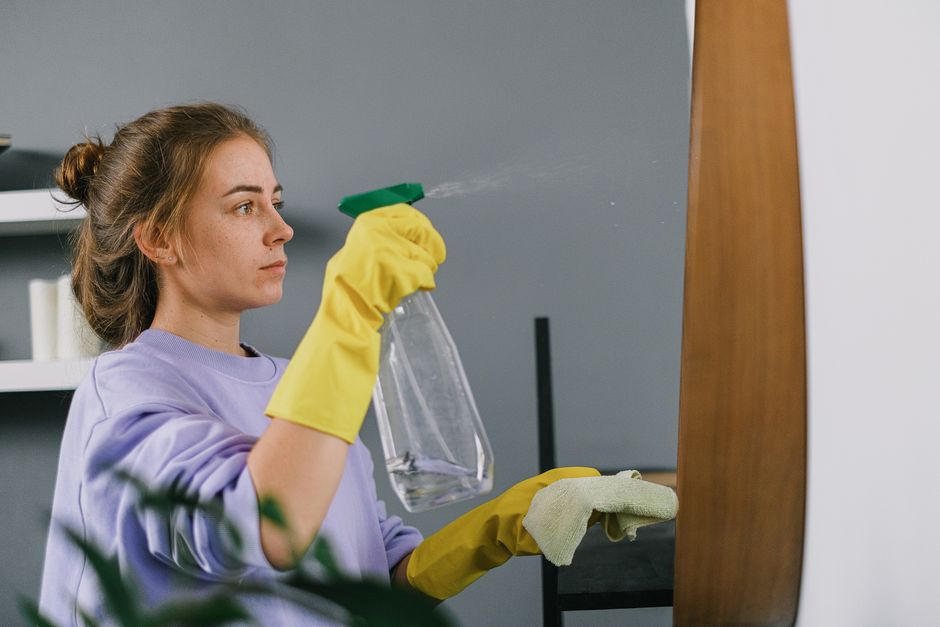
Choose a hidden spot behind the sofa, under a seat cushion, or near the back lower edge. Put a small amount of the intended cleaner on a white cloth, then press and wipe a patch no larger than 5 centimeters. Wait until the area dries completely. Check for color transfer, a dark halo, tackiness, roughness, or a change in sheen. If any of those appear, do not continue across the sofa.
Use this preparation sequence
- Read the sofa label and record the leather type, finish, and cleaning code if one appears.
- Remove cushions and vacuum crumbs from seams with a soft brush attachment. Keep the nozzle from scraping the leather.
- Dust the surface with a dry microfiber cloth. Loose grit can scratch the finish during wiping.
- Move the sofa away from a radiator, fireplace, heat vent, or bright window. Heat can dry one area faster than another.
- Prepare two clean microfiber cloths: one for cleaner and one for drying. Do not use a colored towel that could bleed dye.
- Photograph existing cracks, ink marks, faded areas, and loose stitching before you start. That record helps you separate old damage from a new reaction.
Work when the room is between about 60 and 80 degrees Fahrenheit, with normal ventilation. A fan can move air across the room, but do not aim a hair dryer at the sofa. The preparation verdict is simple: a dry surface, a hidden patch test, and small working sections matter more than buying a large bottle of cleaner.
Which leather cleaner and conditioner should you buy
The short buying verdict
Buy separate cleaner and conditioner for a first deep clean. That gives you control over how much moisture and product reaches the sofa. A two-in-one spray can save time for light maintenance, but it makes it harder to tell whether a dull finish comes from dirt, residue, or excess conditioner.
The prices below are manufacturer prices or listed prices checked in 2026. Promotions, retailer pricing, and bottle sizes change. Treat the price as a comparison point, not a promise.
Product comparison for smooth finished leather
| Product | Size or price | Best use | Clear verdict |
|---|---|---|---|
| Leather Honey Leather Cleaner | 8 oz; listed at $24.99 | Ready-to-use surface cleaning | Best first cleaner when you want a separate cleaning step. |
| Leather Honey Leather Conditioner | 8 oz; listed at $27.99 | Post-cleaning conditioning | Best for smooth leather owners who prefer a thin, separate conditioner. |
| Bickmore Bick 4 Leather Conditioner | 8 oz; listed at $8.99 | Budget conditioning | Best value conditioner if you want a wax-free formula that should not darken smooth leather. |
| Lexol All Leather Cleaner | 16.9 oz / 500 mL | Foaming cleaning for furniture and other leather | Best larger-format cleaner for households caring for several leather items. |
| Chamberlain’s Leather Milk Furniture Treatment No. 5 | 2 oz; listed at $18.95 to $29.95 | Furniture-specific conditioning | Best for owners who want a furniture-focused formula and precise application. |
Do not choose by bottle size alone. A cheap conditioner can still cause a problem if you apply too much, and a larger cleaner is wasteful if the label excludes your leather finish.
How to clean and condition a leather sofa step by step

Clean one small panel at a time
Start with the least visible section. Apply cleaner to the cloth rather than spraying the sofa directly. One or two light pumps are enough for a cloth section about 30 by 30 centimeters. The cloth should feel damp, not wet. Wipe with overlapping strokes, then use a second dry section of the cloth to remove loosened soil.
Do not scrub in circles for several minutes. Friction can polish one patch and leave the surrounding leather dull. Spend extra time on arms, headrests, cushion fronts, and the area under the front edge, where skin oil collects. Use a cotton swab around stitching instead of flooding the seam. If the cloth picks up a little dirt, fold it to a clean side. If it picks up the sofa’s color, stop immediately.
Let the sofa dry before conditioning
Wait until the leather feels dry and looks the same color as the untouched panel. Depending on room humidity and how much cleaner you used, that may take 30 minutes to several hours. Conditioning damp leather traps moisture and can leave a cloudy or sticky surface.
Shake the conditioner if the label directs you to do so. Put a pea-sized amount on a clean cloth and spread it across one small panel. You want a thin film, not a glossy wet layer. Leave it for the label’s recommended time, then buff lightly with a dry cloth. Add a second coat only when the first coat disappears without residue.
For an average three-seat sofa, start with less than you think you need. A 30-minute application using small sections is safer than covering the whole sofa in five minutes. Keep cushions separated while they dry so conditioner does not transfer onto adjacent surfaces. The step-by-step verdict: clean gently, dry fully, condition sparingly, and stop when the surface feels smooth rather than oily.
Leather sofa cleaning mistakes: questions homeowners ask
Can I use dish soap, vinegar, or household wipes?
No. Dish soap may remove surface oils along with dirt, vinegar can change the surface finish, and household wipes may contain alcohol, solvents, fragrance, or disinfectants that leave a dull patch. A damp microfiber cloth is safer for a fresh spill than a random household cleaner. Blot first; do not rub the spill outward.
Can conditioner repair cracks or peeling?
No. Conditioner can improve the feel of dry leather, but it cannot rebuild missing grain, repair a split seam, or reattach a peeling finish. Heavy product can make the crack look darker for a short time while leaving the underlying damage untouched. A specialist should assess structural tears, deep cuts, exposed fabric, and widespread peeling.
Why did the sofa turn dark after cleaning?
Common causes include excess liquid, an oily conditioner, color transfer from the cloth, or a finish that reacts to moisture. Do not add more cleaner to chase the mark. Blot gently with a dry white cloth and let the area dry naturally. If the color remains uneven after 24 hours, stop home treatment.
Other frequent mistakes include cleaning only the stained spot, skipping the hidden test, using a stiff brush, and conditioning every month when the sofa shows no dryness. The failure-mode verdict: most avoidable damage comes from too much liquid, too much rubbing, or the wrong leather category—not from a lack of effort.
When to DIY and when to call a leather specialist
DIY is right for light surface dirt
Home treatment makes sense when the sofa is smooth finished leather, the care label allows water-based cleaning, the color is stable, and the problem is ordinary dust, skin oil, or a small fresh spill. Work in a hidden area first and clean the entire panel, not just a circular stain. That reduces the chance of a visible clean ring.
Do not make a full cleaning project out of a sofa with active peeling, a strong chemical smell, unknown refinishing, severe fading, or a valuable antique hide. A specialist can identify the finish, match color, and decide if the problem needs recoloring rather than conditioning. The same rule applies when a spill contains ink, hair dye, nail polish, wax, or grease that has already soaked in.
Use a simple maintenance schedule
- Dust and vacuum seams weekly if the sofa receives daily use.
- Blot fresh spills immediately with a clean white cloth.
- Do a light surface clean every three to six months, based on use and the maker’s instructions.
- Condition only when the leather feels dry or the product label gives a clear interval.
- Keep the sofa at least 60 centimeters from strong heat and direct sun when possible.
Final recommendation: for a normal smooth finished leather sofa, use a purpose-made cleaner on a cloth, let every panel dry fully, then apply a thin coat of conditioner. For aniline, nubuck, suede, peeling, cracked, or high-value upholstery, skip the experiment and hire a leather specialist.