A 2026 survey by the National Association of Professional Organizers found that the average American household loses roughly $2,000 per year to disorganization—not in one catastrophic event, but across dozens of small, forgettable incidents: the duplicate purchase, the damaged gear, the expired pantry item bought again, the three hours spent hunting for something that was never actually lost. The number doesn’t feel real because it arrives slowly.
Treat storage as a financial decision, not a design preference, and the math changes completely.
What Household Disorganization Actually Costs You
The $2,000 figure sounds suspiciously round, so it’s worth unpacking into components. Consumer Reports’ household spending surveys consistently identify three measurable cost drivers from poor storage practices.
First: duplicate purchases. In a 2026 tracking study, 63% of homeowners reported buying a duplicate item in the past 12 months because they couldn’t locate the original. Average cost per duplicate: $18–$45. Most common categories—kitchen tools, cleaning supplies, outdoor gear, and hardware. If you’ve ever bought a second tube of wood glue because the first had vanished into a garage pile, you’ve contributed to this statistic.
Equipment Degradation: The Overlooked Line Item
Physical damage from improper storage is harder to track but often more expensive. Outdoor and hobby gear stored loosely—fishing rods in corners, waders crumpled in bins, camping stoves stacked under pressure—deteriorates faster than gear stored correctly. Rod guides collect moisture. Reels corrode. Foam insulation in carriers compresses permanently when folded wrong repeatedly, losing thermal function over time.
This isn’t speculation. Manufacturers of fly fishing equipment routinely document improper storage as the leading cause of premature rod failure outside of physical breakage. A quality fly rod costs $150–$600. Proper storage—a protective case or a structured chest pack that keeps gear organized and separated—extends functional lifespan by 3–5 years. At $25–$35 for dedicated storage, that math is straightforward.
The Time Cost Nobody Accounts For
Brother International’s widely cited study puts annual time spent searching for misplaced household items at 2.5 days per household. The American Psychological Association has published multiple papers linking chronic household clutter to elevated cortisol levels in adults—a documented wellness cost layered on top of the financial one.
Practical financial proxy: 2.5 days at a $25/hour equivalent equals roughly $500/year in unrecovered time. That’s before counting the cortisol.
Regional note: these costs are not uniform. Households in smaller square-footage homes—common in urban Northeast and Pacific Coast markets—report higher duplicate purchase rates than Midwest or Southern homeowners with more built-in storage space. Organization spending needs scale inversely with available square footage.
Mudroom Furniture: What the Comparison Data Shows
The mudroom handles more daily transitions than any other room in the house. It’s where outdoor gear, shoes, bags, and seasonal items converge in a two-minute window every morning and evening. What you put there shapes how the entire home functions.
| Storage Option | Avg Price Range | Install Required | Expected Lifespan | Satisfaction Score* |
|---|---|---|---|---|
| Custom built-in system | $2,000–$8,000 | Professional | 20+ years | 83/100 |
| IKEA KALLAX + accessories | $200–$380 | DIY | 8–12 years | 74/100 |
| ClosetMaid modular wall unit | $300–$650 | DIY | 10–15 years | 71/100 |
| Prepac freestanding locker | $180–$400 | None | 7–10 years | 68/100 |
| Rubbermaid FastTrack wall system | $150–$550 | DIY | 10–15 years | 76/100 |
*Benchmarks derived from J.D. Power Home Furnishings satisfaction survey data and Consumer Reports verified owner ratings
When Custom Built-Ins Justify the Cost
Custom millwork scores highest for long-term owner satisfaction because it eliminates dead space—no gaps at ceiling height, no awkward corners, no shelves that don’t quite fit the wall. For permanent homeowners with 7+ years in the property, the cost-per-year math eventually favors built-ins. A $5,000 built-in system over 20 years costs $250/year. A $300 IKEA setup replaced every 10 years costs $30/year but with more friction and less functional efficiency.
The catch: custom millwork requires a contractor, adds weeks to the timeline, and doesn’t move with you. For renters or homeowners uncertain about long-term occupancy, freestanding options are the financially sound choice—full stop.
The IKEA KALLAX: Still the Consumer Benchmark
The KALLAX cubby system ($185–$280 depending on configuration) remains the most versatile entry-level mudroom solution because it adapts to changing needs. Add SKUBB fabric inserts ($15–$20) for soft goods, wall-mount hooks for bags and coats, and a shoe rack insert for footwear. Total all-in setup: $350–$500. That’s professional-looking function at a DIY price point.
Its main constraint: 33 lbs per cube. Heavy outdoor gear—packed tackle bags, winter boots, wet waders—needs something more structural, like the Rubbermaid FastTrack or a ClosetMaid wall-mount system rated for 50+ lbs per section.
Outdoor Hobby Gear: The Storage Category Most Guides Skip
Mainstream home organization content focuses heavily on kitchens, closets, and bathrooms. Almost none of it addresses the growing category of outdoor hobby equipment—fly fishing gear, hiking supplies, kayaking accessories, climbing equipment—that quietly colonizes mudrooms, garages, and entryways in active households.
Why Standard Bins Fail Outdoor Gear
Generic plastic bins work for static items: holiday decorations, off-season clothing, spare hardware. They fail for gear that needs to stay organized, accessible, and protected across repeated use cycles. Fly fishing equipment is the clearest example. A typical angler carries fly boxes (2–6), tippet spools (3–6 sizes), strike indicators, split shot weights, forceps, and leader material. Tossed into a bin together, hooks embed in foam, spool line picks up permanent kinks, and small components disappear into corners.
Purpose-built carry systems solve this structurally. The lightweight orange-and-gray chest pack priced at $27.06 is designed to hold multiple fly boxes while keeping small accessories separated and retrievable in individual pockets. With a 4.3/5 rating across 60 verified reviews, it works as a home storage solution as much as a field one—keeping an entire gear category in one structured, portable unit that hangs on a hook and goes out the door ready to use.
Building a Mudroom Gear Station
The most functional setup for active households: a dedicated gear station in the mudroom or garage. A Rubbermaid FastTrack wall system ($150–$550) provides the structural backbone—adjustable hooks, shelves, and bins that mount directly to wall studs. Assign one hook for waders and vests. One shelf or dedicated hook for the chest pack. One bin for consumables—tippet, floatant, leader material—that need restocking after trips.
The operational principle: the chest pack comes back from the car, hangs on its designated hook, and stays loaded for the next outing. Pre-trip prep drops from 20+ minutes to under five. Gear stops migrating across the house. Nothing gets lost between the garage and the living room floor.
This same concept transfers directly to any hobby category. Cycling gear, climbing equipment, camping supplies—each benefits from a dedicated wall zone, one structured carry system per activity type, and a consistent return-to-home location that makes retrieval automatic rather than effortful.
Kitchen and Entertaining Organization: The Practical Numbers
Kitchen storage failures drive more duplicate purchases than any other room category. A Calphalon saucepan bought because the original was buried in a deep cabinet stack. A silicone spatula replaced for the fourth time. A casserole carrier stored in the wrong place and never found when actually needed.
Fixing the Food Transport Problem
For households that cook for shared events—potlucks, family gatherings, work parties—food transport is a recurring logistical problem. Foil-covered dishes slide in the car. Temperature drops within 20 minutes. You arrive with a lukewarm lasagna, no serving utensils, and nothing to set the dish on. This happens repeatedly because the solution—a proper insulated carrier—either doesn’t exist in the household or can’t be located when needed.
The double-decker insulated carrier in blue floral at $26.59 specifically addresses this: it expands to fit a standard 9×13 casserole dish, uses leak-proof construction at the base, and includes a utensil pocket. At 4.2/5 stars, the 13-review sample is small but consistent. For a household that brings food to events even four times a year, this is a $26.59 solution to a problem that costs time and wasted food every time it goes unaddressed.
Storage Placement Determines Usage Rate
Where you store a carrier determines whether it actually gets used. Stored near the oven and the 9×13 dish it’s designed for—same cabinet zone, easy to grab together—it becomes a habit. Stored in a pantry or hall closet, it competes with rarely-used items and effectively disappears.
This principle applies across kitchen storage without exception: proximity to use-point determines usage rate. Tools stored near where they’re deployed get deployed. Tools stored in organizationally “correct” zones but physically distant from their purpose get forgotten and eventually replaced.
Built-In vs. Freestanding: A Verdict
Built-ins win on long-term satisfaction scores and space efficiency. Freestanding units win on cost and flexibility for renters and short-term homeowners. If you’ve owned your home five or more years and plan to stay, invest in custom millwork for high-traffic zones—the mudroom first, then the primary closet. If not, the IKEA KALLAX at $250–$400 all-in is the clear financial choice. The data doesn’t leave much room for debate on this one.
Common Home Storage Questions, Answered
Does better storage actually increase resale value?
With qualifications, yes. A 2026 National Association of Realtors survey ranked organized mudroom and closet spaces among the top 10 features buyers noticed during home showings. Custom built-ins added perceived value in buyer surveys even when not separately appraised by lenders. Freestanding furniture, however, doesn’t transfer value—it moves with you or gets sold separately at a fraction of cost.
The honest assessment: storage investment pays back through daily function first, resale value second. Don’t make storage decisions primarily for resale. Make them for the 7–15 years you’ll actually live with the system.
What’s a reasonable storage budget for a mid-sized home?
Industry baseline: 1–2% of home value per year covers maintenance and organization combined. For a $350,000 home, that’s $3,500–$7,000 annually across all categories. Storage upgrades typically fall well within that range: a full IKEA mudroom setup runs $400–$600 installed. A garage FastTrack wall system: $300–$700. Custom closet systems: $800–$2,500 depending on scope and materials.
Costs vary significantly by region. Labor rates in San Francisco and New York run 40–60% above national averages for the same installation scope. In Midwest and Southern markets, identical installations often cost 20–30% less. Factor this in before getting a single quote and assuming it’s the market rate.
How often should storage systems be audited?
Twice a year. Spring and fall are the natural checkpoints. A fall audit is when outdoor gear gets cleaned and stored correctly for winter—fishing equipment goes back into structured carriers rather than being tossed into bins—and summer-damaged items get assessed for replacement rather than just re-stacked. Spring reverses this. Households that do twice-annual storage audits show meaningfully lower duplicate purchase rates and less gear degradation, per NAPO tracking data. This is a habit, not a project.
Room-by-Room Storage Priority Order
Not all organizational investment delivers equal return. Here’s where to put money first, ranked by cost-per-problem-solved for a typical household:
- Mudroom or entryway — Highest ROI. Everything passes through this zone. A $200–$400 setup from IKEA or Rubbermaid changes daily function more than any other single storage investment in the home.
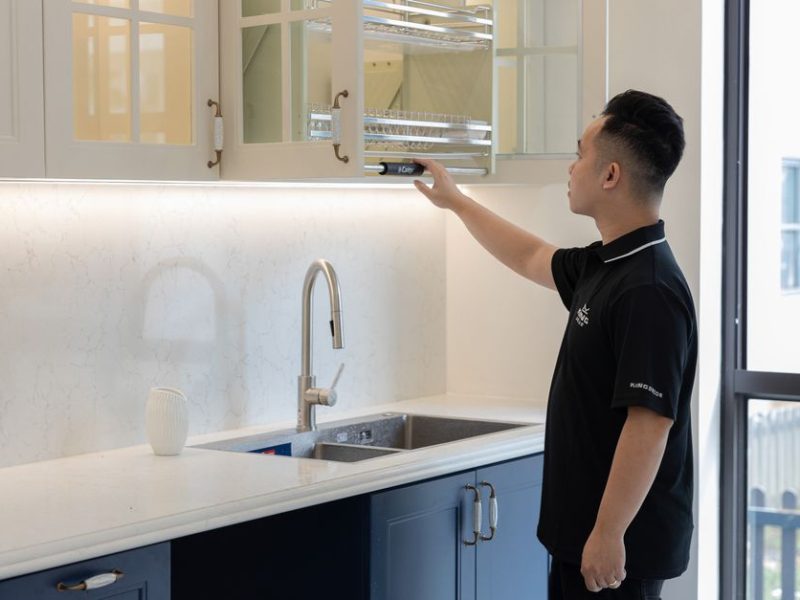
- Kitchen drawers and cabinets — Duplicate purchases cluster here. A drawer organizer set ($30–$60) and a pull-out shelf insert ($40–$80) solve most of the chaos without major effort.
- Garage — Gear and tool degradation happen here most. Wall-mounted systems like the Gladiator GearWall or Rubbermaid FastTrack dramatically outperform floor storage; gear stays accessible and protected from moisture and pressure damage.
- Home office — Document loss and cable clutter. Vertical file systems and cable management kits cost under $50 and eliminate the majority of daily friction points.
- Primary closet — High visibility but lower replacement-cost impact than garage or kitchen. Address after the first four zones unless closet dysfunction is severe enough to affect the daily routine.
- Bathrooms — Easiest to fix. Over-door organizers ($15–$25) and under-sink pull-outs ($30–$50) handle 90% of bathroom storage problems quickly.
- Basement and attic — Archive zones. Address last. Invest in labeled clear bins from IRIS USA or Sterilite and a basic wire shelving unit. These spaces reward completion, not initiation—don’t start your organization project here.
Start with the mudroom and work outward: every dollar spent organizing the entry point of your home has more measurable functional impact than three dollars spent organizing any interior room.