How do you know if a canvas will actually look right on your wall before you buy it? Size is 90% of the answer. The rest is style and placement — and those have rules that most people ignore until they’ve already rehung something three times.
What Size Wall Art Do You Actually Need?
The most common mistake: buying art that’s too small. A 16×20 print on a 12-foot living room wall looks like a sticky note. The fix is simple — your art should cover roughly two-thirds of the available wall width. Not half. Not whatever fits in a standard retail frame.
Use this table before you buy anything:
| Room / Wall Type | Recommended Art Size | Notes |
|---|---|---|
| Small bedroom (under 120 sq ft) | 16×20 to 24×30 in | Single piece above the headboard is most effective |
| Standard living room sofa wall | 24×36 to 36×48 in | Art width should reach 2/3 of sofa width |
| Large living room feature wall | 40×60 in or gallery grouping | Single oversized piece or 3-panel triptych |
| Home office accent wall | 24×36 to 24×48 in | Vertical orientation suits taller walls |
| Dining room above sideboard | Match or slightly narrower than furniture | Keep 6–8 in of clearance above furniture |
| Entryway / narrow hallway | 12×36 to 18×36 in vertical | Vertical format prevents a cramped look |
The 2/3 Rule (and When to Break It)
The 2/3 rule applies when a dominant piece of furniture anchors the wall — a sofa, a bed, a dining sideboard. Art should feel proportionally connected to that furniture, not floating loosely above it like an afterthought.
Break the rule when the wall itself is the focal point. Entryway, staircase wall, gallery-style reading corner with no furniture anchor — go bigger. Art that’s too small in an anchor-free space looks nervous. Fill the wall with intention.
Ceiling height changes the math significantly. Standard 8-foot ceilings favor horizontal compositions. With 10 or 12-foot ceilings, a vertical piece — specifically a 24×48 canvas — draws the eye upward and gives the room vertical energy rather than low-ceiling compression. Let the architecture dictate orientation, not just preference.
Vertical vs. Horizontal: Which Orientation Fits Where
Horizontal art works on wide walls, with low-profile furniture, in living rooms and dining areas. It mirrors the horizontal lines of sofas and sideboards and creates visual calm.
Vertical art works on tall walls, in narrow corridors, and wherever you need perceived height. A 48-inch-tall piece on a standard 8-foot wall is dramatic. On a 10-foot wall, it’s exactly right.
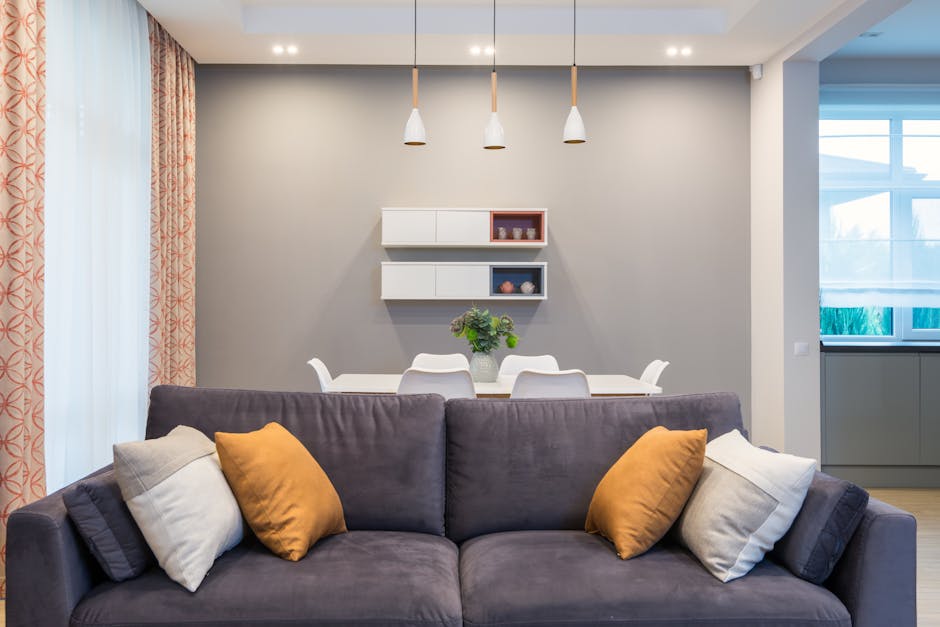
Sofa walls: go horizontal, almost always. The sofa is already a horizontal element — the art echoes it and creates coherence. Above a fireplace, either orientation works depending on mantel proportions. In a home office where you face a wall directly from a seated position, vertical art fills your field of view more naturally than a wide piece hovering below eye level.
Why Gray and Black Abstract Art Dominates Modern Interiors

Gray and black abstract art is not a trend — it’s the most practical category in residential wall decor. It coexists with warm wood tones, cool white walls, charcoal upholstery, and almost any palette in between. It doesn’t compete with your sofa color or your rug pattern. That’s not accidental. That’s the entire design logic of the style.
Compare it to highly saturated art. A vivid blue-and-orange abstract looks spectacular in the right room. In the wrong room — wrong undertones, wrong furniture palette — it creates visual noise that wears on you daily. Most people redecorate within five years. Neutral abstract art survives those refresh cycles intact.
Neutral Doesn’t Mean Boring
Strong gray and black abstract work has real texture: gestural brushwork, gradients from deep charcoal to pale silver, layered compositions with genuine depth. The better pieces reward close looking. You are not hanging a gray rectangle.
West Elm, Minted, and Society6 all carry gray abstract canvas pieces ranging from $80 to $400+. The gap between a $90 print and a $300 gallery piece is almost always canvas substrate quality, UV-resistant inks, and frame weight — rarely the design itself. At 24×48 inches, this framed gray and black abstract canvas sits at $109.90 — a mounted canvas with real frame weight, not a poster dropped into a frame — and carries 748 reviews at 4.6 stars. That review volume is a genuine market verdict on quality at the price point.
The gray tones in pieces like this also respond differently under different lighting. Warm incandescent bulbs pull out mid-tone warmth. Daylight-spectrum LEDs make the blacks sharper and the grays cooler. Neither is wrong — just different moods from the same piece at different times of day.
What 24×48 Inches Actually Looks Like Installed
People underestimate 24×48 consistently. On paper it sounds medium. On a wall, it commands attention.
A 24-inch width is roughly the span of an adult’s shoulders. Now extend that 48 inches vertically — four feet of framed art. On a standard 8-foot wall, it fills more than half the vertical space. In a bedroom, placed slightly off-center rather than symmetrically, it creates the kind of asymmetric tension that reads as deliberately designed. In a home office, it fills the wall above a desk without overwhelming the workspace. Enough presence to be interesting, not so much that it competes with what you’re doing at the desk.
The Staying Power of Monochrome Abstract
Monochrome abstract art has been a mainstream residential staple since the early 2000s. It has not faded because it solves a real problem: the wall needs something, but that something cannot fight with everything else in the room.
Pottery Barn, Restoration Hardware, and AllModern have built substantial canvas art lines around this aesthetic. The gray-and-black abstract market in the 24×48 to 40×60 range is enormous because the style is not anchored to a single design era. It reads as contemporary in 2026 and will read as contemporary in 2035. For a wall piece that takes 20 minutes to hang and rarely gets replaced, that longevity is real value.
Single Panel vs. Multi-Panel Canvas: Which Should You Buy?
Is one large piece better than three smaller ones?
For most walls, yes. A single large canvas has more visual impact than three smaller panels covering equivalent total area. One piece reads as a statement. Three pieces require the viewer’s eye to stitch them together — and if spacing is off by a fraction or horizontal alignment drifts even slightly, the arrangement looks careless rather than curated.
Single-panel art is also easier to move and rehang when you redecorate. One piece lifts off the wall in five seconds. A triptych requires three careful measurements every time you relocate it. For renters or anyone who moves frequently, the single large panel is the obvious practical choice.
The triptych exception: wide furniture anchors. Above a sectional sofa, a king bed, or a long dining sideboard, a well-executed three-panel arrangement can be more dynamic than a single piece of equivalent size. The panels need consistent 1.5 to 2-inch spacing, precise horizontal alignment, and a composition that divides naturally into thirds. When those conditions are met, the triptych has rhythm that a single panel can’t replicate.
Does a triptych work in small rooms?
Almost never. Three panels need horizontal spread to read as a unified composition rather than three separate pieces. In a small bedroom or a narrow living room, a triptych either crowds the wall or sits too small to make any impact. A single oversized piece is almost always the better call in constrained spaces.
Multi-panel art works in large living rooms, master bedrooms with wide feature walls, and home offices with long desk setups. If the wall is there, a blue watercolor feather triptych shows the format working well — the feather motif divides across three canvases naturally, and the soft watercolor palette holds at a distance without becoming visually loud. At $99.90 with a 4.6 rating across 748 reviews, it’s a direct format comparison against a single-panel purchase at roughly the same price.
Which format works best for different wall types?
Single panel: walls under 60 inches wide, tall narrow walls, spaces above a single furniture anchor, entryways, corridors. When in doubt, default here.
Multi-panel: walls over 72 inches wide, spaces above sectionals or long sideboards, rooms where horizontal scale is the design priority. Gallery walls — five or more mixed-size pieces — work on very large feature walls but require a planned floor layout before anything touches the wall.
How to Hang Large Canvas Art Without Damaging Your Walls
A 24×48 framed canvas weighs 8–15 lbs depending on frame material and canvas thickness. Standard picture hooks handle 20–30 lbs — that covers most pieces in this size range. The variable is whether the hook is anchored properly. That’s exactly where most people skip a step and pay for it later.
What You Need Before You Start
- Stud finder ($15–25 at any hardware store; magnetic models are fine for most drywall)
- Level (the built-in smartphone level is accurate enough for single-piece installations)
- Tape measure
- Pencil for wall marks
- Heavy-duty picture hooks rated to the frame weight
- Drywall anchors if you cannot hit a stud — use anchors rated for at least 1.5× the piece’s weight
Skip the stud finder and you risk the hook pulling through drywall. Skip the level and you’ll rehang the piece twice. Neither shortcut saves meaningful time.
The Hanging Process, Step by Step
- Mark the center point. Identify where you want the art and mark the horizontal center of that space. The center of the art — not the top edge — should sit 57–60 inches from the floor, which is average standing eye level.
- Check the back of the frame. Wire across the width means one hook. Separate D-rings mean two hooks at equal height. Know which system you have before you mark the wall.
- Calculate nail position. Measure from the top of the frame to where the hanging wire or D-ring sits at peak tension. Subtract that distance from your desired top-of-frame height. That number is where the nail goes.
- Find a stud or set an anchor. Run the stud finder. If a stud falls within an inch of your mark, use it — a 1.5-inch screw into solid stud holds 50+ lbs reliably. Otherwise, set a toggle bolt or heavy spiral drywall anchor rated for the weight.
- Hang and level before you step back. Hook the piece and check the level while still holding the bottom edge. The wire shifts slightly once fully loaded — adjust position on the hook before the weight settles completely.
Frames with a continuous wire across the back are the most forgiving to level, because the wire self-adjusts left or right on a single point. Large framed canvases with this wire system are also the easiest to reposition on a different wall later — lift off, fill the old hole, rehang. D-ring systems are more secure against accidental bumps but demand precise two-point measurement from the start.
How Room Color Affects Which Wall Art You Should Choose
Most buyers find art they like online, bring it home, hang it, and wonder why it looks wrong. The answer is almost always undertones — color values embedded in the wall paint that clash invisibly with the art’s palette. This is a solvable problem once you know what to look for.
Light Walls vs. Dark Walls
White and light gray walls give you maximum flexibility. The wall is neutral ground — it doesn’t compete with anything you hang on it. Gray and black abstract pieces pop cleanly against white. Blue watercolor art reads fresh and precise. This is why white walls are the gallery standard worldwide. On a white wall, you have very few wrong choices.
Dark walls — charcoal, deep navy, forest green — require more deliberate selection. High-contrast art with a bright background can look jarring against a dark wall: too much competing visual weight in one place. Art with deeper tonal ranges holds better. A gray-and-black abstract piece actually works well on dark walls because the dark elements in the art blend with the wall surface while the lighter grays generate contrast. The result is layered and intentional — harder to pull off, but sophisticated when it lands correctly.
The Undertone Problem Nobody Fixes
Beige walls with warm yellow undertones will make cool gray art look faintly blue or purple. That’s not a flaw in the art — it’s undertone contrast operating exactly as color theory says it should. The fix is either warm-toned art that plays with the wall rather than against it, or repainting with a true neutral before investing in cool-toned canvas.
Two useful reference points: Benjamin Moore “Pale Oak” (OC-20) carries warm beige undertones — beautiful with warm wood furniture and warm-toned art, but it will shift cool gray art noticeably. Sherwin-Williams “Repose Gray” (SW 7015) is a true neutral with minimal undertone bias in most lighting. It’s one of the most widely used interior colors specifically because it doesn’t fight art choices. Always check paint chips in natural afternoon daylight before deciding — store lighting makes almost everything look warm.
Furniture Colors and Art Cohesion
You do not need to match art to furniture. You need them to share at least one color value. A gray and black abstract canvas connects visually with the dark frame of a leather sofa, the silver legs on a mid-century coffee table, and a charcoal throw pillow. None of those are the same color. They share a tonal family — and that’s enough to make the room feel considered.
The failure mode is zero shared value: warm honey oak furniture, rust-orange cushions, and a cold blue-gray abstract on the wall. The art looks imported from a different room. The fix is usually not replacing the art — it’s adding one bridge element in the art’s vicinity. A side table with warm wood tones, a warm-framed object on a nearby shelf, a single warm-toned accent that provides a visual connection between the art and the rest of the room.
Color cohesion is about conversation between elements, not matching them.
One practical technique: photograph your room, desaturate the image in your phone’s photo app, and look at the light-to-dark value distribution. Art should reinforce an existing value or introduce one that’s missing. All mid-tones in the room? Dark-accented art creates drama. Already high-contrast? Softer art provides relief. The black-and-white photo reveals the actual structure of the space without color distracting the analysis.
Canvas Care Is Simpler Than You Think

Wipe dust off with a dry microfiber cloth every few months. Keep framed canvas out of direct sunlight — UV exposure fades pigments over time regardless of ink quality. Avoid hanging canvas in bathrooms or above stovetops where humidity and steam warp the substrate over time.
Hang it correctly in a living area, bedroom, or office, and it will look identical in ten years. Large canvas art is one of the lowest-maintenance elements in any room — the upfront placement decision matters far more than any ongoing care routine.