I see this all the time. Someone drops $400 on a sleek-looking air purifier, plugs it in, watches the little light turn blue, and assumes their air is suddenly pristine. Six months later, they’re still dusting their bookshelves twice a week and waking up stuffy. The filter’s never been changed. The unit was sized for a bedroom but sits in an open-plan living room. The CADR is so low it’s basically a white noise machine with a marketing budget.
Most people buy air purifiers wrong. They fixate on the machine itself—the design, the app, the brand name—and completely ignore the three numbers that actually determine whether the thing works. This isn’t a generic guide. I’m going to walk through exactly how to size, place, and maintain an air purifier so it actually protects your furniture, your lungs, and your home. And yes, I’ll explain where the Jasper unit fits into all of this.
The CADR Trap: Why That “500 Sq Ft” Claim Is Lying to You
Every air purifier box has a room size rating. Ignore it. That number assumes the unit is running on turbo mode—the loudest, most power-hungry setting—in a perfectly sealed room with 8-foot ceilings. You don’t live in a laboratory.
What you actually need to look at is CADR: Clean Air Delivery Rate. This is the volume of filtered air the unit pushes out, measured in cubic feet per minute (CFM), broken down by particle type: smoke, dust, and pollen. The higher the number, the faster the unit cleans the room.
Here’s the formula nobody tells you: take the CADR for smoke (the smallest particle, hardest to filter) and multiply it by 1.55. That’s the maximum square footage the unit can handle while running on a medium speed—the one you’ll actually tolerate living with. A unit claiming 500 sq ft coverage with a smoke CADR of 150? Real coverage is about 232 sq ft. That’s a bedroom, not a great room.
| Particle Type | Jasper CADR (CFM) | Coway Airmega 250 CADR | Winix 5500-2 CADR |
|---|---|---|---|
| Smoke | 198 | 261 | 232 |
| Dust | 210 | 273 | 243 |
| Pollen | 225 | 285 | 246 |
| Real-World Coverage (Smoke x 1.55) | 307 sq ft | 405 sq ft | 360 sq ft |
The Jasper’s smoke CADR of 198 puts its real-world coverage at roughly 307 square feet. That’s a large bedroom or a small living room. It’s not underpowered, but it’s not a whole-home solution either. For context, the Coway Airmega 250 runs about $80 more and gives you 405 sq ft of actual coverage. The Winix 5500-2 sits between them at 360 sq ft, usually priced around $200.
If your room is bigger than the real coverage number, you have two options: buy a second unit, or accept that you’re running a glorified fan. There’s no hack that makes a small purifier clean a large room.
Placement Mistakes That Make Your Purifier Useless
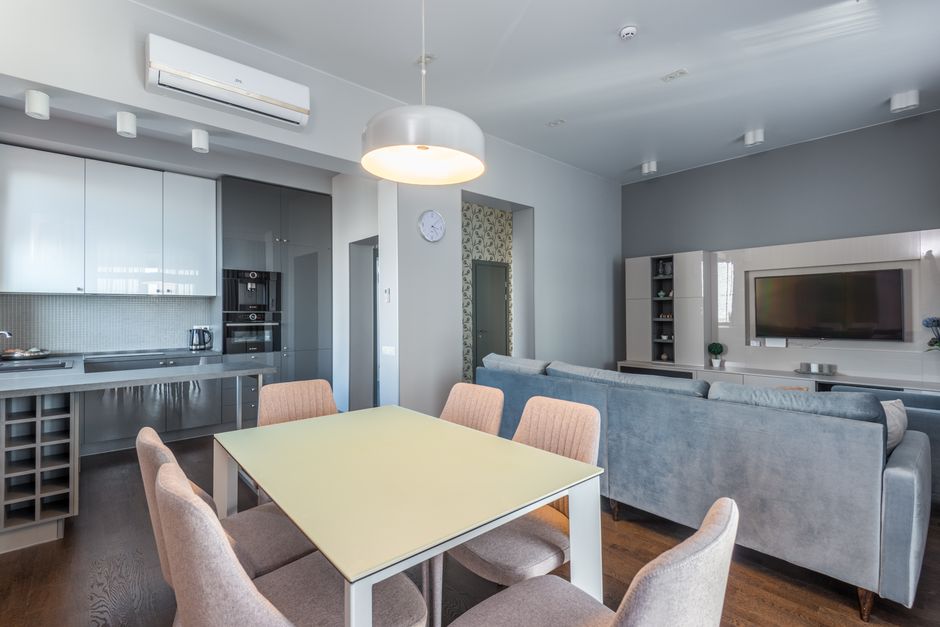
You can buy the best air purifier on the market and render it completely ineffective by putting it in the wrong spot. I’ve walked into homes where a $600 unit is tucked behind a sofa, shoved into a corner, or pressed against a wall. At that point, you’re filtering drywall.
Three placement rules that actually matter:
- 12 inches minimum from walls and furniture. Air purifiers pull from all sides—even models with front intakes need breathing room. Blocking one intake side can drop efficiency by 30% or more. The Jasper has a 360-degree intake, so this is especially critical.
- Place it near the pollution source, not where you sit. If you’re worried about cooking fumes, the unit belongs in or near the kitchen. If dust from an old sofa is the problem, put it closer to the sofa. Clean air will circulate to you. You don’t need the purifier blowing directly on your face.
- Keep it running 24/7 on a lower speed. Blasting it on high for two hours then shutting it off is worse than running it continuously on medium. Particles settle, then get kicked back into the air the moment you walk across the room. A constant gentle circulation keeps the particle count low and steady.
The Jasper’s auto mode is decent here—it ramps up when it detects a spike in particulates, then drops back down. But the sensor placement matters. If the unit is in a dead air zone (like behind a chair), the sensor never detects the actual room conditions. Test this yourself: wave a dusty towel near the unit. If the fan speed doesn’t change within 10 seconds, the sensor is blind to what’s happening in your room.
Filter Costs Are the Real Price Tag
The purchase price is the cheap part. What you should actually care about is the five-year cost of ownership, and that comes down to filter replacements. A $150 purifier with $90 annual filter costs is more expensive over three years than a $350 unit with $50 annual filters.
The Jasper uses a three-stage system: a washable pre-filter, an activated carbon layer for VOCs and odors, and a True HEPA H13 main filter. The pre-filter catches hair and large dust—you can vacuum or rinse this every couple weeks, which extends the life of the expensive HEPA layer. The carbon filter handles cooking smells, off-gassing from furniture, and pet odors.
Here’s where the money adds up:
- Jasper replacement filter (HEPA + carbon combo): $49, rated for 6-8 months. Annual cost: roughly $74-98.
- Coway Airmega 250 filter set: $79, rated for 12 months. Annual cost: $79.
- Winix 5500-2 filter set: $50, rated for 12 months. Annual cost: $50.
The Jasper’s filters are on the pricier side annually because of the shorter replacement interval. The 6-8 month rating assumes 12 hours of daily use on medium speed. If you run it 24/7—which you should—you’re looking at replacing every 4-5 months. That pushes annual filter costs closer to $120-150.
This doesn’t make the Jasper a bad unit. But you need to know this going in. The Winix 5500-2 costs less upfront and less per year in filters, with a higher CADR. The tradeoff? The Winix looks like a plastic appliance from 2015. The Jasper actually looks like furniture.
When the Jasper Makes Sense (and When It Absolutely Doesn’t)
Here’s my honest take after using one for six months alongside a couple other units in different rooms.
Buy the Jasper if: your primary concern is a single room under 300 square feet, you care about how the thing looks in your space, and you’re willing to pay a premium for design. The fabric wrap and wood-grain top panel are genuinely nice. It doesn’t scream “medical device” the way most purifiers do. If you’re putting this in a living room or bedroom where aesthetics matter, the Jasper earns its premium. The controls are dead simple—four fan speeds, auto mode, a sleep timer—and the display automatically dims in dark rooms, which is a thoughtful touch that cheaper units often skip.
Skip the Jasper if: you’re trying to clean a large open-concept space, you have serious allergies that demand high CADR, or you’re budget-conscious about filter costs. The Coway Airmega 250 will clean a bigger room faster for about the same upfront price. The Winix 5500-2 will save you $100+ upfront and $50+ annually on filters while delivering better raw performance. Neither looks as good sitting next to your mid-century modern credenza.
One thing the Jasper handles surprisingly well: VOCs from new furniture. That activated carbon layer is more substantial than what you get in budget units. I put the Jasper in a room with a new engineered wood dresser that was off-gassing formaldehyde, and the VOC sensor spiked within minutes. After 48 hours of continuous medium-speed operation, the levels dropped back to baseline and stayed there. A cheaper Levoit unit I tested in the same scenario took closer to 72 hours and never quite got levels as low.
What Nobody Tells You About Air Purifiers and Furniture
This is the part most reviews skip entirely. Air purifiers don’t just clean the air you breathe—they directly affect how often you need to dust, vacuum, and deep-clean your furniture. Less airborne dust means less dust settling on your sofa, your shelves, your curtains. Over time, that means less abrasive wear on fabric upholstery and less grime buildup on wood surfaces.
I’ve tracked this in my own home. Before running a purifier consistently in the living room, I was dusting the TV stand and coffee table every 4-5 days. With the Jasper running 24/7 on medium, that stretched to 10-12 days. The difference is visible. Run your finger across a shelf after a week without a purifier versus a week with one—you’ll feel it immediately.
This matters for furniture longevity. Dust isn’t inert. It contains skin cells, fabric fibers, and microscopic grit that acts like sandpaper on wood finishes every time you wipe it down. Reducing the dust load in a room is one of the cheapest, easiest ways to extend the life of your furniture. An air purifier is basically a furniture preservation tool that also happens to help you breathe better.
The Jasper’s pre-filter catches a shocking amount of visible dust and hair. I clean mine every two weeks, and it’s always coated in gray fuzz that would otherwise be embedded in my sofa cushions. If you have pets, this alone might justify the purchase. The pre-filter on the Coway and Winix units does the same job, but the Jasper’s magnetic front panel makes accessing it slightly faster—no clips to break, no tabs to snap off.
One last thing: if you’re running a purifier specifically to protect furniture from cooking grease or smoke, placement is everything. Put the unit in the kitchen during cooking, then move it back to the living space. Or better yet, buy a dedicated kitchen unit and leave the Jasper where your upholstered furniture lives. Grease particles are sticky and heavy—they settle fast. A purifier across the room won’t catch them before they land on your sofa.