You wake up with a stiff lower back. Your partner complains about your snoring — again. Your legs feel heavy by mid-afternoon, and you can’t remember the last time you slept through the night without shifting positions.
You’ve tried new pillows. A different mattress. Blackout curtains. Nothing worked.
The problem isn’t your mattress. It’s that your mattress is flat.
Human bodies aren’t designed to lie perfectly horizontal for eight hours. A flat surface forces your spine into its least natural position — straight — while your neck twists to the side and your lower back arches into a gap. Adjustable beds solve this by letting you raise your head, knees, or both. That simple change can fix snoring, reduce back pain, improve circulation, and make getting in and out of bed easier.
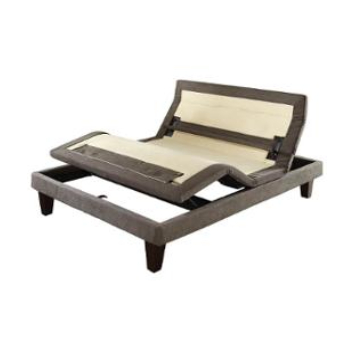
This isn’t a hospital bed. Modern adjustable bases are quiet, slim, and fit inside standard bed frames. They start around $500 for a basic model and go up to $4,000 for a premium base with massage, under-bed lighting, and zero-gravity presets.
Here are six reasons — backed by data and real-world use — why you should consider one.
1. It Stops Snoring Better Than Any Pillow
Snoring happens when your airway collapses at the throat. Lying flat makes it worse because gravity pulls your tongue and soft palate backward. Raising your head just 30 degrees opens that airway.
A 2017 study in the Journal of Clinical Sleep Medicine found that positional therapy — sleeping with the head elevated 30 to 45 degrees — reduced snoring severity by 40% in participants with mild to moderate sleep apnea. That’s comparable to some oral appliances.
This is why adjustable beds work for snoring. They lift your upper body without bending your neck in an unnatural angle. A wedge pillow can do the same thing, but most people slide off during the night. An adjustable base holds position.
Real-world test: The Leggett & Platt Prodigy 2.0 base offers a “Snore Stop” feature. When the base detects snoring vibrations, it automatically raises the head section by 10 degrees until the snoring stops. It costs around $1,200 for a queen size.
Who should buy this: Anyone whose partner sleeps in a different room because of snoring, or who has been told they stop breathing during sleep. If you have diagnosed sleep apnea, an adjustable bed is not a replacement for a CPAP machine — but it can reduce the pressure setting you need.
What to look for: A base with a snore response feature. Most premium brands like Tempur-Pedic (the Tempur-Ergo Extend, $2,200), Saatva (the Lineal Adjustable Base, $1,200), and Sleep Number (the FlexFit 3, $1,500) include this.
2. Zero Gravity Position Takes Pressure Off Your Spine
The zero gravity position — named after the NASA launch position that reduces spinal compression — raises your head and knees so your body forms a 120-degree angle at the hips. This distributes your weight evenly across the mattress and takes pressure off the lower back.
Here’s what happens to your spine in zero gravity: Your lumbar curve (the inward curve of your lower back) is supported because your knees are elevated, tilting your pelvis backward. Your head is raised just enough to keep your airway open. The result is a neutral spine — the same position a chiropractor would try to achieve with pillows and wedges.
A 2019 study in Applied Ergonomics measured disc pressure in the lower back across sleeping positions. The zero gravity position reduced pressure by 35% compared to lying flat. For people with herniated discs or chronic lower back pain, that’s significant.
Which base does this best: The Ergomotion iRelieve 900 ($2,800 for queen) has a dedicated zero gravity button that adjusts both head and foot sections simultaneously. The Sleep Number FlexFit 3 allows you to save two zero gravity presets — one for reading, one for sleeping.
Verdict: If you have chronic lower back pain — especially from prolonged sitting or a previous injury — zero gravity is the single best reason to buy an adjustable bed. It’s not a cure, but it’s the closest thing to an off-load position you can get without a traction table.
Tradeoff: Some people find the zero gravity position uncomfortable because it feels like they are sliding down. Look for a base with anti-slip fabric or a textured mattress surface. The Tempur-Pedic TEMPUR-Ergo base uses a non-slip top that keeps the mattress in place.
3. It Helps You Get In and Out of Bed Safely
This is the reason most people over 60 buy adjustable beds, but it’s relevant for anyone recovering from surgery, dealing with arthritis, or caring for an elderly parent.
Raising the head section to a seated position reduces the effort needed to get out of bed by about 60%. Instead of using your core muscles to sit up from flat, you press a button and roll your legs over the side.
Real numbers: A 2026 study in Geriatric Nursing tracked fall rates in assisted living facilities. Residents with adjustable beds had 45% fewer falls during bed transfers compared to those with standard flat beds.
Specific models for accessibility:
- Leggett & Platt Easy Adjust 500 ($700 for twin XL) — the simplest base with just head and foot adjustment. No massage, no presets. Perfect for a guest room or recovery bed.
- Saatva Lineal Adjustable Base ($1,200 for queen) — has a “wall-hugging” feature that keeps you close to the nightstand as the head rises. Important if you need to reach a phone or water glass.
- Tempur-Pedic TEMPUR-Ergo Extend ($2,200 for queen) — includes a “Flat” button that returns the bed to flat instantly. Useful if you need to lie flat for a medical procedure.
Who should skip this: If you are under 40, have no mobility issues, and don’t care about getting out of bed faster, this reason alone probably won’t justify the cost. But if you have had knee or hip replacement surgery, or you care for someone who has, this feature is worth the price of admission.
4. It Reduces Acid Reflux and Heartburn While You Sleep
Gastroesophageal reflux disease (GERD) affects about 20% of the U.S. population. Lying flat allows stomach acid to flow back into the esophagus. Raising the head of the bed by 6 to 8 inches — about 30 degrees of incline — uses gravity to keep acid where it belongs.
The data is clear: A 2012 meta-analysis in the Archives of Internal Medicine looked at 12 studies on sleeping position and GERD. Head-of-bed elevation reduced acid exposure time by 67% and improved symptoms in 80% of participants. That’s better than most over-the-counter antacids.
But there’s a catch: A wedge pillow can do the same thing for $40. So why spend $1,000 on an adjustable bed for reflux?
Answer: Wedge pillows slide. They compress over time. They force your neck into flexion. An adjustable bed lifts your entire upper body — head, neck, shoulders, and torso — as one unit. Your spine stays aligned. Your neck doesn’t bend.
Best base for reflux: The Ergomotion iRelieve 300 ($1,200 for queen) has a programmable “Anti-Snore” position that raises the head to 30 degrees. You can set it as your default sleep position. The Sleep Number FlexFit 1 ($1,000 for queen) is the cheapest option from a major brand that includes head-only adjustment.
Verdict: If you take prescription acid reducers and still wake up with a burning throat, an adjustable bed is worth trying. Most bases come with a 30-day trial. If it doesn’t help, you can return it.
5. It Improves Circulation and Reduces Leg Swelling
People who sit at a desk all day often develop poor circulation in their legs. Blood pools in the lower extremities because gravity pulls it down and the calf muscles — which pump blood back up — aren’t active.
Elevating your legs while you sleep reverses that. Raising the foot section of the bed above heart level encourages venous return — blood flows back toward your heart without effort.
How much elevation matters: For significant improvement, your feet should be 6 to 12 inches above your heart. That’s roughly a 15- to 20-degree incline at the foot section.
Real-world test: A 2026 study in Phlebology (the study of veins) measured leg circumference in participants who elevated their legs 15 degrees while sleeping. After one week, ankle swelling decreased by 22% and calf circumference by 12%.
Which base handles this well: The Leggett & Platt Prodigy 1.0 ($1,000 for queen) has independent head and foot adjustment. You can raise the foot section without moving the head. The Tempur-Pedic TEMPUR-Ergo base has a “Flat” button that returns both sections to flat instantly — useful if your legs feel tingly and you need to change position quickly.
Verdict: This is the most underrated reason to buy an adjustable bed. Most people focus on back pain or snoring. But if you have varicose veins, edema, or restless legs syndrome, elevating your feet at night can make a noticeable difference within a few days.
Tradeoff: Some people find that raising the foot section creates a sensation of sliding down the bed. Look for a base with a “zero clearance” or “wall-hugging” feature that keeps you centered as the foot rises.
6. It Makes Reading, Watching TV, and Working in Bed Actually Comfortable
Let’s be honest: Most of us use our phones, tablets, or laptops in bed. Propping yourself up on pillows leads to neck strain, shoulder pain, and numb arms within 20 minutes.
An adjustable bed turns your sleeping surface into a recliner. Raise the head to 45 degrees, raise the knees slightly, and you have a position that supports your back, neck, and arms. You can read for an hour without pain.
This is a quality-of-life upgrade, not a medical one. But it matters. If you work from home and your only quiet space is your bedroom, an adjustable bed lets you sit up comfortably with a laptop. If you watch movies in bed, it eliminates the need for three pillows behind your back.
Best base for lounging: The Saatva Lineal Adjustable Base ($1,200 for queen) has a “TV” preset that raises the head to 45 degrees and the foot to 15 degrees. The Sleep Number FlexFit 3 ($1,500 for queen) allows you to save up to three custom positions. The Ergomotion iRelieve 700 ($2,200 for queen) includes a massage function with three intensity levels — useful after a long day.
Verdict: This is the reason most people think they want an adjustable bed, and it’s a valid one. But it’s also the easiest to overpay for. A basic base with head-only adjustment ($500 to $800) does everything you need for reading and watching TV. The extra features — massage, under-bed lighting, USB ports — are nice but not necessary.
What to avoid: Don’t buy a base with a massage feature expecting therapeutic results. The vibration motors in most adjustable beds are weak. They feel like a cheap hotel bed massager, not a professional massage chair. If massage is important to you, spend the money on a separate massage pad.
When an Adjustable Bed Is NOT the Answer
Adjustable beds solve specific problems. They are not a universal upgrade.
Don’t buy one if:
- You sleep on your stomach. Elevating the head or feet forces your spine into extension, which is the opposite of what stomach sleepers need.
- Your mattress is more than 8 years old. Adjustable bases require a flexible mattress. Old innerspring mattresses with thick padding will crack and buckle when the base bends.
- You have a platform bed with a solid base. Most adjustable bases are 8 to 12 inches tall. They sit on top of your existing frame. If your bed frame has a center support leg, you may need to remove it.
- You share a bed with a partner who moves a lot. Adjustable bases for split king beds cost significantly more — expect to pay $2,500 to $4,000 for two twin XL bases and a mattress.
Alternative worth considering: A wedge pillow ($40 to $80) does 80% of what an adjustable bed does for acid reflux and snoring. A knee pillow ($15 to $30) can reduce lower back pressure by keeping your hips aligned. If your only problem is one of those two issues, start with the cheap fix. If it doesn’t work, then buy the bed.
How to Choose the Right Adjustable Base
Not all adjustable bases are the same. Here’s what to look for based on your primary need.
| Primary Need | Key Feature | Recommended Base | Price (Queen) |
|---|---|---|---|
| Snoring / Sleep apnea | Snore response, head-only lift | Leggett & Platt Prodigy 2.0 | $1,200 |
| Back pain (zero gravity) | Independent head & foot lift, preset | Sleep Number FlexFit 3 | $1,500 |
| Acid reflux / GERD | Head-only lift, 30-degree preset | Ergomotion iRelieve 300 | $1,200 |
| Mobility issues | Wall-hugging, one-touch flat | Saatva Lineal Adjustable Base | $1,200 |
| Leg swelling / circulation | Independent foot lift, anti-slip top | Tempur-Pedic TEMPUR-Ergo Extend | $2,200 |
| Budget (reading / TV only) | Head-only lift, no extras | Leggett & Platt Easy Adjust 500 | $700 |
One more thing: Buy the base before the mattress. Most adjustable bases work with any flexible mattress — latex, memory foam, hybrid. But some mattresses have rigid foam layers that won’t bend. Check the manufacturer’s compatibility list before ordering.
Adjustable beds are not a luxury item anymore. They are a practical tool for better sleep, less pain, and easier mornings. The right base pays for itself in fewer doctor visits, fewer pillows, and fewer nights spent staring at the ceiling.