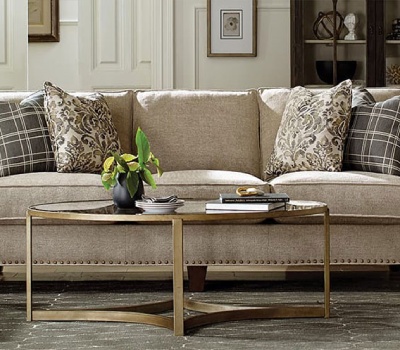
Most people buy a coffee table backwards. They find something they like online, order it, and discover afterward that it’s the wrong size for the sofa, too short to comfortably reach, or made of a material that won’t survive their actual household. Return shipping on furniture is expensive and slow.
Start with function and fit. Style is the last decision you make, not the first. Here’s an honest breakdown of what actually matters.
Coffee Table Sizing: The Measurement Mistake That Ruins Rooms
Size is where most buyers go wrong first. A table that’s too large dominates the space. Too small and it floats in front of the sofa like an afterthought. Neither problem is fixable with styling.
The Two-Thirds Rule (And Why It Works)
A coffee table should run roughly two-thirds the length of your sofa. For a 90-inch sofa, that’s a table around 60 inches long. For a 72-inch sofa, aim for 48 inches. This proportion gives the table visual weight without swamping the seating around it.
More critical than length: leave 14 to 18 inches of clearance between the front edge of the sofa and the back edge of the table. Under 14 inches and you’ll be bumping your shins constantly. Over 18 inches and reaching for a drink means leaning forward awkwardly every time. This measurement is easy to check with a tape measure and almost nobody does it before ordering.
Measure your actual room before browsing anything. Mark the maximum footprint you can accommodate on the floor with painter’s tape and stand back. Two minutes of prep prevents expensive returns.
Shape by Room Type
Shape affects how a room reads more than most buyers expect:
- Rectangular: the standard option, works with almost any sofa and most room layouts. The IKEA LACK ($39.99, 46×22″) is proof that good proportions don’t require a big budget. The two-thirds rule applies naturally to this shape.
- Round or oval: better for small rooms and open-plan spaces. No sharp corners, which also matters if you have children under five. A 36-inch diameter round table takes up less perceived space than a 36-inch square even at the same actual footprint.
- Square: works well in front of an L-shaped sectional where seating wraps around two sides. The West Elm Anton Square Coffee Table (~$549, 40×40″) is a common pick for this configuration — reach from both arms of the sectional is roughly equal.
- Nesting tables: two or three stacking units rather than one fixed table. Better suited for specific situations, which are covered further below.
Height: The Spec Almost Nobody Checks
Standard coffee table height is 16 to 18 inches. Most sofa seat heights fall in the 17 to 19 inch range. The goal is a table surface within 1 to 2 inches of the sofa cushion — at the same level or just below it.
A 12-inch table in front of an 18-inch sofa looks wrong, feels wrong, and breaks the visual logic of the room. Height is listed on every product page. It is consistently ignored. If a listing doesn’t show the height spec clearly, ask before ordering or skip it entirely.
Material Breakdown: What Actually Holds Up vs. What Looks Good in Photos
Furniture marketing uses “solid wood construction” to describe everything from genuine hardwood to MDF core with a wood-grain laminate surface. These are not the same thing. Here’s what the main materials actually deliver in daily use.
| Material | Durability | Maintenance Level | Price Range | Best Fit |
|---|---|---|---|---|
| Solid Wood | High — can be sanded and refinished | Low — wipe down, oil once a year | $300–$900+ | Long-term buyers, families |
| Wood Veneer / MDF | Medium — surface scratches, hard to repair | Low — easy to clean | $80–$400 | Budget buyers, short-term spaces |
| Tempered Glass | Medium — chips at edges over time | High — fingerprints always visible | $150–$600 | Small rooms needing visual lightness |
| Marble / Stone | High — but etches with acidic liquids | Medium — requires sealing annually | $400–$2,000+ | Buyers without young children or pets |
| Metal Frame | High — scratch resistant | Low | $200–$600 | Industrial, minimalist rooms |
| Rattan / Cane | Low-Medium — surface fragile under weight | Medium — dust traps in the weave | $150–$500 | Decorative use in low-traffic rooms |
The most common materials misrepresentation: “solid wood legs with engineered wood top.” At many price points between $150 and $400, the top surface is MDF or particleboard with a veneer or laminate finish. This is disclosed in the specs if you read them, but the marketing photos show finished wood grain that could be solid or engineered. The IKEA HEMNES Coffee Table (~$199, solid pine throughout) says so plainly in its product listing. The Pottery Barn Benchwright Coffee Table (~$749, solid reclaimed pine) is equally transparent about its construction. Both deliver what they advertise. Many tables at mid-range price points do not.
Glass tables solve a specific problem: making a small or dark room feel more open. The visual lightness is real. The maintenance is also real. Fingerprints, water rings, and smudges are always visible on glass, and cleaning it properly means glass cleaner several times a week in active households. If you have pets or young children, rule glass out entirely.
Marble is the most maintenance-intensive option at the higher price tier. It’s durable against scratches but acidic liquids — coffee, wine, lemon juice — etch the surface permanently over time. A marble sealer ($15–25 at any hardware store) applied once a year significantly reduces this risk. The Crate & Barrel Dillon Marble Coffee Table (~$799) is a legitimate example of the look done well, with solid weight and a refined finish. Just know what you’re signing up for before the table arrives.
Bottom Line: Solid wood in the $300–600 range is the most broadly reliable choice for long-term use. Engineered wood works fine as a budget option if you’re not rough on surfaces. Avoid glass in high-traffic households. Treat marble as a considered investment, not an impulse buy.
Three Features Most Buyers Skip Until It’s Too Late
Once size and material are settled, three more variables determine whether a coffee table actually works in daily use. Most buyers don’t consider them until after delivery.
-
Storage configuration — not just whether storage exists. There’s a meaningful difference between a lift-top table, an open-shelf table, and a drawer table. Lift-top designs — like the Sauder Carson Forge Lift-Top Coffee Table (~$175) — raise the surface to a working height of around 27 to 29 inches and reveal a storage compartment below. Genuinely useful in apartments where the coffee table doubles as a desk. Open shelves keep books, remotes, and objects in view — tidy if you’re organized, visually noisy if you’re not. Drawers hide everything but limit depth to around 4 to 6 inches, meaning flat items only. Choose based on your real habits, not a Pinterest version of how the room might someday look.
-
Weight affects usability more than buyers expect. A solid stone or thick marble table can weigh 80 to 120 pounds. A solid hardwood table in the 48-inch range typically runs 40 to 60 pounds. If your living room layout changes seasonally or you regularly clear floor space for guests, weight is a functional spec to check before you buy. Tables with individual tapered legs are easier to reposition than those with a solid slab base. Some tables include felt feet or casters — a small detail that matters a great deal when you’re on hardwood floors and rearranging every few months.
-
Surface depth, not just length. A table that’s 46 inches long but only 18 inches deep gives you far less working area than the headline dimension suggests. For households where the coffee table sees real use — meals, laptops, games — look for at least 24 inches of depth. The West Elm Industrial Storage Coffee Table (~$649, 48×28″) has notably practical proportions for this reason. The extra depth makes a concrete difference when you’re actually using the surface.
Quick pre-purchase check: spend one week writing down what you actually place near your sofa. Remotes, charging cables, books, coasters? That list tells you precisely what storage type you need. Don’t pay extra for features that solve a problem you don’t have.
When a Standard Coffee Table Is the Wrong Buy
Two situations where skipping the traditional coffee table is the smarter move: rooms under 150 square feet, and households with children under five. In tight rooms, a fixed-footprint table eats floor space you can’t afford. The IKEA KRAGSTA nesting table set (~$109, two tables) slides together when not in use and separates when you need surface area. A padded ottoman — the IKEA KIVIK footstool runs about $179 — is a safer choice for young children, doubles as extra seating when guests arrive, and survives dropped toys better than a hard surface with corners at shin height.
Coffee Table Buying Mistakes That Are Easy to Avoid
Does the table need to match other furniture in the room?
No. A matched furniture set looks coordinated in a showroom and flat in a real room. The coffee table should relate to the room — picking up a finish, material, or color that appears somewhere else — without being identical to any other piece. A walnut-topped table in a room with a gray sofa and black TV unit works because it introduces warmth without competing. That same walnut table in a room with walnut shelving, walnut floors, and a walnut sideboard tips into monotony fast.
One reliable approach: if the dominant tones in your room are soft and warm — cream, beige, warm gray — choose a coffee table with structural contrast. Metal legs, a dark-stained top, or a glass surface. The contrast keeps the room from going flat without requiring a full redesign.
What’s the actual minimum budget for a decent coffee table?
Around $150 to $200 gets you something functional and presentable. Below $100, surface finishes show wear within a year and hardware loosens. The IKEA LACK at $39.99 is the well-known exception — durable for its price, proportions are honest — but it reads as IKEA in a way that doesn’t work in every room.
The $200–$400 range is the genuine sweet spot. The IKEA HEMNES at $199 is solid pine with clean lines and enough design restraint to work across multiple interior styles. At $350–$499, brands like Article and Castlery sell solid wood tables with better finish quality and more distinct designs. Above $600, you’re paying for material grade, manufacturing precision, and design integrity — legitimate reasons to spend more if you’re furnishing a space you intend to keep for years.
What should you confirm before placing an order?
Three things that consistently catch buyers off guard after delivery:
- Return policy and return shipping cost. Many furniture retailers — including Article, Wayfair, and most mid-tier brands — charge $50 to $150 in return shipping fees. Read the policy before ordering, not after the table arrives looking different in person than it did in the photos.
- Assembly requirements. A minimalist-looking table can arrive in 18 pieces requiring 45 minutes of work. Check the product listing for assembly details or scan customer reviews — they’ll flag it quickly if it’s complicated.
- Delivery type. “Threshold delivery” — the standard at most mid-range price points — means the table is left at your front door, not brought inside. If you’re in a multi-floor building or can’t carry a 60-pound box up stairs alone, confirm white-glove delivery is available before you check out.
For most living rooms: a 48–60 inch rectangular table, solid wood or honest veneer, 16–18 inches tall, with at least a lower shelf for storage. That spec handles the majority of spaces and use cases without overcomplicating the decision. The IKEA HEMNES covers the budget end; Pottery Barn’s Benchwright covers the premium end. Most buyers land somewhere between them.