You have found a table you like, measured the tabletop, and still cannot picture it in the room. That is normal. A dining table can fit on paper and still make every chair scrape the wall, block a doorway, or leave the room feeling cramped. The right choice depends on three measurements: the tabletop, the chairs, and the walking space around them.
This guide gives you the numbers first, then compares rectangular, round, square, and oval tables. It also covers common layout mistakes and real 2026 examples from IKEA and West Elm. Prices can change, but the dimensions and planning rules will help you judge any table you find.
How much space do you need around a dining table?
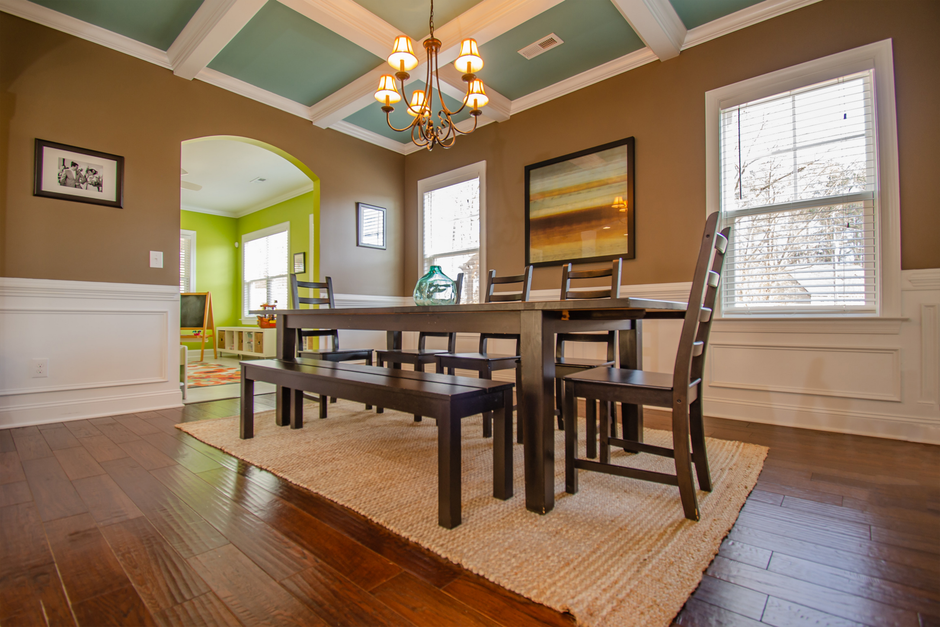
Use this five-step floor test
- Measure the room’s usable length and width, excluding built-in cabinets, radiators, and door swings.
- Mark a 36-inch clearance zone around the proposed table. Increase that zone to 42 or 48 inches along the main route through the room.
- Allow 24 inches of tabletop width for each diner. Give frequent hosts 26 to 30 inches per person.
- Check the chair depth. Most dining chairs need 20 to 24 inches from the front edge to the back.
- Pull out every chair in the taped layout and walk through the room with a tray or laundry basket.
The numbers that prevent daily frustration
A standard dining table stands about 28 to 30 inches high. Leave at least 10 to 12 inches between the seat of a chair and the underside of the tabletop so knees do not hit an apron or drawer. Table legs also matter. Four corner legs reduce the usable space at the ends, while a pedestal base usually gives end diners more legroom.
Do not measure only from wall to wall. The space behind a chair matters just as much as the tabletop. In a narrow dining area, a 30-inch-deep table with 38 inches of clearance can work better than a 40-inch-deep table with barely enough room to pass. For most homes, a slightly smaller table with comfortable circulation beats a larger table that requires everyone to turn sideways.
Rectangular, round, square, or oval: which shape wins?
Shape comparison at a glance
| Shape | Useful starting size | Best for | Main drawback |
|---|---|---|---|
| Rectangular | 60 by 36 inches for 4 to 6 people | Long rooms, families, dinner parties | Sharp corners and less flexible circulation |
| Round | 48 inches for 4 to 6 people | Square rooms and easy conversation | Uses more floor area at larger sizes |
| Square | 36 to 42 inches for 4 people | Compact square dining areas | Four diners sit close to each other |
| Oval | 60 to 72 inches long for 6 to 8 people | Narrow rooms needing softer corners | Harder to fit against a wall |
My shape verdict
Choose a rectangular table for the most flexible seating. Its long sides can take extra chairs, a bench, or a child seat, and it works well in rooms that are clearly longer than they are wide. Choose round when conversation matters more than maximum capacity. Everyone faces the center, and a pedestal base removes the awkward corner positions.
Round tables need careful sizing. A 36-inch round table feels more like a café table for two to four people. A 48-inch table gives four diners useful space, while a 60-inch table can seat six without making plates crowd the center. Avoid a large round table in a narrow room; its corners do not exist, but its circular footprint still takes floor space.
Oval tables offer the strongest compromise for a busy walkway. The rounded ends reduce bruised hips and make the table feel less severe than a rectangle, while the long sides preserve good seating capacity. For a tight room, my pick is an oval or narrow rectangle. For a square room, my pick is a 48-inch round pedestal table.
How many seats should your dining table have?
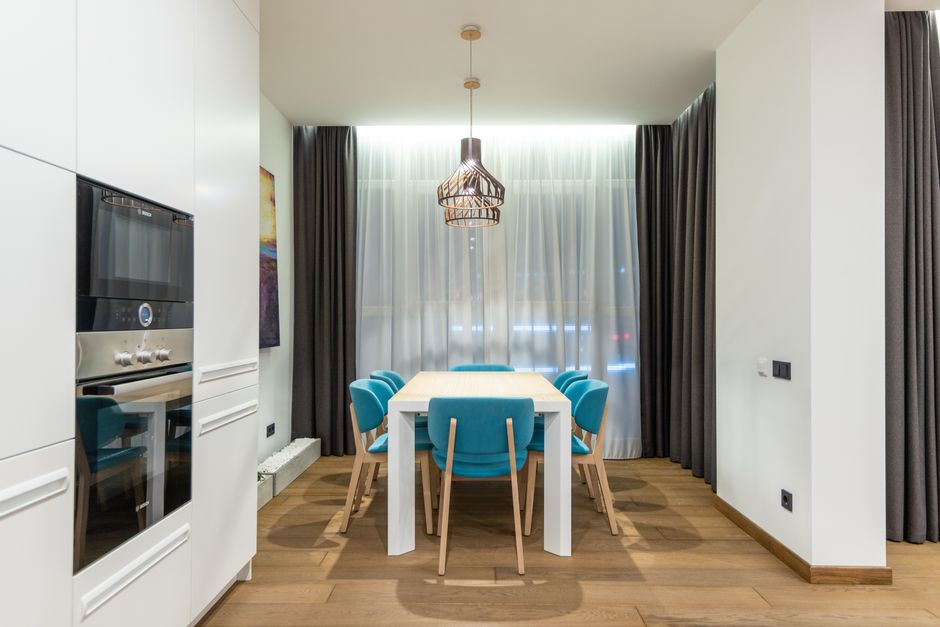
How much tabletop space does one person need?
Plan on 24 inches of table edge per person as the minimum. That works for normal meals with modest place settings. Use 26 to 30 inches when diners need serving plates, laptops, craft supplies, or wide armchairs. A 60-inch rectangular table can usually seat two people on each long side and one at each end, but the end seats may feel tight if the table has bulky corner legs.
Can a table seat more people than the label says?
Yes, but the extra seats are occasional seats, not everyday seats. A 72-inch rectangular table can seat six comfortably and eight for a holiday meal if diners use the ends. A 48-inch round table can seat four comfortably and six in a tighter arrangement. Do not buy based on the maximum number printed by the retailer. Retailers often count narrow chairs and omit the space needed for arms, plates, and movement.
What size works for a growing household?
For two to four daily diners who host occasionally, buy an extendable table. A compact 42- to 48-inch table keeps daily circulation open, while a leaf adds 12 to 20 inches when guests arrive. Families that host often should start with a 72- to 84-inch rectangle, provided the room keeps at least 36 inches of clearance. Buy for your normal week, then add capacity for your realistic hosting pattern. A table that stays oversized all year wastes valuable floor space.
Which table materials and bases make daily life easier?
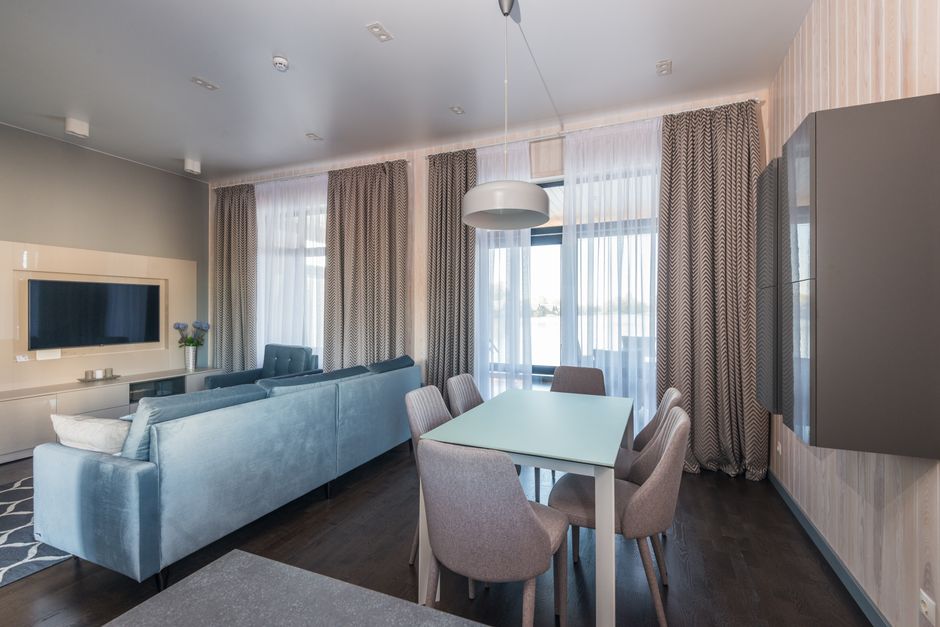
Choose the surface based on how you live
Solid wood is the best choice for buyers who want a table that can be refinished or repaired. It shows dents and water marks, but those marks can become part of the finish or receive local repairs. Wood veneer gives you a real wood surface over a stable core and often costs less than thick solid timber. It looks refined, but deep scratches can expose the core and limit repairs.
Laminate handles children, craft projects, and frequent wiping better than many delicate wood finishes. It does not develop the same aged character, but it wins on easy care. Glass keeps a small room visually light, yet it shows fingerprints, crumbs, and scratches quickly. Stone and concrete look strong, but they add weight and may require careful placement on older floors.
Pick the base before you fall for the top
Four legs make a table stable and familiar, but corner legs can interfere with end chairs. A central pedestal gives more freedom for knees and makes round tables especially comfortable. Trestle bases work well for long tables and benches, though the supports can collide with feet if the table is too shallow.
Check the underside before buying. Look for an apron that leaves at least 10 inches of knee clearance, extension leaves that store inside the table, and legs placed far enough from the corners for your chairs. The practical winner for most homes is a durable wood or veneer top with a pedestal or inset-leg base. It keeps cleaning simple and preserves more usable seating than decorative legs that steal space.
Dining table mistakes to avoid, plus the final picks
Do not make these five buying mistakes
- Buying the maximum table size without marking the chair zone on the floor.
- Counting six seats when only four diners can use the table comfortably every day.
- Ignoring the table base and discovering that corner legs block the end chairs.
- Choosing a deep table that leaves no space for serving dishes or conversation.
- Buying an extendable table without measuring the fully opened length.
My clear recommendations by room type
For a narrow apartment or breakfast nook, choose the IKEA SANDSBERG. Its $69.99 price and 43 1/4-inch length make it easy to fit, but treat it as a two-to-four-person table. For a compact room that needs occasional hosting, choose the IKEA ROSENTORP because its 43 1/4- to 61-inch range gives you daily breathing room and useful extra capacity.
For a narrow room with a more finished look, choose the West Elm Mid-Century Rounded Extendable. For a large dining room that regularly seats eight, choose the IKEA MÖRBYLÅNGA or a 72-inch round pedestal table such as West Elm’s Anton Solid Wood Round Pedestal, which comes in 48-, 60-, and 72-inch sizes and was listed around $1,199 to $1,899. The Anton is the premium pick for a square room where conversation and legroom matter more than the lowest price.
| Room situation | Best choice | Why |
|---|---|---|
| Small nook for 2 to 4 | IKEA SANDSBERG | 43 1/4 by 26 3/8 inches; lowest listed price at $69.99 |
| Small room with occasional guests | IKEA ROSENTORP | Extends from 43 1/4 to 61 inches; listed at $399.99 |
| Narrow room with a refined look | West Elm Mid-Century Rounded Extendable | 42 to 80 inches; rounded ends and flexible seating |
| Large room for regular hosting | IKEA MÖRBYLÅNGA | 86 5/8 by 39 3/8 inches; listed at $899.99 |
| Square room focused on conversation | West Elm Anton Round Pedestal | 48-, 60-, or 72-inch options with open legroom |